Clear Sky Science · en
Hyperphagia in craniopharyngioma- a real-world study from the international hypothalamic-pituitary brain tumors patient registry
When Hunger Does Not Turn Off
Most of us take it for granted that after a meal, hunger fades and we can move on with our day. For some survivors of a rare childhood brain tumor called craniopharyngioma, that switch seems broken. They may feel constantly hungry, think about food much of the time, and gain weight rapidly despite families making heroic efforts to limit access to food. This study looks closely at those eating problems in the real world, asking: how severe is this relentless hunger, how does it affect daily life, and how can doctors better recognize and measure it?
A Rare Tumor With Lasting Effects
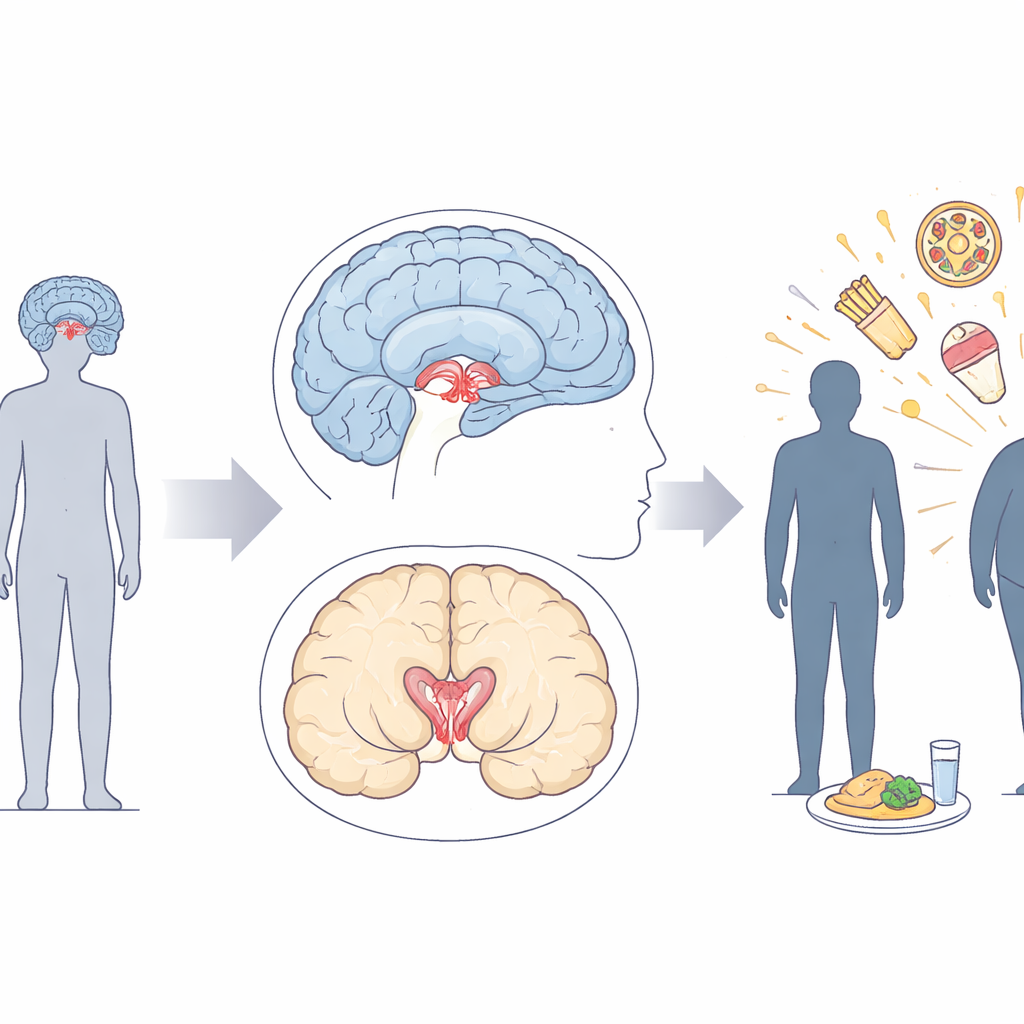
Craniopharyngioma is a slow-growing tumor that develops near the base of the brain, right next to the hypothalamus, a region that helps regulate hormones, body temperature, sleep, and appetite. Surgery and radiation can save lives, but they may also disturb this delicate control center. About half of survivors develop what doctors call hypothalamic obesity: rapid, hard‑to‑control weight gain that does not respond to dieting or typical advice about exercise. Along with extra weight, many survivors experience overwhelming hunger, disturbed sleep, mood changes, and learning difficulties, a cluster of problems known as hypothalamic syndrome.
Listening to Families Living With Constant Hunger
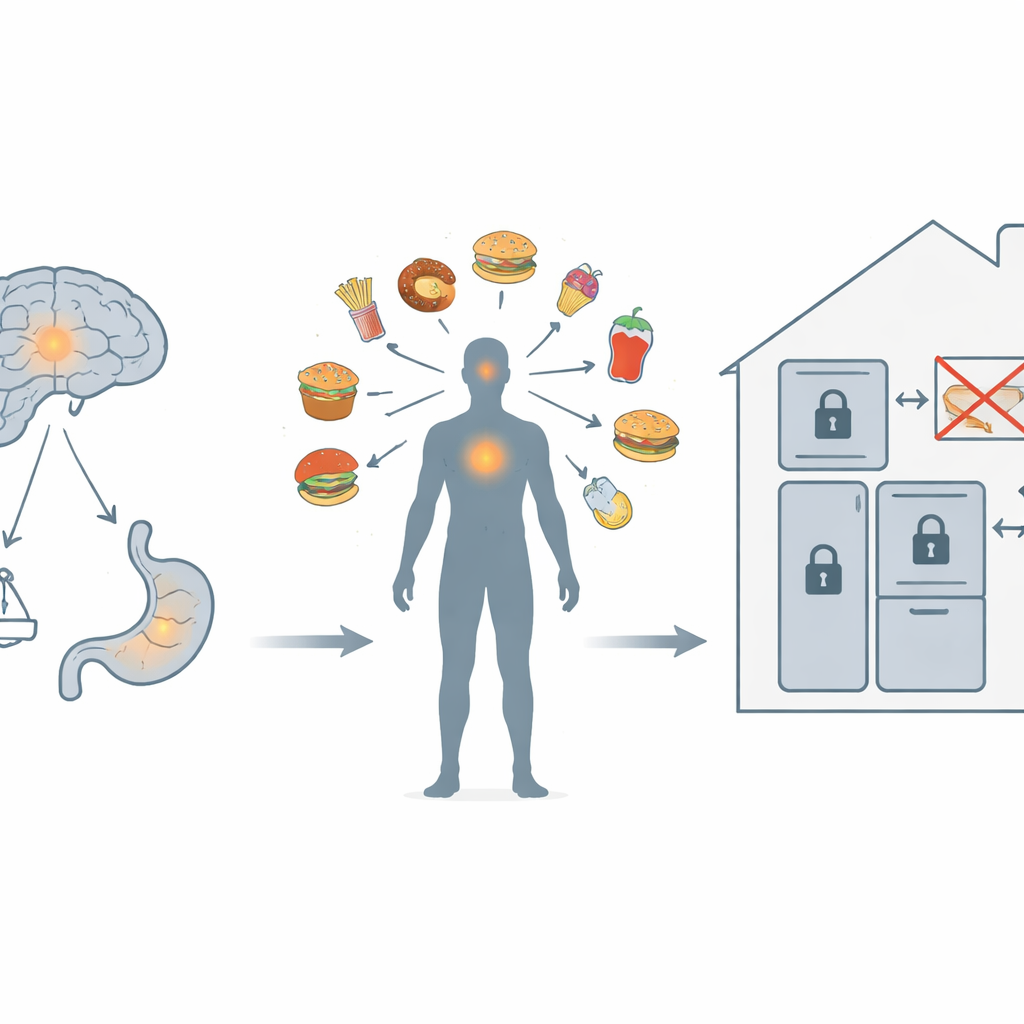
To understand these eating problems outside the clinic, the researchers drew on an online international registry for people with hypothalamic–pituitary brain tumors. Forty caregivers of craniopharyngioma survivors completed detailed surveys about their child’s or adult loved one’s hunger, fullness, eating habits, health problems, and everyday life. About 4 in 10 survivors had been formally told they had hypothalamic obesity. Caregivers also filled out two structured tools originally created for another condition marked by extreme hunger, Prader–Willi syndrome: the Hyperphagia Questionnaire for Clinical Trials, which scores food‑seeking behaviors, and the Food Safe Zone checklist, which tracks how often families lock up or tightly manage access to food.
Two Very Different Eating Worlds
Caregivers reported that survivors with hypothalamic obesity had far more health problems overall and were much more likely to show signs of hypothalamic syndrome, such as severe fatigue, sleep disruption, temperature control issues, and emotional outbursts. Their eating patterns stood out sharply. After tumor treatment, nearly half of these survivors became intensely hungrier than before, compared with only a small fraction of survivors without hypothalamic obesity. They tended to eat faster, felt less full after meals, and the feeling of fullness faded sooner—often within an hour. Many were described as “hangry,” irritable or distressed until they could eat, and some would sneak or steal food, overeat to the point of sickness, or even consume items others would find inedible. In contrast, survivors without hypothalamic obesity generally showed milder, more manageable changes in appetite that did not dominate daily life.
Measuring Hunger, Food Thoughts, and Safety Tactics
On the hyperphagia questionnaire, survivors with hypothalamic obesity scored much higher than those without it, reaching levels similar to people with Prader–Willi syndrome. These scores rose with greater body weight and with stronger feelings of hunger and weaker feelings of satiety. One factor stood out: food preoccupation—how much of the day someone spent thinking about food. Caregivers of survivors with hypothalamic obesity reported that food could occupy a large share of their loved one’s thoughts, and this single measure strongly predicted hyperphagia scores. Families responded by reshaping the home environment. Those caring for survivors with hypothalamic obesity much more often supervised meals closely, avoided taking their child to restaurants or grocery stores, checked pockets and bedrooms for hidden food, and ensured no food was left out where it could be grabbed. Their Food Safe Zone scores were tightly linked to both hunger intensity and hyperphagia scores, reflecting how hard they worked to keep food access under control.
Why These Findings Matter
This study shows that eating behavior after craniopharyngioma is not simply a matter of willpower or ordinary overeating. Instead, survivors appear to fall along a spectrum: from relatively typical appetites to an extreme, biologically driven hyperphagia that resembles that seen in Prader–Willi syndrome. In those with hypothalamic obesity, constant hunger and food obsession can disrupt school, work, friendships, and family life, while placing a heavy burden on caregivers who must continually monitor and restrict food. By demonstrating that a brief hyperphagia questionnaire and a simple question about how much of the day is spent thinking about food can capture this problem, the authors argue for earlier recognition and targeted treatment of pathological hunger in this vulnerable group. Identifying hyperphagia as a distinct, measurable complication of hypothalamic damage may help guide new therapies, support services, and research aimed at restoring some balance to the basic experience of hunger and fullness.
Citation: Kayadjanian, N., Hsu, E.A., Wood, A.M. et al. Hyperphagia in craniopharyngioma- a real-world study from the international hypothalamic-pituitary brain tumors patient registry. Sci Rep 16, 11242 (2026). https://doi.org/10.1038/s41598-026-45789-3
Keywords: craniopharyngioma, hypothalamic obesity, hyperphagia, caregiver burden, food preoccupation