Clear Sky Science · en
The SUV rear wheel axle under different loading conditions at digital image correlation approach for road safety
Why how you pack your SUV matters
Many drivers throw bags into an SUV without thinking about how that extra weight changes the way the vehicle behaves. This study shows that not only how much you load into an SUV, but also where you place that load, can quietly bend the rear wheels out of their ideal positions. Those small shifts in wheel alignment can alter how the car steers, brakes, and grips the road, especially when it is heavily loaded for holidays or long trips.
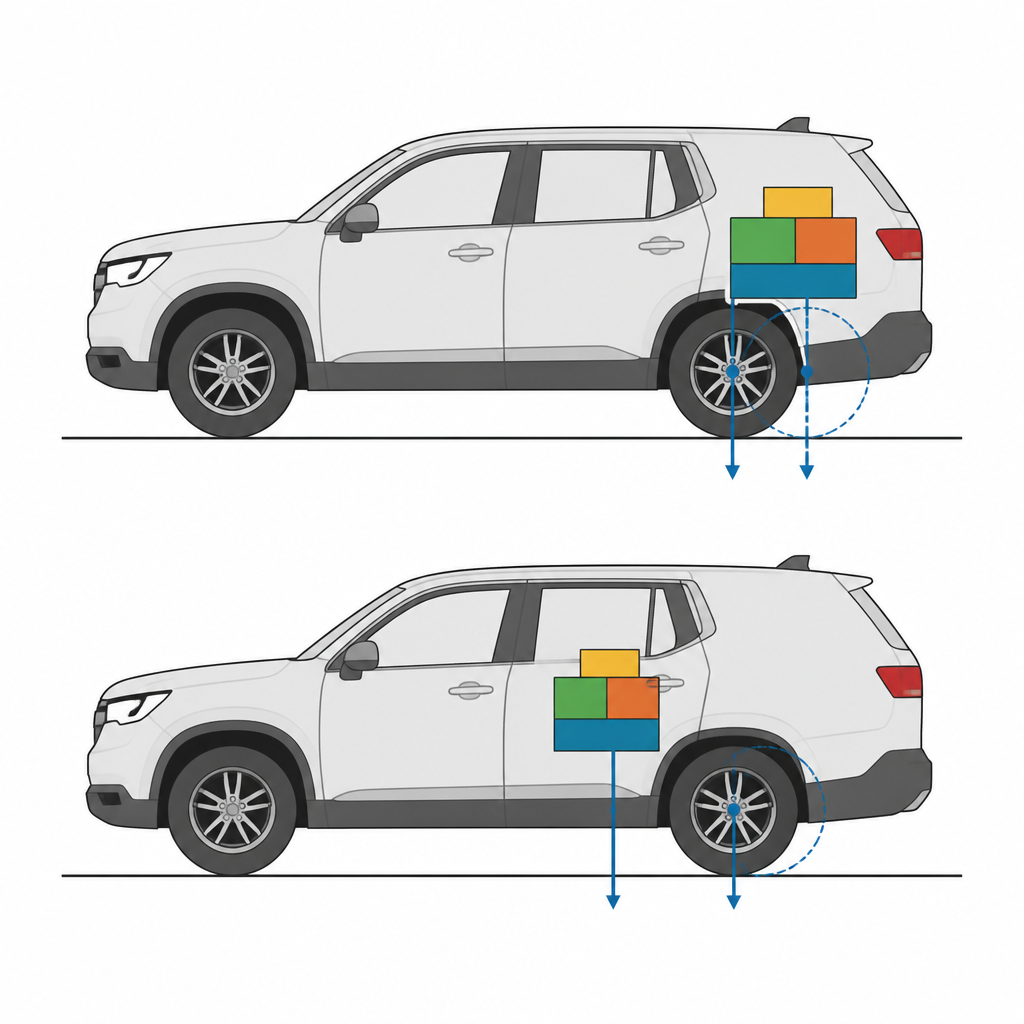
Looking at wheel motion in three dimensions
The researchers examined a modern sport utility vehicle and focused on the rear axle, which is especially sensitive to heavy luggage and passengers. Instead of using a standard wheel alignment rig, they attached a rigid plate with many black and white dots to one rear wheel and tracked those dots with high resolution cameras. This method, called digital image correlation, allowed them to follow tiny movements of the wheel in three directions at once: side to side, up and down, and along the length of the vehicle. At the same time, the car’s basic health, such as suspension damping and braking strength, was checked on a diagnostic test line to make sure the vehicle itself started out in good condition.
Four real world loading patterns
To mimic real travel situations, the team tried four different ways of loading the back of the SUV while always adding driver and front passenger weight. In one case, they stacked bags only in the luggage area behind the rear axle, increasing the mass step by step. In another, they placed weight only in the rear seats, between the axles. A third case added large loads to the rear seats, and a fourth combined a full rear seat area with extra weight in the trunk. For each situation, they recorded how the rear wheel’s position changed as more mass was added, building up a three dimensional picture of how the suspension and tyre responded.
Small movements, big effects on wheel angles
The measurements revealed that the largest wheel shifts occurred along the length of the car, meaning the wheel moved slightly forward under heavy load. This is tied to a change in the toe angle, which describes whether the wheels point slightly inward or outward. The wheel also moved downward and sideways, changing the camber angle, which affects how the tyre’s contact patch meets the road. When the trunk alone was packed, even with the same total mass, these shifts were noticeably larger than when the same weight was placed over the rear seats. As the load grew, the paths of these movements were not perfectly straight, reflecting the complex, springy behavior of the suspension bushings, springs, and tyres.
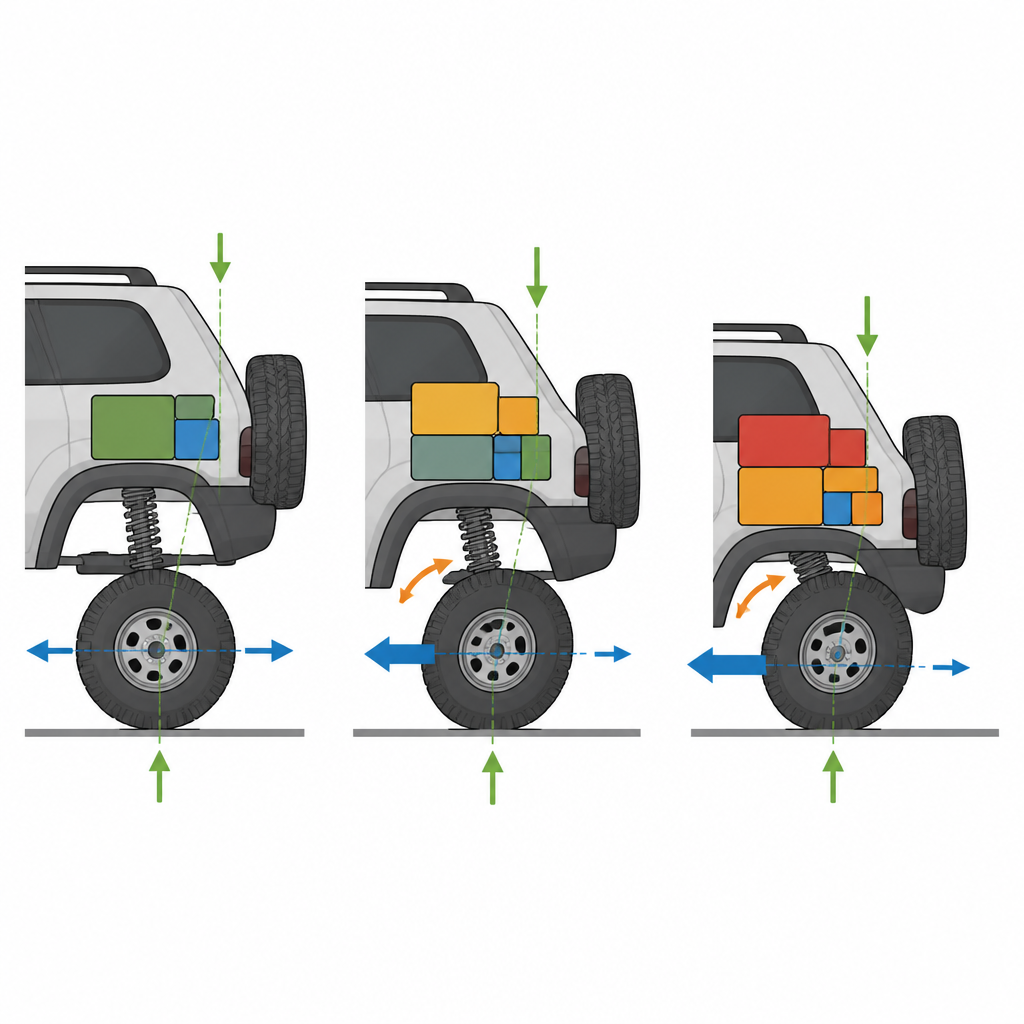
Why cargo in the trunk is more demanding
By comparing movement across the different setups, the authors defined a simple sensitivity measure that links how far the wheel moves to how much weight is added. This revealed that loading the luggage area behind the rear axle increases the strain on the rear suspension more than loading the rear seats with the same mass. With heavy luggage in the overhang of the vehicle, the rear axle takes a larger share of the total weight while the front axle becomes lighter. That tilt in weight balance can reduce the braking power available at the front wheels, where most stopping usually occurs, and it can speed up wear of rear suspension parts and tyres.
What this means for safe everyday driving
For non specialists, the study’s message is straightforward: how you distribute weight in an SUV changes the angles of the rear wheels, and those angles in turn influence steering feel, stability in curves, braking distance, and tyre life. Packing the heaviest items over or just in front of the rear axle, such as on the rear seats or close to the seat backs, is gentler on the vehicle than piling everything far back in the trunk. The authors also suggest that car makers can use this kind of precise, non contact measurement to design suspensions that better maintain correct wheel alignment under different loading conditions, making everyday travel safer and more predictable.
Citation: Gonera, J.K., Szymczak, T. & Dziedziak, P. The SUV rear wheel axle under different loading conditions at digital image correlation approach for road safety. Sci Rep 16, 15319 (2026). https://doi.org/10.1038/s41598-026-45758-w
Keywords: SUV safety, wheel alignment, vehicle loading, suspension behavior, digital image correlation