Clear Sky Science · en
Machine learning based prediction of platelet concentration from ROTEM measurements
Why fast checks on blood platelets matter
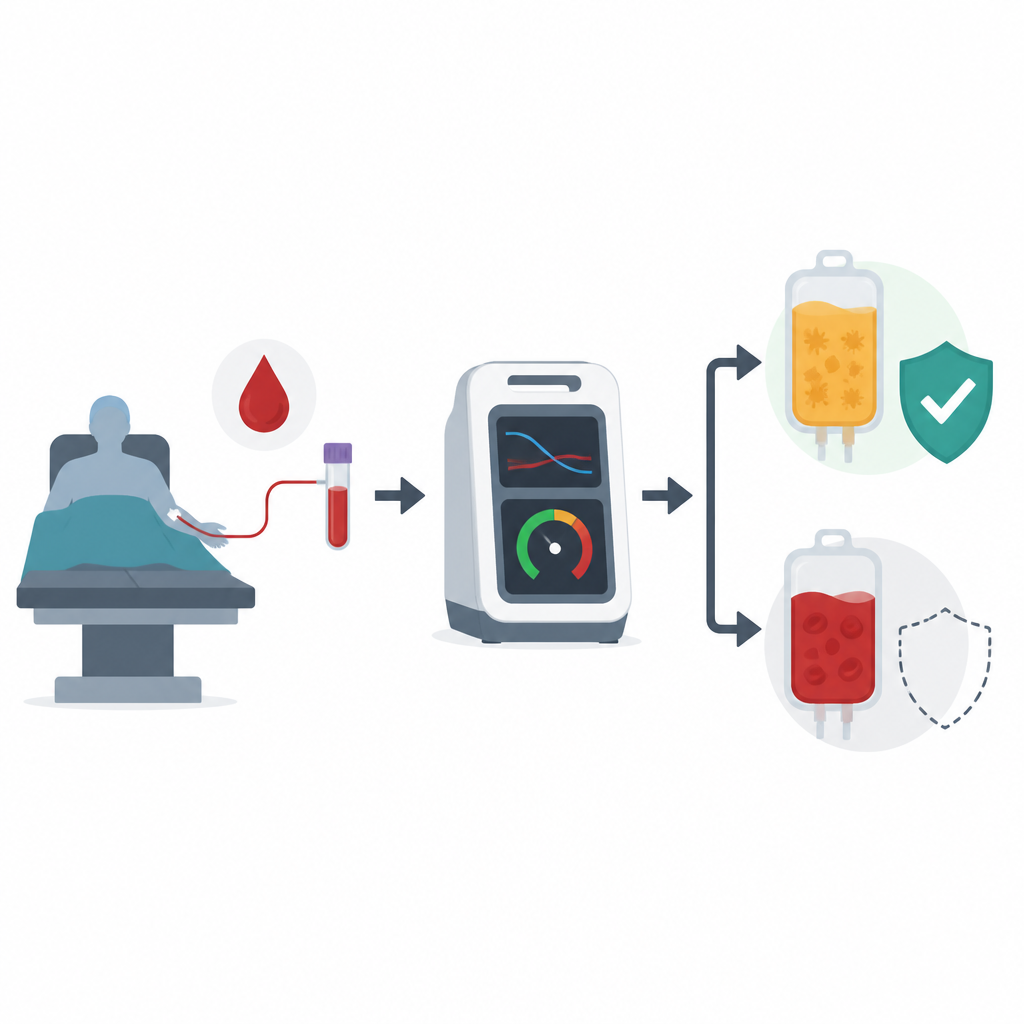
When a person is bleeding during surgery or in intensive care, doctors must quickly decide whether to give platelet transfusions to help the blood clot. Standard lab tests can count platelets accurately, but often take an hour or more, slowing urgent decisions. Bedside devices that track how a clot forms in real time are much faster, yet they do not directly show how many platelets are in the blood. This study explores whether computer models can translate those fast bedside measurements into reliable information about dangerously low platelet levels.
A quick look at clotting in real time
Modern point of care tests such as rotational thromboelastometry, or ROTEM, watch how a blood sample clots from the first spark of clotting to the point where the clot is firm and later breaks down. These tests provide curves and numbers that reflect how strong and stable the clot becomes, but not the actual number of platelets. Earlier research showed that some ROTEM readings are related to platelet levels, yet simple formulas using a single ROTEM value did not predict platelet counts well enough to guide treatment. The authors asked whether more advanced computer techniques that consider many ROTEM features at once could do better.
Building computer models from hospital data
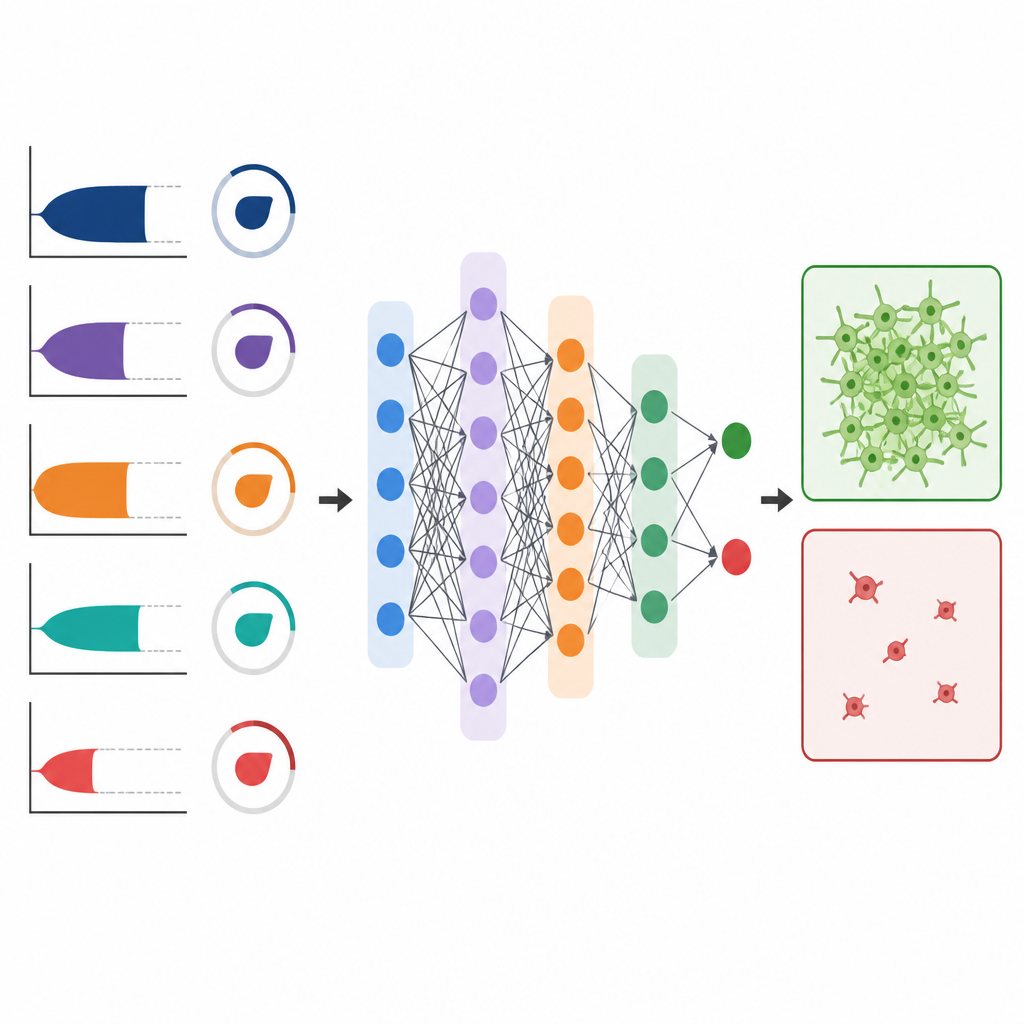
The team gathered 2,333 paired blood tests from four university hospitals, all taken from surgical or intensive care patients between 2014 and 2023. For each case they had a full set of ROTEM measurements and a laboratory platelet count taken within three hours. After carefully cleaning the data and filling in missing values, they fed 29 ROTEM related variables into several machine learning methods. Some models tried to predict the exact platelet concentration, while others tackled simpler questions: is the platelet count below 100 billion per liter, or below 50 billion per liter, levels that are widely used as safety thresholds in surgery and critical bleeding.
How well the models could count platelets
When asked to estimate the exact platelet count, all of the machine learning models beat older one line formulas that relied on a single ROTEM based value. The best approach, a stacked ensemble model that combines several methods, still showed only moderate accuracy. Its predictions differed from the true platelet count by an average of about 40 billion platelets per liter, which the authors judge too imprecise for confident dosing decisions. Graphs comparing predicted and real counts, as well as statistical checks of bias and spread, confirmed that the models often missed the mark for individual patients even when they captured broad trends.
Spotting dangerously low levels works better
The models performed much better at a simpler and clinically crucial task: flagging patients with clearly low platelet counts. For detecting counts below 100 billion per liter, random forest and ensemble models reached high values for a standard measure of test quality called the area under the curve. They were especially strong at ruling out low platelets, with very high chances that a “safe” result truly meant the patient was above the threshold. Performance was even stronger for detecting counts below 50 billion per liter, where the ensemble model again stood out. These results held across different ways of judging accuracy, and were clearly superior to relying on the single ROTEM derived value alone.
What this could mean at the bedside
The authors conclude that current machine learning models are not yet accurate enough to replace a laboratory platelet count, because their estimates of the exact number vary too widely for individual patients. However, the same models are very good at answering a yes or no question about whether platelets have dropped below key safety cutoffs. In urgent bleeding situations, such fast bedside guidance could help doctors safely delay or avoid platelet transfusions while they wait for lab results, reducing both delays in care and unnecessary exposure to blood products.
Citation: Brooks, R., Noitz, M., Mahečić, T.T. et al. Machine learning based prediction of platelet concentration from ROTEM measurements. Sci Rep 16, 15854 (2026). https://doi.org/10.1038/s41598-026-45743-3
Keywords: platelet count, thrombocytopenia, ROTEM, machine learning, platelet transfusion