Clear Sky Science · en
Effect of obesity and endocrine therapy on the prognosis of premenopausal women with HR+HER2-breast cancer: a multi-center retrospective study
Why weight and treatment choices matter
For many younger women, a diagnosis of breast cancer raises urgent questions about what affects their chance of the cancer coming back. This study looks at one important and very common factor body weight and how it may change the outlook for premenopausal women with a specific type of breast cancer, as well as how different hormone blocking treatments might offset that risk.
Who the researchers studied
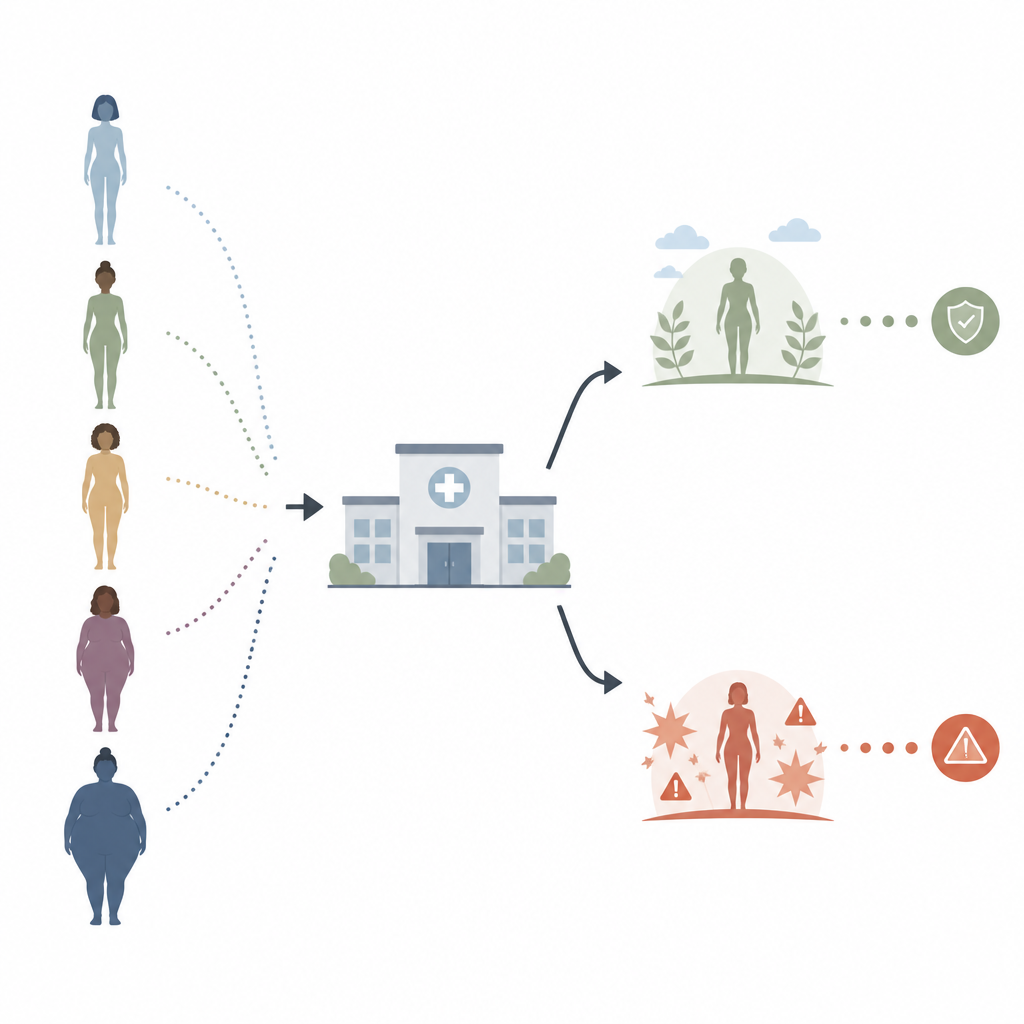
The team analyzed medical records from 5,094 premenopausal women treated for early stage hormone receptor positive, HER2 negative breast cancer at 42 hospitals across China between 2016 and 2021. All women had surgery to remove their tumors and then received standard hormone based treatments to lower the chance of recurrence. The researchers grouped patients by body mass index into underweight, normal weight, overweight and obese categories and then tracked how many women in each group experienced a return or spread of their cancer, a measure called disease free survival.
What they found about obesity and cancer return
Over a median follow up of just over three years, obese women had the highest rate of cancer coming back compared with women who were underweight, normal weight or overweight. Even after accounting for many other factors that influence prognosis such as tumor size, lymph node involvement, tumor growth rate and additional treatments like chemotherapy and radiotherapy, obesity still stood out as an independent marker of higher recurrence risk. Statistical models showed that, among women with this breast cancer subtype, those with obesity were more likely to see their disease return than women of normal weight.
How hormone treatments interact with body weight
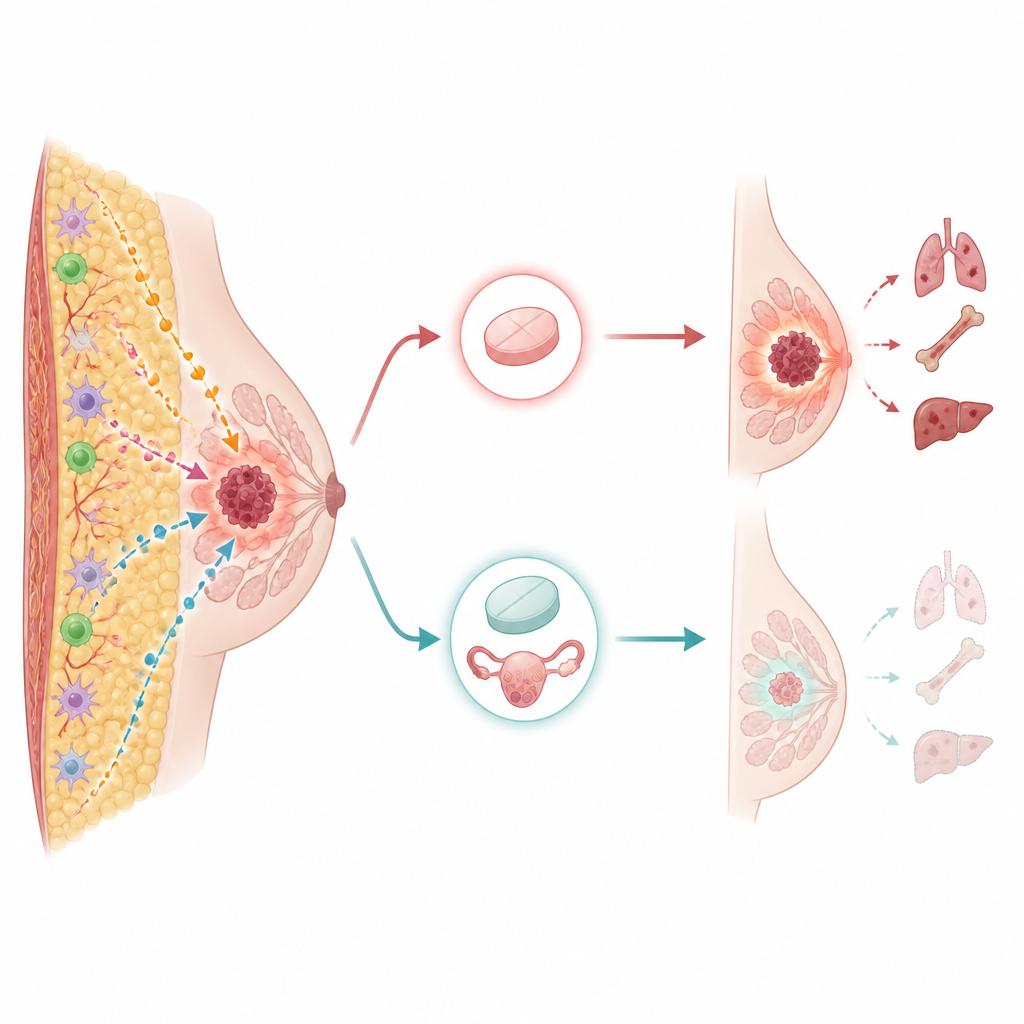
The study also examined how different hormone blocking strategies might change the influence of obesity. Some women received pills called selective estrogen receptor modulators, which block the action of estrogen on breast cancer cells but do not shut down the ovaries. Others received either these pills or aromatase inhibitors together with ovarian function suppression, a treatment that temporarily quiets the ovaries. Among women who took the pills alone, those who were overweight or obese had clearly worse disease free survival than women who were underweight or normal weight, even after careful matching of patients with similar tumor features. In contrast, when ovarian function suppression was added, the gap in outcomes between heavier and lighter women nearly disappeared.
Possible reasons behind the link
While this study was not designed to uncover detailed biological causes, it fits with growing evidence that extra body fat can create a body environment that favors hormone sensitive breast cancers. Fat tissue can raise estrogen levels, promote chronic inflammation and alter hormones such as insulin, all of which may help cancer cells grow or resist treatment. In laboratory studies, factors released from the bodies of people with obesity have been shown to make hormone blocking drugs like tamoxifen less effective. By turning down ovarian hormone production, ovarian function suppression may partly offset these obesity related signals in younger women.
What this means for patients
Overall, the research suggests that, for premenopausal women with this common form of breast cancer, obesity is linked to a higher chance of the cancer returning, independent of other known risk features. It also indicates that adding ovarian function suppression to standard hormone pills may blunt some, though not necessarily all, of the added risk seen in heavier patients. Because the study is observational, it cannot prove cause and effect, and longer follow up is needed. Still, the findings highlight the importance of considering body weight when planning hormone therapy and of continuing research on how tailored treatment can support the long term health of women across the weight spectrum.
Citation: Lian, W., Hong, C., Wang, C. et al. Effect of obesity and endocrine therapy on the prognosis of premenopausal women with HR+HER2-breast cancer: a multi-center retrospective study. Sci Rep 16, 15281 (2026). https://doi.org/10.1038/s41598-026-45742-4
Keywords: obesity, premenopausal breast cancer, hormone therapy, disease free survival, ovarian function suppression