Clear Sky Science · en
Carotenoid nanoforms from clementine peel stabilized by xanthan and arabic gums with antioxidant anti inflammatory and antimicrobial activities
From Kitchen Waste to Health Helper
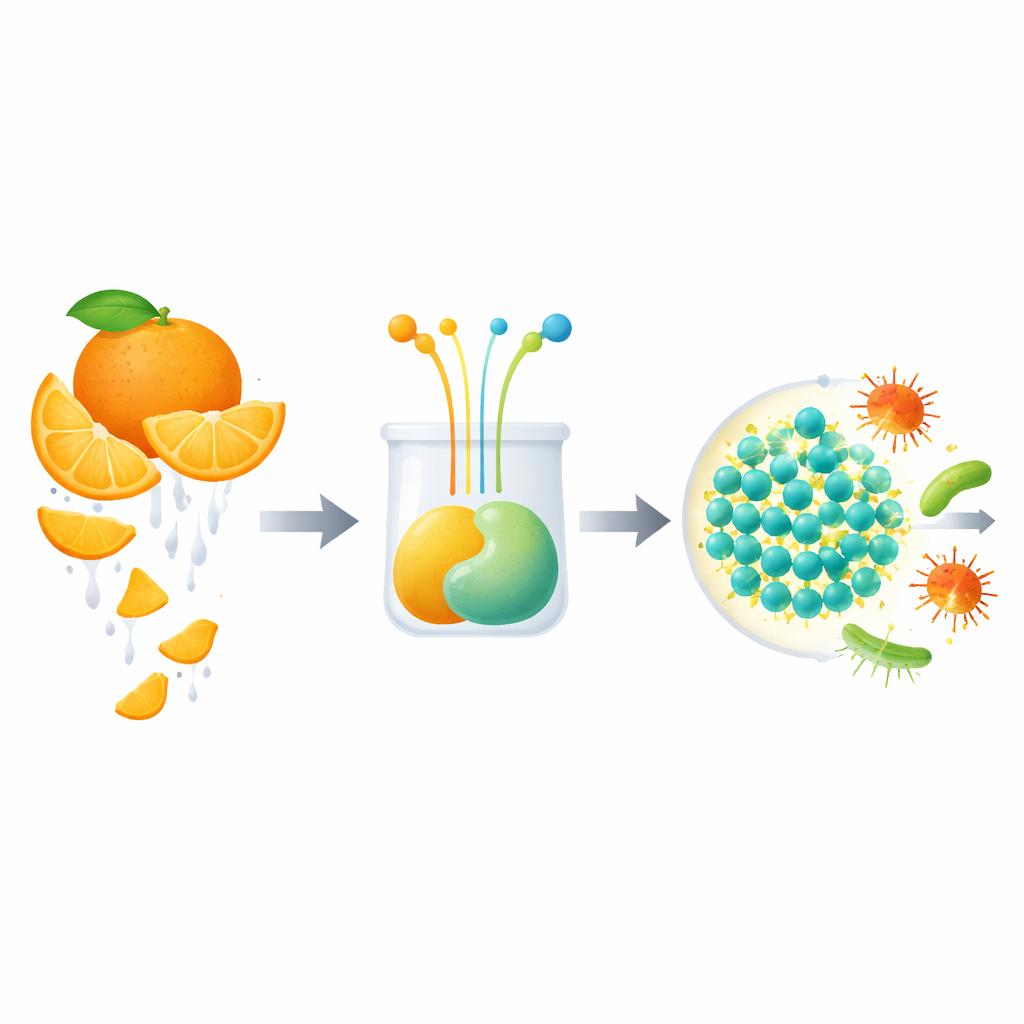
Most of us toss citrus peels into the trash without a second thought. Yet these bright orange skins are packed with colorful molecules that can protect our cells, calm inflammation, and even fight germs. This study explores how the peels of clementines—small, sweet mandarins—can be turned into tiny, stable particles that may one day help keep food safer and support human health in a world struggling with antibiotic resistance.
Why Citrus Color Matters
The rich color of citrus fruits comes from natural pigments called carotenoids and related compounds. Humans cannot make these molecules on their own, but we benefit from eating them: they can neutralize harmful “free radicals,” ease inflammation, and slow the growth of some microbes. Clementine peels turned out to be a surprisingly rich source of these pigments. The researchers measured several types—including total carotenoids, anthocyanins, lycopene, and astaxanthin—and found that carotenoids were by far the most abundant, with anthocyanins in second place and the other pigments present in smaller amounts. This means that what is usually considered food waste actually contains a concentrated store of potentially useful natural ingredients.
Making Tiny Protective Capsules
There is a catch: these colorful molecules are fragile. They break down when exposed to light, heat, oxygen, or the harsh conditions of the digestive tract. To protect them, the team used a strategy from nanotechnology, shrinking and wrapping the pigments into particles tens of billionths of a meter in size. They combined the extracted carotenoids with two edible, plant-based thickening agents widely used in foods: xanthan gum and Arabic gum. Together these gums form a gentle, protective matrix around the pigments. Careful measurements showed that the resulting particles averaged about 17 nanometers in size and carried an electrical charge that helps them repel each other, a sign of good stability. Heat tests indicated that the new particles stayed intact up to about 300 °C, far above typical cooking temperatures.
Shielding Power and Slow Release
The scientists then asked whether these tiny capsules changed how the pigments behaved. They compared the antioxidant and anti-inflammatory effects of the free pigments, the empty gums, and the pigment-loaded nanoparticles. Free carotenoids showed the strongest immediate ability to neutralize damaging molecules and block protein damage linked to inflammation. The nanoform was slightly less powerful in short tests, because some of the pigment was tucked away inside the gum shell. However, this is also an advantage: encapsulation protects the pigments from rapid breakdown and allows them to be released gradually rather than all at once. The gums themselves, and especially their mixture, contributed their own moderate antioxidant and anti-inflammatory activity, suggesting that the whole formulation acts as a team rather than relying on a single component.
Fighting Germs With Fruit Peels
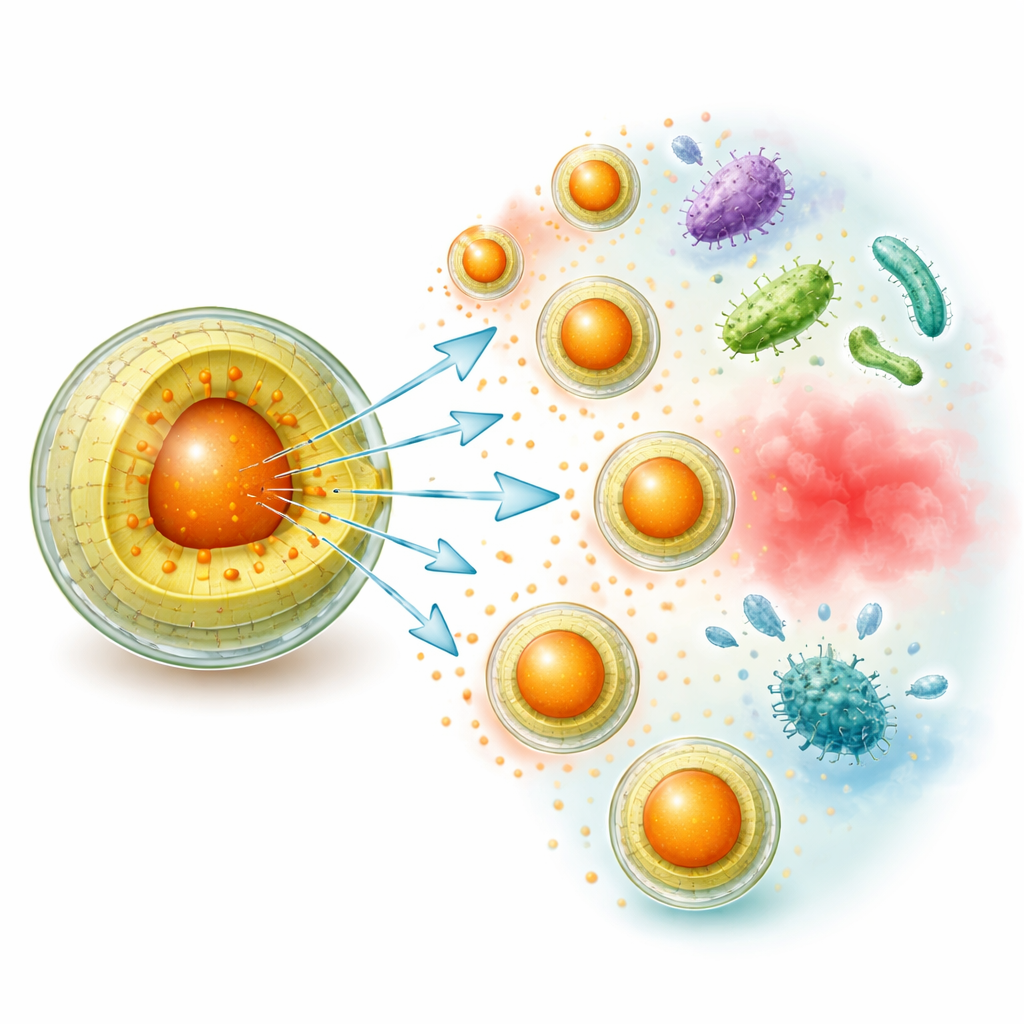
With antibiotic resistance on the rise, there is strong interest in natural substances that can help control harmful microbes. The researchers tested the free pigments, the nanoparticles, xanthan gum, Arabic gum, and their mixture against several disease-causing bacteria and fungi. The clementine pigments, sometimes supported by the gums, slowed or stopped the growth of foodborne pathogens such as Listeria monocytogenes, Escherichia coli, Salmonella typhi, and molds that can spoil food or produce toxins. In many cases, the combination of gums and pigments performed as well as or better than either alone, pointing again to a cooperative effect. Although the standard medical drugs used as controls were still stronger, the results suggest that these natural formulations could be useful where mild, food-safe protection is desired.
From Lab Bench to Everyday Use
Overall, the study shows that clementine peels can be transformed from waste into a source of tiny, gum-stabilized pigment particles with antioxidant, anti-inflammatory, and antimicrobial powers. For a layperson, this means that substances already common in foods—citrus pigments and natural gums—can be combined into a stable, miniature delivery system that may help keep food fresher for longer and support health without relying solely on synthetic additives or antibiotics. The authors emphasize that further work is needed to test safety, how these particles behave in the body, and exactly how much is needed to be effective. Still, the research points toward a future where everyday fruit scraps could be reimagined as gentle, multi-purpose defenders against oxidation, inflammation, and harmful microbes.
Citation: Ahmed, H.A., Ibrahim, E.A., Salama, Z.A. et al. Carotenoid nanoforms from clementine peel stabilized by xanthan and arabic gums with antioxidant anti inflammatory and antimicrobial activities. Sci Rep 16, 12360 (2026). https://doi.org/10.1038/s41598-026-45729-1
Keywords: clementine peel, carotenoids, nanoparticles, natural preservatives, antimicrobial activity