Clear Sky Science · en
Teaching activity design and psychological practice of music majors under a convolutional neural network and transformer module
Bringing Smart Technology into Music Class
For many music students, lessons can feel like a one-size-fits-all routine: the same pieces, the same exercises, and little attention to nerves before a performance. This study explores how modern artificial intelligence can make music learning more personal and supportive. By blending ideas from science, technology, engineering, art, and math (often called STEAM) with a smart recommendation system, the researchers aim to help music majors find the right pieces and activities at the right time—while also easing anxiety and building confidence.
Why Music Students Need More Than Scales
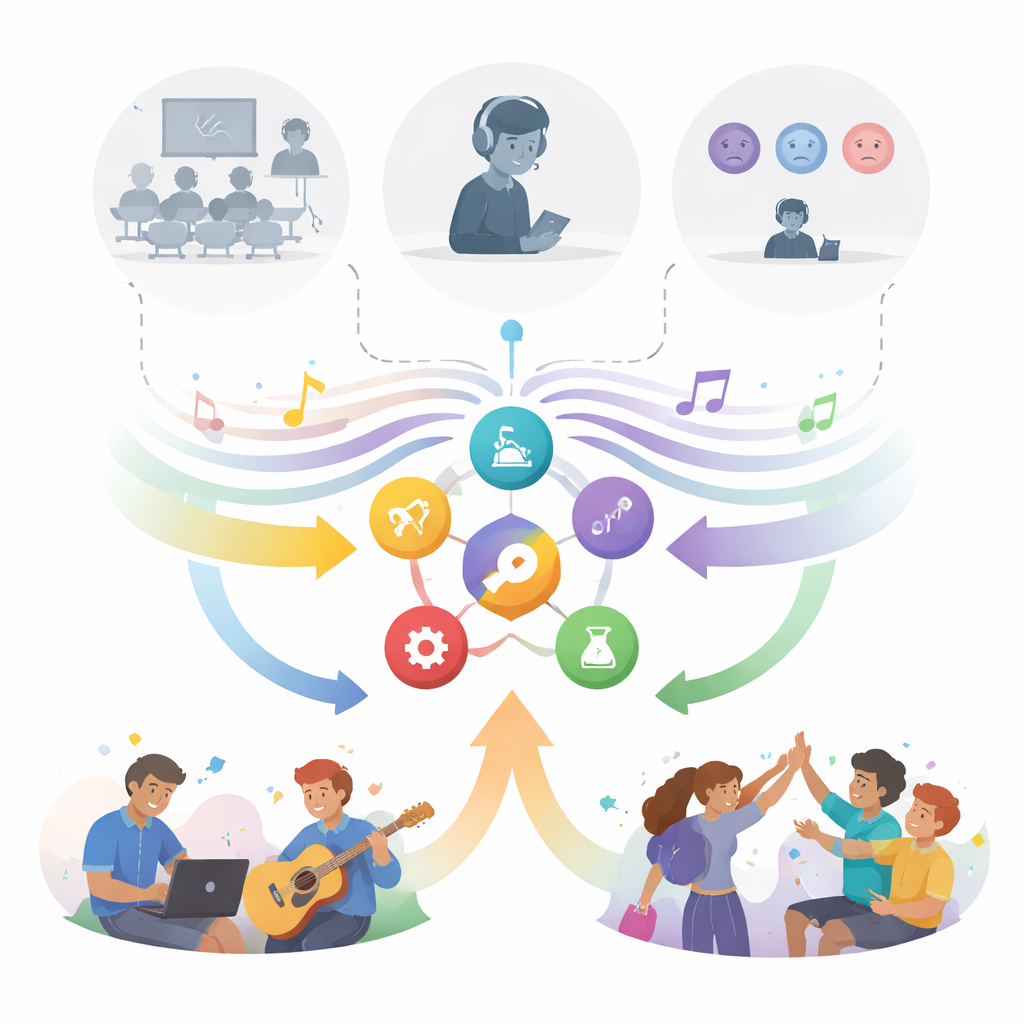
Traditional college music teaching often relies on fixed syllabi, teacher-chosen repertoire, and limited attention to students’ feelings. That can leave individual interests, learning pace, and stage fright largely ignored. At the same time, online learning platforms now track what students click, how long they listen, and which pieces they return to. The researchers saw an opportunity: use this rich digital trail, together with psychological surveys, to tailor music teaching to each student, rather than forcing everyone through the same path.
A Smart Guide That Learns from Sound, Scores, and Feelings
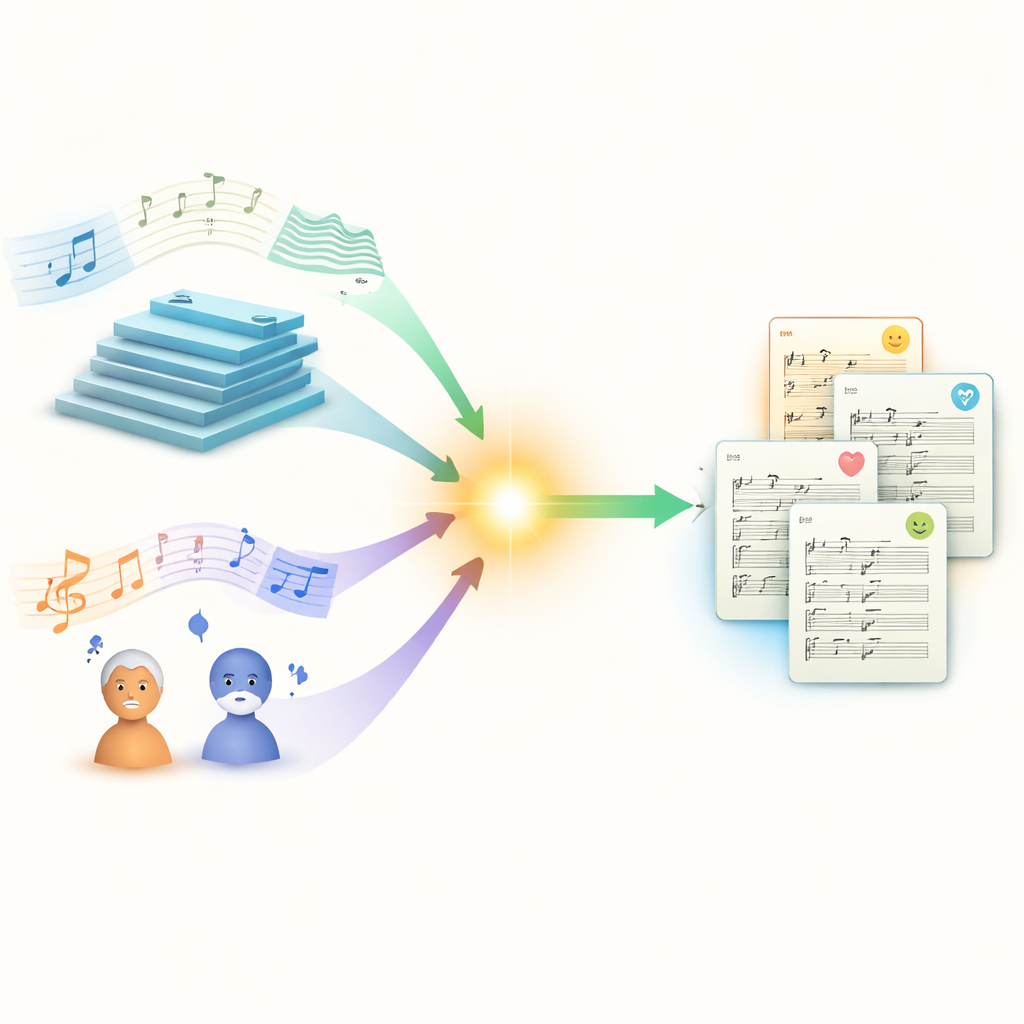
The heart of the project is a personalized recommendation system built on two powerful AI tools: convolutional neural networks and Transformer modules. In simple terms, the system “listens” to recordings of teaching pieces, turning them into colorful sound maps that capture tone and rhythm. It also “reads” digital scores, noting elements such as harmony, tempo changes, and technical difficulty. On top of that, students complete questionnaires about performance anxiety, everyday learning stress, and self-confidence. All of this information is turned into numerical features and fused into a single picture of how suitable each piece might be for a particular student at a particular time.
Linking Projects, STEAM Ideas, and Personalized Choices
To fit real classroom needs, the system is woven into a four-stage project-based teaching model: starting a topic, exploring ideas, creating a work, and presenting results. Each music piece is tagged with how it connects to science, technology, engineering, art, and math—such as sound physics, recording practice, or rhythmic patterns. Depending on the stage, the system shifts its priorities. Early on, it recommends broad, curiosity-sparking material; later, it focuses more on technical tutorials, creative tools, or performance examples. For group projects, it blends the tastes and roles of different members, so both “tech-minded” and “art-minded” students receive resources that suit them while still pushing the group toward shared goals.
What Happened When Students Tried It
The researchers tested the system with 112 music majors, comparing an experimental group using the smart recommendations to a control group taught in the traditional way. The AI model proved more accurate than several competing algorithms at guessing what resources students would actually use, reaching an accuracy of about 96 percent. More importantly for teaching, students using the system clicked on more resources, stayed longer on learning pages, and left more comments—signs of deeper engagement. Psychological measures also improved: music performance anxiety and general learning anxiety dropped more in the experimental group, while self-confidence rose sharply compared with the control group.
What This Means for Future Music Lessons
In everyday terms, the study shows that a well-designed smart assistant can act like an extra-sensitive tutor: one that listens to the music, reads the score, watches how students behave online, and keeps an eye on how they feel. It can then suggest pieces and activities that are not only at the right level, but also supportive of students’ emotional needs and broader STEAM learning goals. While the current system is still a proof of concept, it points toward a future where music majors practice with playlists that calm their nerves, challenge their skills, and open doors to science and technology—all automatically tuned to who they are and how they learn.
Citation: Zhuang, T., Wang, X. & Chang, D. Teaching activity design and psychological practice of music majors under a convolutional neural network and transformer module. Sci Rep 16, 14534 (2026). https://doi.org/10.1038/s41598-026-45673-0
Keywords: music education, personalized learning, STEAM, recommendation system, student anxiety