Clear Sky Science · en
Analysis of adult men’s knowledge in the area of male fertility in relation to selected lifestyle factors
Why this topic matters
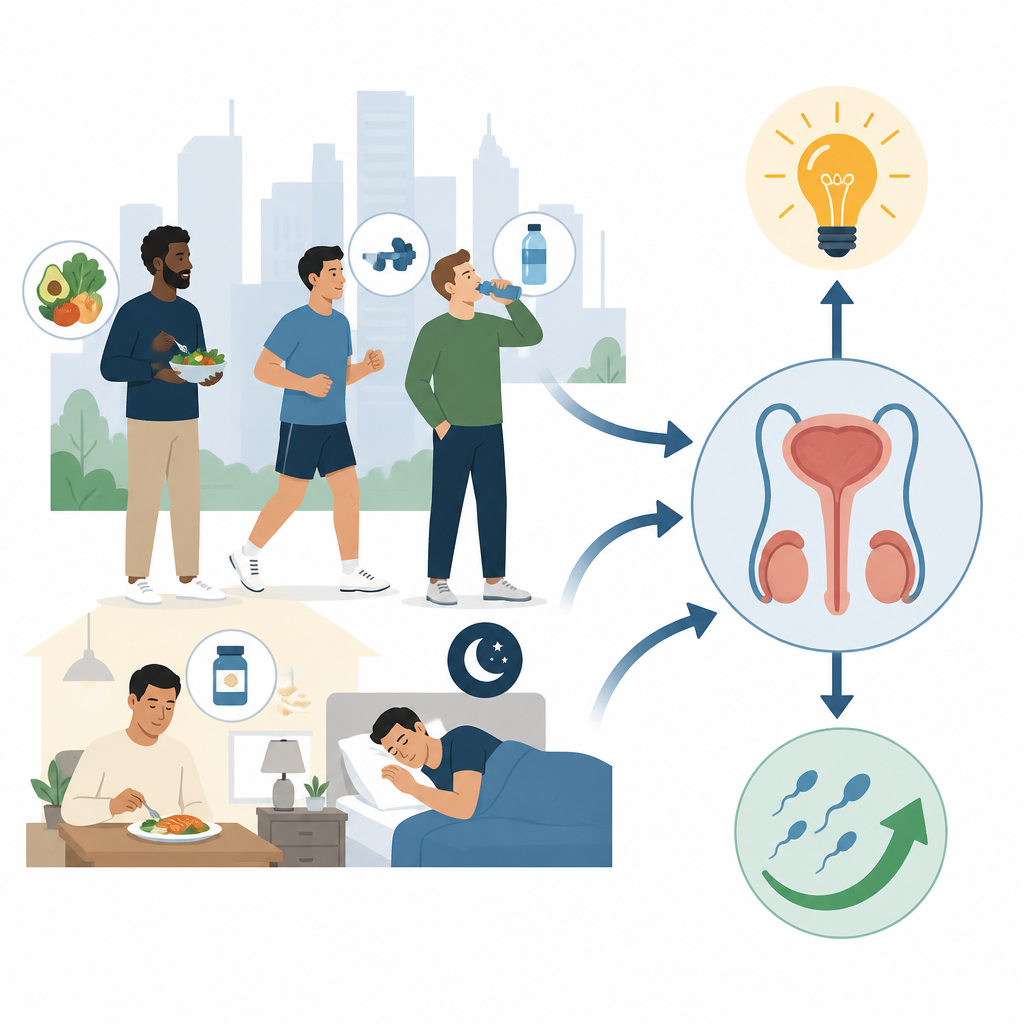
Many people assume that fertility problems mostly concern women, yet in about half of all couples who struggle to conceive, the male partner plays a role. This study looks at what adult men actually know about their own fertility and how everyday habits such as diet, exercise, and supplement use might affect it. Understanding these knowledge gaps can help shape better education so that men can make informed choices about their health, relationships, and plans for having children.
What the researchers wanted to find out
The research team set out to measure how well men understand basic facts about male fertility and how it connects to lifestyle and medical issues. They focused on topics like semen quality, age, common health problems, and everyday behaviors such as physical activity, body weight, and nutrition. Because many causes of male infertility are either preventable or manageable, the authors wanted to see whether men are equipped with the information needed to notice warning signs early or to change harmful habits.
How the study was carried out
The scientists invited 156 men aged 18 to 74 from different backgrounds to complete an anonymous online questionnaire. The form had two main parts: one collected simple details such as age, education, type of job, relationship status, and whether the man had children or any known fertility problems. The other part asked 25 single-choice questions about medical aspects of male fertility and lifestyle factors, including diet, exercise, supplement use, and other habits. Each correct answer counted for one point, allowing the researchers to see both overall knowledge and patterns within specific themes.
What the men knew and where they struggled
The results painted a clear picture of limited understanding. Only 5 of the 25 questions were answered correctly by most participants. Men did relatively well on broad ideas, such as knowing that eating habits and low physical activity can affect fertility or that only one sperm is needed to fertilize an egg. However, they performed poorly on more detailed questions, such as the share of sperm that should have a normal shape or which internal structures are most important for producing semen. Knowledge about lifestyle and about medical issues tended to rise or fall together, suggesting that men were not well informed in either area, rather than being strong in one and weak in the other.

Who knew more and why that matters
Some groups stood out with slightly higher scores. Older men tended to know more than younger men, though the link between age and knowledge was modest. Men with training or jobs in medicine, and those who had been suspected of or treated for infertility, also scored higher. Yet even in these groups, understanding was far from complete. One surprising finding was that a large majority of participants reported using dietary supplements, often complex multi-ingredient products, but this interest in health did not match a solid grasp of which vitamins, minerals, or other substances truly matter for fertility. This gap suggests that many men act on vague beliefs or advertising rather than clear medical advice.
What the findings mean for everyday life
The authors argue that low awareness among men may delay diagnosis and treatment of fertility problems, put most of the burden on female partners, and encourage casual, sometimes excessive use of over-the-counter products without expert guidance. They suggest that education about male fertility should start early, be simple and repeated, and reach men in schools, workplaces, clinics, and online spaces they already use. Rather than focusing only on men already in treatment or working in health care, efforts should target the broader male population so that more men understand how their age, lifestyle choices, and medical history can influence their ability to have children.
Takeaway for readers
In plain terms, this study shows that many men know very little about how their own bodies influence the chance of becoming a father, even when they are keen on taking supplements or believe they are looking after their health. Better information about fertility, shared in clear language and through trusted sources, could help men make wiser decisions about diet, exercise, substance use, and when to seek medical advice. By raising awareness among men as well as women, society can improve early diagnosis of fertility problems and support healthier choices for future families.
Citation: Dakowicz, A.L., Milewska, A.J., Nowakowski, D. et al. Analysis of adult men’s knowledge in the area of male fertility in relation to selected lifestyle factors. Sci Rep 16, 14919 (2026). https://doi.org/10.1038/s41598-026-45648-1
Keywords: male fertility, fertility awareness, lifestyle factors, dietary supplements, reproductive health education