Clear Sky Science · en
Rapamycin reduces peritendinous fibrosis but has a limited effect on intratendinous healing in a rodent Achilles tendon injury model
Why tendon scarring matters
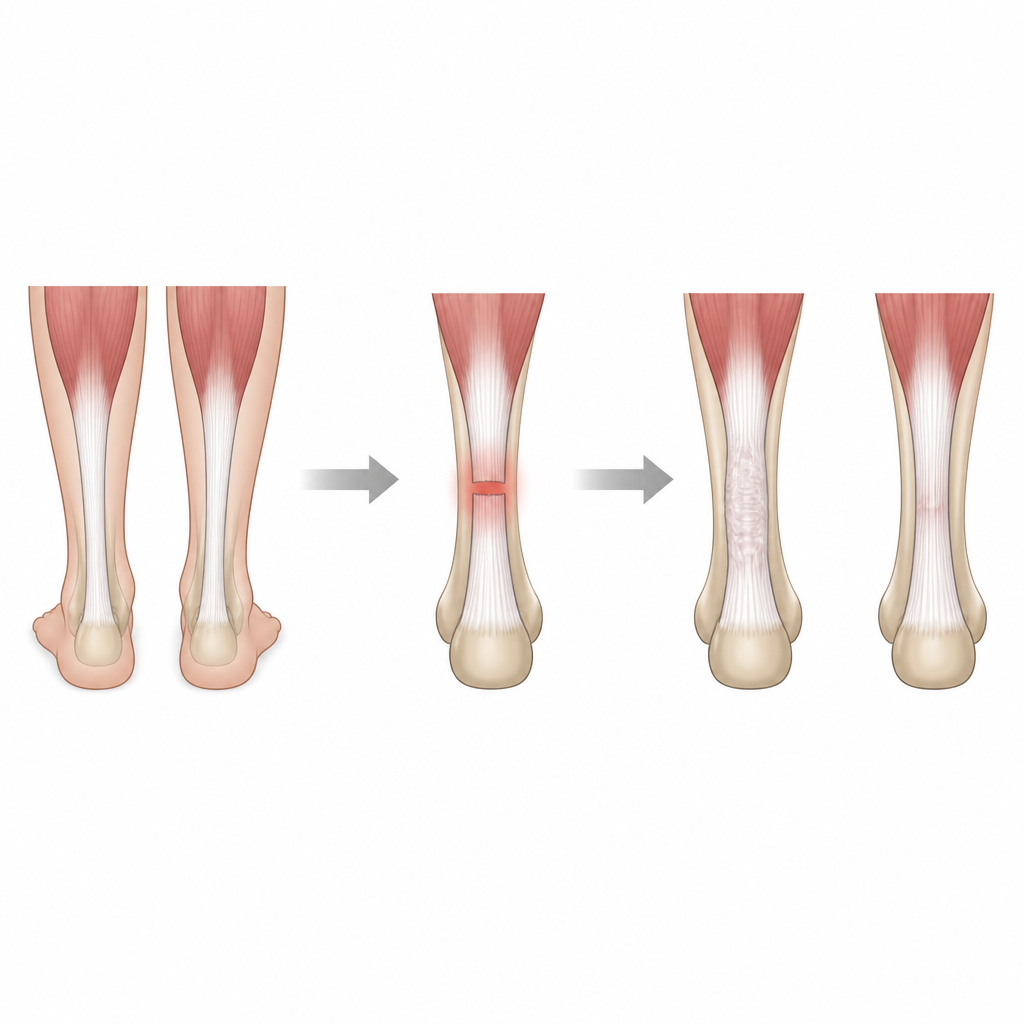
Whether you are a runner, a weekend hiker, or simply someone who climbs stairs, your Achilles tendons do a lot of quiet work. When these tough cords at the back of the ankle are injured, healing often leaves behind stiff, fibrous scar tissue that hurts, limits movement, and can fail again. Scientists are searching for drugs that do more than ease pain, instead guiding the body to rebuild stronger, more flexible tendon tissue. This study explores whether a drug called rapamycin, already used in other diseases, can tilt tendon healing away from scarring and toward healthier repair.
A closer look at tendon damage
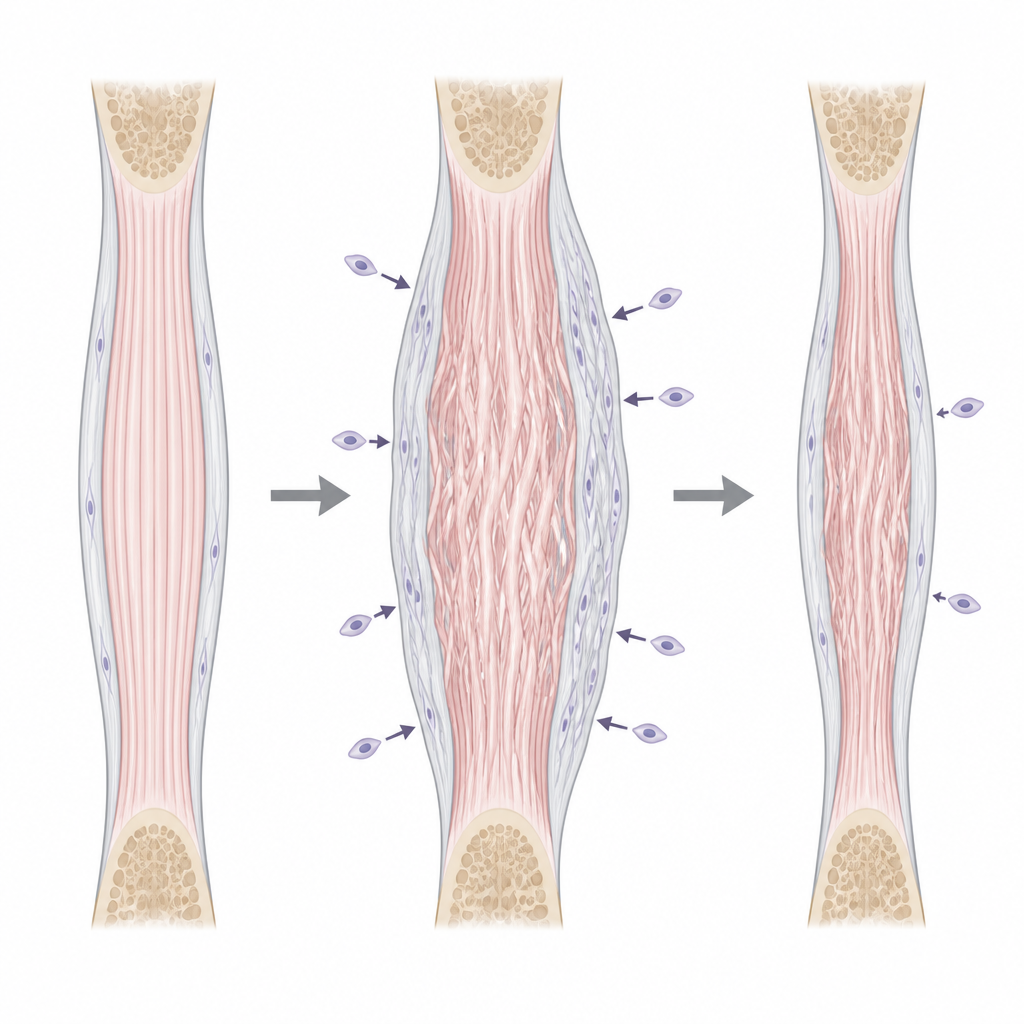
Tendons connect muscle to bone and are built from tightly packed collagen fibers bundled into fascicles, wrapped by a softer outer layer. In common problems such as Achilles tendinopathy, these inner fibers fray and rupture while new cells flood in and lay down disorganized scar. Current treatments largely manage symptoms or rely on surgery, and many people are left with lasting weakness. Because the biological pathway controlled by the protein mTOR helps govern cell growth and scarring in many tissues, the team asked if blocking this pathway with rapamycin could steer tendon cells toward a more orderly, less fibrotic style of healing.
Testing rapamycin in injured rat tendons
Researchers used a well-established rat model in which a fine needle punctures the Achilles tendon to mimic a small core injury. All animals had one injured tendon and one intact tendon for comparison. Half of the rats received daily injections of rapamycin for either one week or three weeks after injury, while the others received a placebo solution. The team then examined the tendons under the microscope, scored how orderly the tissue looked, and measured the presence of key cell markers and collagen types associated with either scar formation or normal structure. They also analyzed tiny vesicles in the blood that carry microRNAs, small molecules that can reflect and possibly influence tissue responses far from the injury site.
Less surface scarring, but core damage remains
When the researchers examined the injured tendons, they found that the central lesions inside the tendon looked much the same with or without rapamycin. The core tissue remained disorganized, and overall healing scores did not improve. However, the outer region surrounding the tendon, called the peritenon, told a different story. Here, rapamycin-treated animals developed less thickening and fibrosis by three weeks than placebo-treated rats. Staining for collagen type III, a hallmark of scar, confirmed that rapamycin reduced this fibrotic buildup mainly around the outside of the tendon, rather than within the central injured zone.
Signals from tendon cells and the bloodstream
To understand how rapamycin was working, the team looked at specific tendon cell markers and genes linked to the mTOR pathway and blood vessel growth. Rapamycin did not broadly change the activity of most of these genes inside the injured tendons, though one marker associated with a particular tendon cell population, known as CD146, increased at the RNA level even as its protein signal in the lesion appeared reduced. In the bloodstream, rapamycin clearly shifted the pattern of several microRNAs packaged in extracellular vesicles, especially one week after injury. Some of these microRNAs have known roles in blood vessel behavior and tissue remodeling, hinting that rapamycin influences the wider healing environment even if the tendon core remains unchanged.
What this means for tendon treatment
Overall, the study shows that this rapamycin dosing schedule helps limit scarring on the outer surface of an injured Achilles tendon but does not rebuild the damaged core tissue during the first three weeks after injury in young adult rats. In other words, rapamycin in this setting is not a simple fix for acute tendon tears. The findings suggest that any benefits of the drug may depend on treatment timing, duration, age, or underlying metabolic health. Future work will explore whether different rapamycin regimens, older animals, or longer follow-up periods can better support deep tendon repair, and whether blood microRNA changes might one day serve as accessible markers to track how tendons respond to therapy.
Citation: Marr, N., Zamboulis, D.E., Beaumont, R.E. et al. Rapamycin reduces peritendinous fibrosis but has a limited effect on intratendinous healing in a rodent Achilles tendon injury model. Sci Rep 16, 15028 (2026). https://doi.org/10.1038/s41598-026-45606-x
Keywords: Achilles tendon, tendon healing, rapamycin, fibrosis, microRNA