Clear Sky Science · en
Effects of single-session anodal transcranial direct current stimulation (tDCS) on cognitive and motor performance in athletes and healthy adults: a systematic review and meta-analysis
Boosting performance by gently charging the brain
Elite sport and fitness training are often framed as a battle of muscle and willpower, but this study asks a different question: what if a small, painless electrical current applied to the scalp could safely give the brain a temporary edge? By pulling together dozens of experiments with athletes and healthy adults, the authors explore whether transcranial direct current stimulation, or tDCS, can sharpen thinking and enhance physical performance in a single session.
What this brain stimulation method is
tDCS delivers a weak, constant current through electrodes placed on the head. In this review, the focus is on anodal stimulation, a setting thought to nudge brain cells into a more responsive state without causing them to fire wildly. Earlier work suggests that this kind of stimulation can subtly reshape how nerve cells communicate, influence supporting cells and blood flow, and even tune brain rhythms seen on EEG. Because the equipment is portable and relatively simple, it has attracted interest from sports scientists looking for legal ways to help competitors squeeze more out of their nervous systems.
How the researchers gathered the evidence
The authors systematically searched major scientific databases for randomized controlled trials published between 2015 and 2025. To be included, studies had to test adults or athletes without neurological disease, use a clearly described tDCS protocol, include a fake (sham) stimulation condition, and report numbers for at least one thinking task or movement test. In total, 33 studies met these strict rules: 13 looked at thinking abilities such as memory, attention, and self-control, and 20 examined physical skills such as strength, jumping power, and endurance. The team then used standard statistical tools to pool the results and check the quality and possible bias of each study.
What happened to thinking skills
When the authors combined all of the thinking tests, a single tDCS session did not reliably improve performance. Tasks measuring working memory, the ability to stop an unwanted response, or attention showed, at best, small and inconsistent gains. Some individual experiments did find that certain people became faster or more accurate, but when viewed as a whole, the evidence suggested no clear, immediate boost in mental function for either athletes or non-athletes. The results across studies varied widely, hinting that differences in task difficulty, brain target area, and individual brain states may all influence who benefits and who does not.
What happened to muscles and movement
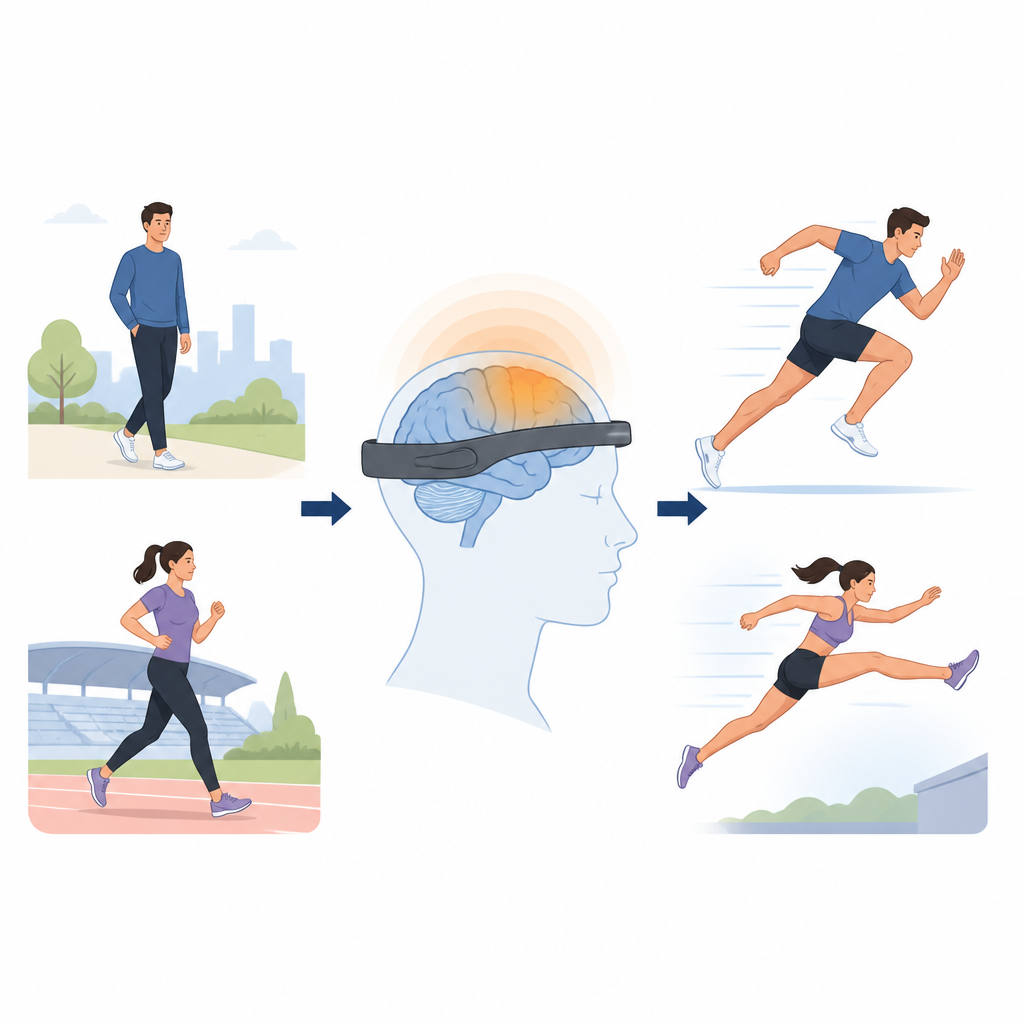
The story was different for physical performance. Across 20 motor studies, a single tDCS session was linked to noticeable improvements in tasks that depend strongly on the brain’s ability to drive muscles. The largest effects appeared in strength tests, such as squeezing or lifting at maximum effort, followed by explosive actions like jumps. Endurance measures, like cycling or running until exhaustion, improved more modestly. When the researchers split the data by group, athletes stood out: they showed large and consistent gains, while healthy but non-trained adults showed only small changes. This pattern supports the idea that a well-practiced nervous system, shaped by years of training, may be especially ready to respond to extra neural “tuning.”
Why dose and timing matter
The review also probed how stimulation settings influenced outcomes. Protocols using currents of about 2 milliamps or higher tended to produce stronger effects on movement than weaker currents. Likewise, sessions lasting 20 minutes or more were more likely to yield clear performance gains than shorter ones. Very long sessions showed the biggest effects but also the greatest uncertainty, partly because fewer studies used these settings. Overall, the findings suggest that there may be a useful window of intensity and duration that boosts muscle-related performance without guaranteed benefits for the mind.
What this means for athletes and everyday users
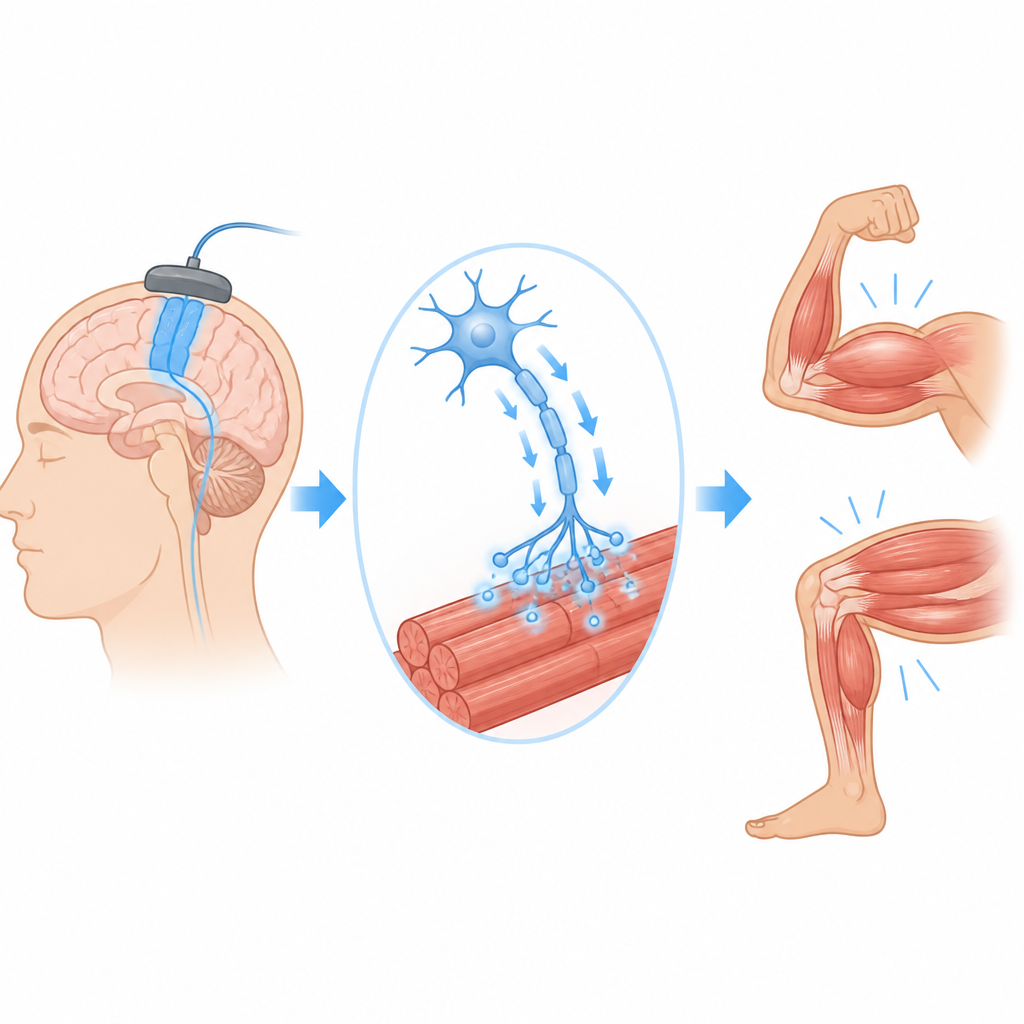
For coaches, athletes, and curious exercisers, this meta-analysis offers both promise and caution. On the one hand, a single bout of anodal tDCS appears capable of meaningfully enhancing strength and power, particularly in trained competitors whose brains and muscles are already finely tuned. On the other hand, the same session does little for short-term thinking skills, and the size of the physical boost varies from person to person and from study to study. Until scientists better understand who responds, which brain regions to target, and how often stimulation can be used safely, tDCS should be viewed as a still-experimental aid rather than a guaranteed shortcut to peak performance.
Citation: Yi, X., Wu, H., Lin, S. et al. Effects of single-session anodal transcranial direct current stimulation (tDCS) on cognitive and motor performance in athletes and healthy adults: a systematic review and meta-analysis. Sci Rep 16, 15442 (2026). https://doi.org/10.1038/s41598-026-45549-3
Keywords: transcranial direct current stimulation, athletic performance, motor performance, brain stimulation, strength and power