Clear Sky Science · en
Enhanced nutritional quality, digestibility, and flavor of grasshopper through solid state fermentation
A new way to turn insects into everyday food
Feeding a growing world without overwhelming the planet has scientists searching for protein sources that are nutritious, climate‑friendly, and appealing to eat. Grasshoppers are already enjoyed as snacks in many cultures, but turning them into ingredients for breads, snacks, or meat alternatives requires better flavor, easier digestion, and lower allergy risk. This study explores whether the same fungi used to make miso and tempeh can gently "pre‑digest" grasshoppers, transforming them into a milder, more versatile food ingredient.
Why grasshoppers and kitchen molds make a good team
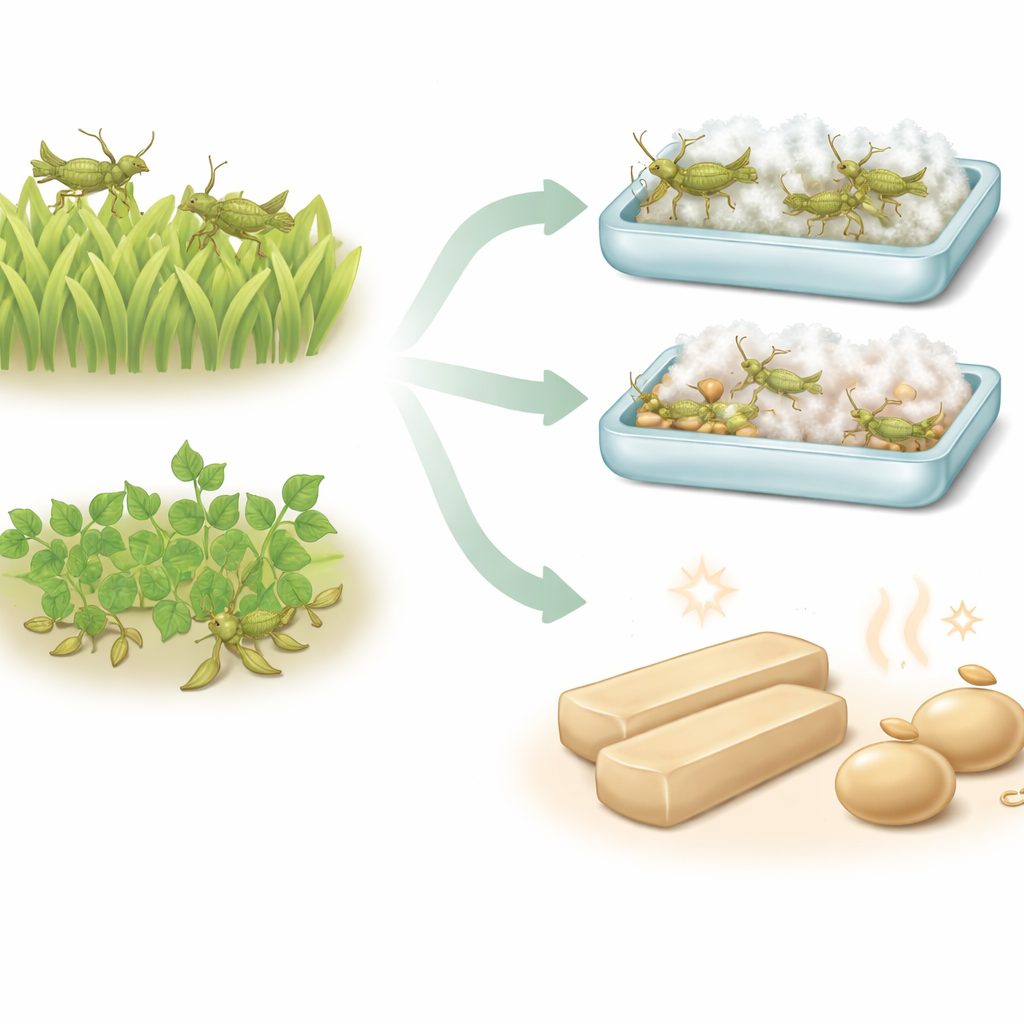
Edible insects pack high‑quality protein, healthy fats, vitamins, and minerals, and they can be raised with far less land, water, and greenhouse gas emissions than cattle or pigs. Grasshoppers, in particular, are already accepted in parts of Asia, Africa, and Latin America. The challenge is to make them attractive to a much wider public. The research team borrowed a time‑tested trick from Asian food traditions: solid‑state fermentation using two fungi, Aspergillus oryzae (central to koji and miso) and Rhizopus oryzae (used in tempeh). These fungi are expert at releasing enzymes that break down proteins, fats, and carbohydrates in grains and soybeans, building umami flavor and improving digestibility. The question was whether they could do the same for grasshoppers.
Two fermentation paths from insect to ingredient
The scientists tested two main approaches. In one, they fermented a paste made from 100% freeze‑dried grasshoppers, adding either pure Aspergillus or pure Rhizopus spores. In the other, they mixed grasshopper paste with fermented soy starters—koji or tempeh—creating a 50:50 grasshopper–soy blend. All mixtures were incubated for 15 days in warm, humid conditions, similar to traditional miso or tempeh production. Over time the researchers tracked changes in acidity, color, moisture, fat and protein content, amino acids, protein digestibility, aroma compounds, and even the detailed protein makeup using advanced mass spectrometry. Each system was always compared with its own fresh, unfermented starting point.
From tough proteins to gentle, flavorful building blocks
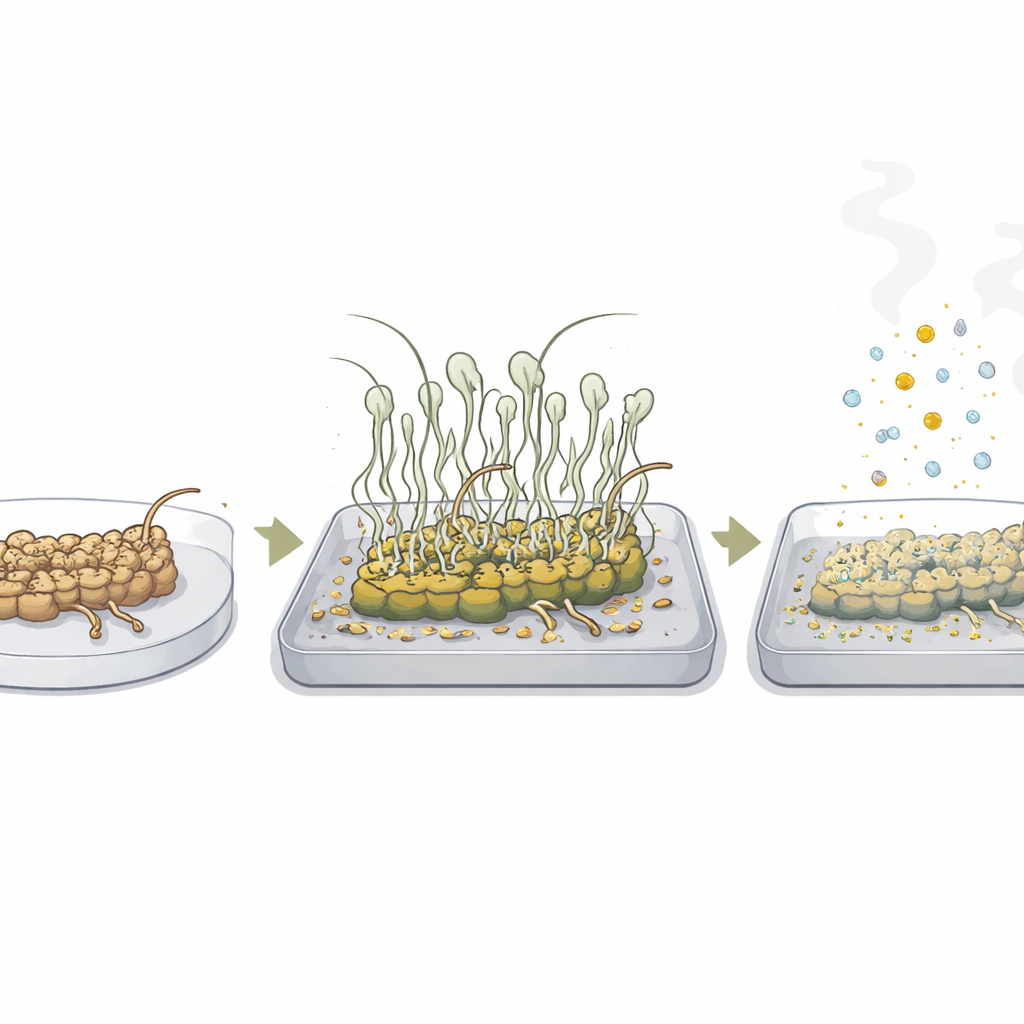
As fermentation progressed, the fungi produced large amounts of protein‑cutting enzymes that sliced long, tightly folded insect proteins into smaller pieces and individual amino acids. In the pure grasshopper system, the degree of protein breakdown jumped from about 1% to more than 16%, and free amino acids such as glutamate, alanine, and branched‑chain amino acids rose three‑ to five‑fold. Simulated digestion tests showed that these fermented samples were significantly easier to digest, and their overall protein quality score improved. In both the insect‑only and insect‑soy setups, fatty acids were reshaped, moisture and water activity dropped to more stable levels, and the color shifted—whitening with surface fungal growth or browning when soy was present. Detailed protein analysis revealed that many rigid structural proteins and known allergen‑related proteins declined in abundance, suggesting that fermentation may soften texture and reduce potential allergenicity.
Flavor makeover through natural chemistry
Beyond nutrition, the fungi also rewired the aroma profile of grasshopper paste. Gas‑chromatography measurements identified nearly seventy volatile compounds that became more abundant or appeared only after fermentation. Many came from amino acid and fat breakdown, forming families of pyrazines, esters, alcohols, ketones, and sulfur‑containing molecules. These are the same types of compounds that give roasted nuts, grilled foods, and fermented soy their savory, nutty, and complex aromas. Treatment‑specific “fingerprints” emerged: for example, certain sulfur and indole notes were stronger in some Rhizopus fermentations, pointing to the need for recipe tuning, but overall the process moved the smell of grasshopper paste toward more familiar and attractive food aromas.
What this means for future foods
Put simply, the study shows that the friendly molds behind miso and tempeh can transform grasshoppers into a more digestible, potentially less allergenic, and better‑tasting ingredient. By breaking down tough proteins, remodeling fats, and generating layers of savory aroma, fungal fermentation helps convert an already sustainable protein source into something closer to a mainstream food component. The work suggests that we can adapt traditional fermentation know‑how, not just to beans and grains, but also to insect biomass, opening a path toward new, climate‑friendly foods that are both nutritious and enjoyable to eat.
Citation: Okehie, I.D., Riaz, M.N., Pillai, S. et al. Enhanced nutritional quality, digestibility, and flavor of grasshopper through solid state fermentation. Sci Rep 16, 10918 (2026). https://doi.org/10.1038/s41598-026-45428-x
Keywords: edible insects, grasshopper protein, fermentation, sustainable food, fungal cultures