Clear Sky Science · en
Optimization of a wet-cell electrolyzer for efficient oxyhydrogen (HHO) gas production: a step towards sustainable green energy solutions
Turning Water into a Cleaner Fuel
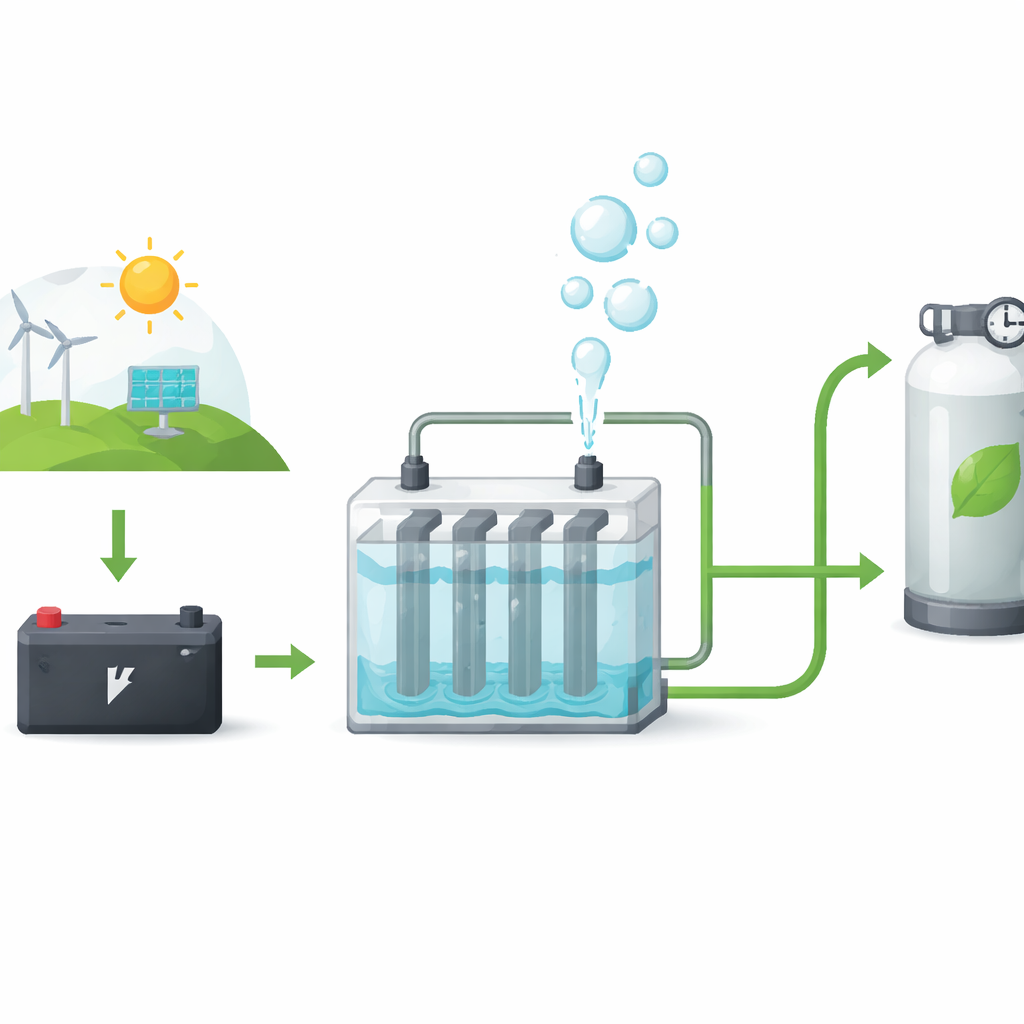
As the world looks for ways to cut pollution without giving up the convenience of engines, one intriguing idea is to make a clean, on‑demand fuel directly from water. This study explores a compact device that does exactly that: it splits water into a burnable mix of hydrogen and oxygen gas using electricity. The researchers set out to redesign this kind of generator so it wastes far less power as heat, producing more usable gas from every unit of electricity. Their findings point to a practical route toward greener fuel boosters for vehicles and small‑scale energy systems.
Why Splitting Water Matters
Water is made of hydrogen and oxygen, and hydrogen burns cleanly, forming water again instead of sooty exhaust. But hydrogen rarely exists alone in nature, so it must be extracted using energy. One way is electrolysis: passing electric current through water so it breaks apart into gases. When the gases are kept together in their ideal two‑to‑one ratio, the mix is called oxyhydrogen or HHO. It is colorless, flammable, and can be fed into engines to improve combustion. The catch is efficiency. If most of the electrical power turns into unwanted heat instead of gas, the process becomes too costly and wasteful. This study tackles that problem by carefully shaping and arranging the metal plates where the reaction happens and tuning the liquid that carries the current.
Building Four Versions of the Same Idea
The team built four nearly identical water‑splitting devices, named Alpha, Beta, Gamma, and Delta. All of them used stainless‑steel plates stacked in a tank filled with water containing a small amount of potassium hydroxide, a salt that helps electricity move through the liquid. The plates were wired so some acted as positive and negative terminals, while others sat between them as “neutral” surfaces that still helped the reaction along. The researchers varied three things: how big each plate was, how many positive and negative plates they used, and whether the liquid contained a lower or higher amount of the dissolved salt. They then powered each device from a 12‑volt battery and measured gas output, power draw, temperature, and overall efficiency over time.
What Made the Best Design Stand Out
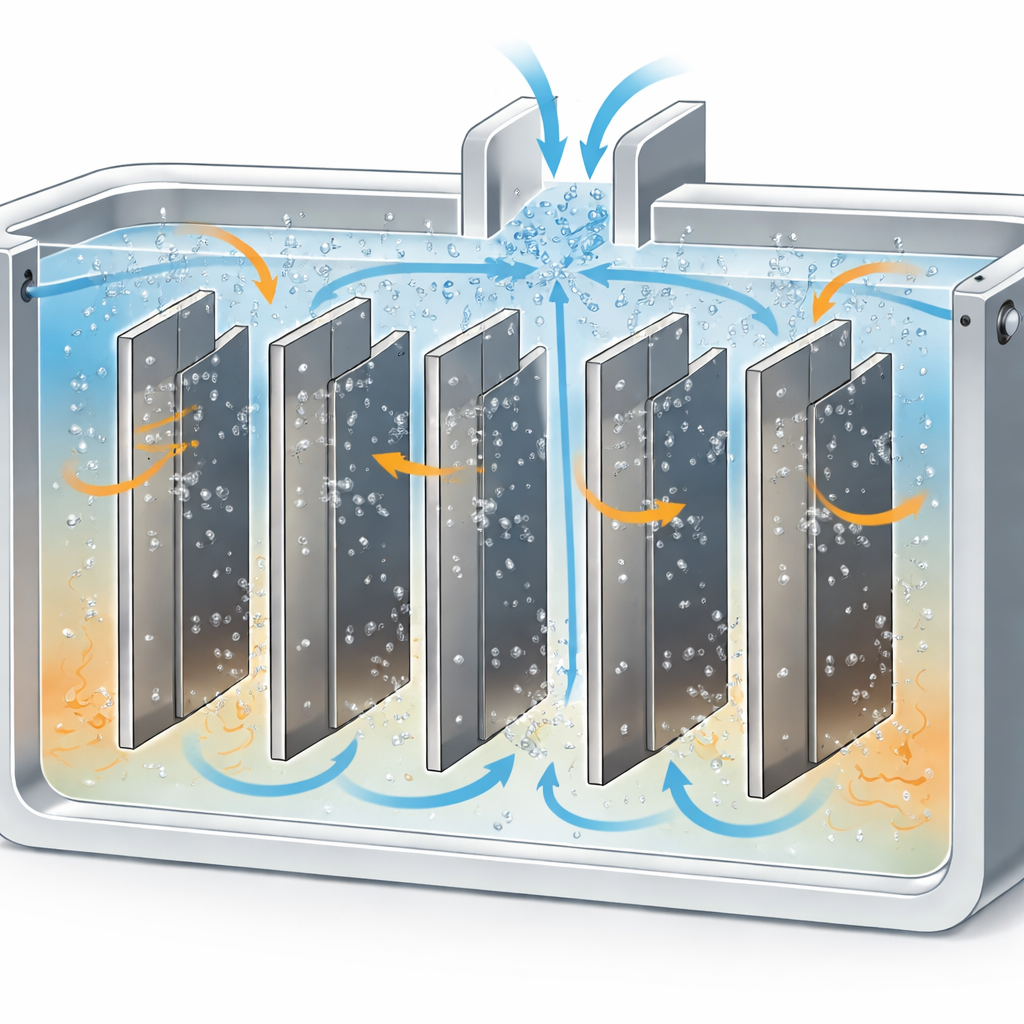
One design, Delta, clearly outperformed the others. It used larger plates (twice the side length of the smaller versions), more powered plates, and a generous volume of electrolyte solution. This combination spread the electrical current over a wider surface, which eased the microscopic barriers that normally slow the reaction and reduced hot spots. The larger tank of liquid also acted like a thermal buffer, soaking up heat and preventing runaway temperature rise. As a result, Delta produced about 3.4 liters of HHO gas per minute while reaching an overall efficiency close to 60%, meaning that a large share of the incoming electrical energy left in the chemical bonds of hydrogen rather than as waste heat. Smaller designs, especially Beta, ran hotter and wasted much of their input power warming the liquid instead of making gas.
Balancing Power, Heat, and Gas Output
Another key knob was the strength of the salt solution. Doubling the potassium hydroxide concentration made it easier for electric charges to move through the water, so every design drew more current and produced more gas. But there was a trade‑off: extra current also meant more heating. Only the larger‑plate designs, Gamma and especially Delta, managed to turn this higher current into better overall efficiency rather than excess warmth. They did so by combining low electrical resistance, plenty of active surface where bubbles could form and detach, and enough liquid volume to carry away heat. In these cases, as current rose, the amount of energy needed per cubic meter of gas actually went down, a sign that the device was operating in a sweet spot where design and operating conditions reinforced each other.
From Lab Device to Real‑World Helper
The researchers compared their best design with earlier HHO generators and with commercial hydrogen systems. The Delta setup matched or beat many previously reported devices while remaining simple and relatively inexpensive, with parts costing just over two hundred dollars. Unlike industrial hydrogen plants, it produces a ready‑to‑burn hydrogen‑oxygen mix at low pressure, making it suitable for direct use as a combustion enhancer in engines or as a way to store surplus solar power locally. The study shows that careful attention to plate size, arrangement, and liquid chemistry can turn a basic water‑splitting cell into a much more efficient tool. To a layperson, the bottom line is that smart geometry and good thermal control can turn an everyday substance—water—into a more practical, cleaner partner for future energy systems.
Citation: Fayez, N.H.A., Qenawy, M., Mustafa, H.M.M. et al. Optimization of a wet-cell electrolyzer for efficient oxyhydrogen (HHO) gas production: a step towards sustainable green energy solutions. Sci Rep 16, 12374 (2026). https://doi.org/10.1038/s41598-026-45418-z
Keywords: oxyhydrogen, wet-cell electrolyzer, green hydrogen, water electrolysis, engine fuel enhancer