Clear Sky Science · en
Japanese cancer survivors have a higher risk of fragility fractures over ten years
Why bone health matters after cancer
More people in Japan are living longer after cancer, but survival is only part of the story. As the population ages, staying mobile and independent becomes crucial. This study asks a simple but important question: do Japanese adults who have had cancer face a higher chance of breaking fragile bones—such as the hip, spine, or wrist—over the next decade than people who have never had cancer? The answer can guide how doctors and patients plan long‑term care to protect everyday movement and quality of life. 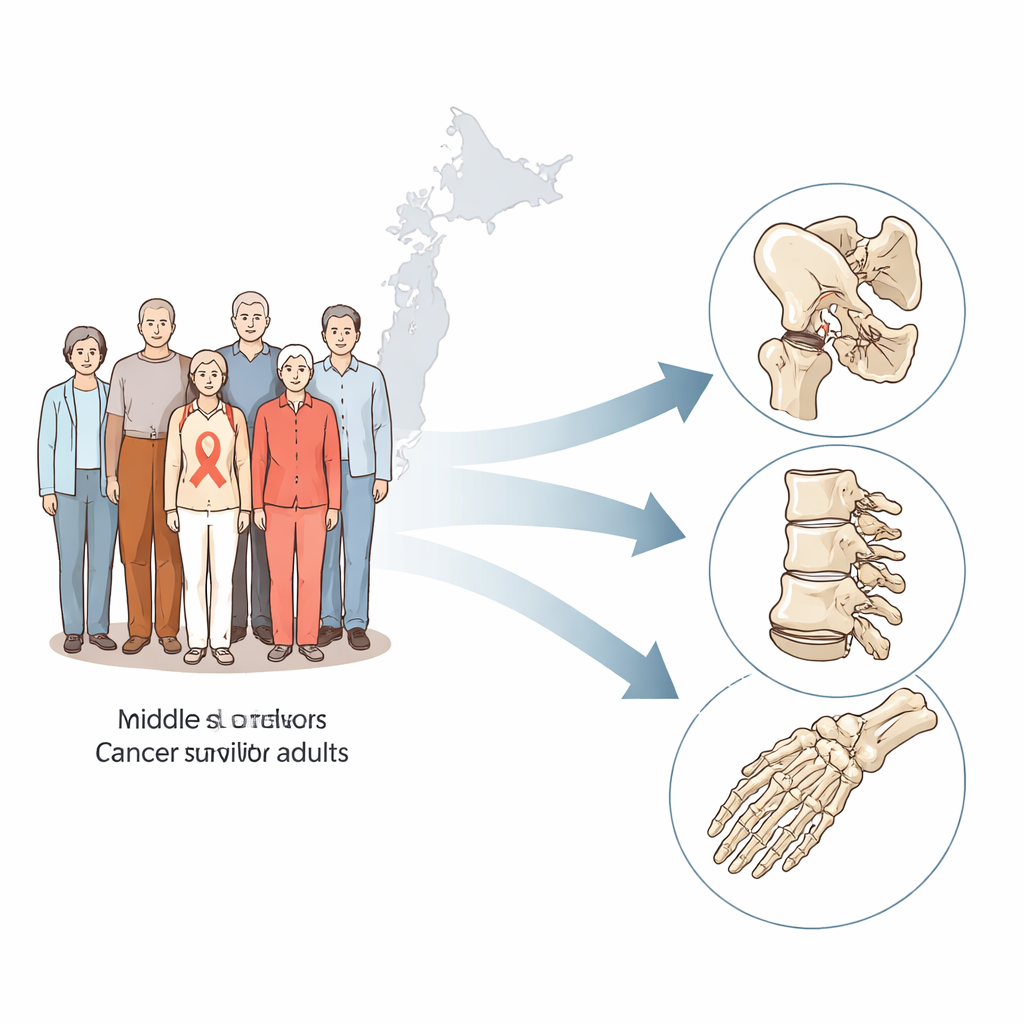
Looking at thousands of adults over ten years
The researchers followed 10,330 men and women aged 40 to 69 years living in Saga City, Japan, for about ten years. At the start, participants reported whether they had ever been diagnosed with cancer, along with details about their health, lifestyle, and medical history. Ten years later, they were asked about any fractures they had sustained from simple falls—such as slipping while walking—focusing on three key sites known to be related to bone weakness: the hip, the spine (compression fractures in the back), and the wrist near the hand. Medical records were used to confirm both the cancer diagnoses during follow‑up and these specific types of fractures.
Tracking cancer status as it changes
A key feature of this work is that the team treated cancer as something that can change over time, rather than a fixed “yes or no” label at the beginning. Some people entered the study cancer‑free but developed cancer later; their “time before cancer” was counted as time without cancer, and their “time after cancer” was counted as time with cancer. This approach, using a time‑updated statistical model, helps avoid exaggerating the fracture risk by fairly including the years before diagnosis. The analysis also adjusted for many other influences on bone health, including age, sex, body weight, menopause, other illnesses, smoking, alcohol use, physical activity, and medicines such as steroids or osteoporosis drugs.
Who faced the greatest fracture risk?
Over the ten years, 386 participants experienced one or more of the fragile fractures of interest. Overall, people with cancer had about a 40 percent higher risk of these fractures than those who never had cancer, even after accounting for other risk factors. The increase was especially clear in men. Those with ongoing or recent cancer—described as having “active” cancer—had a still higher fracture risk than those whose cancer was in the past. People who had more than one separate primary cancer also showed an elevated risk compared with those who had either a single cancer or none. When the team looked by cancer type, survivors of stomach, kidney, and blood‑related cancers stood out as having notably higher chances of fractures. 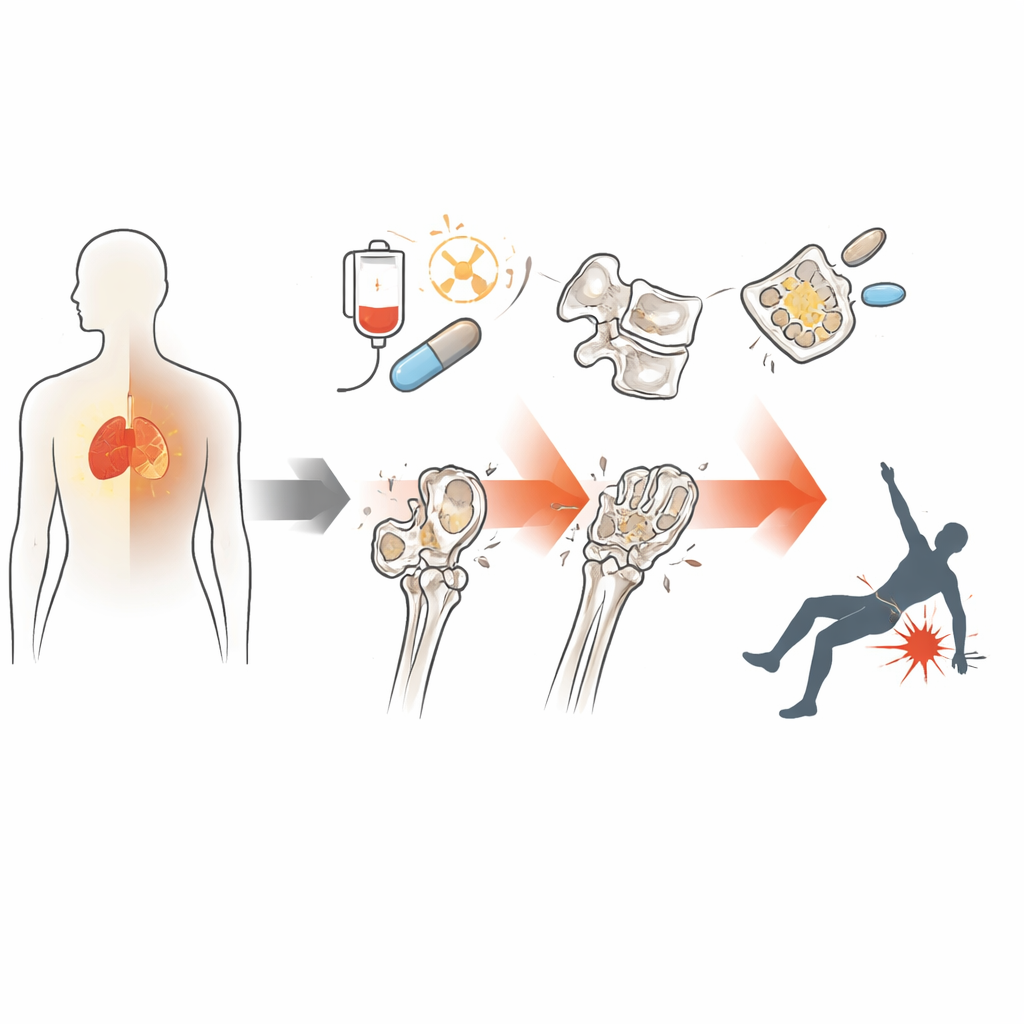
Where the body was most vulnerable
The pattern of fractures gave further clues. Cancer survivors were more likely than others to have fractures in the spine and wrist, while the difference for hip fractures was small and uncertain. When the researchers repeated the analysis in a way that counted people as “having cancer” only from the time of diagnosis onward, the estimated risks became even higher—but the general message stayed the same: cancer and its treatments are linked to weaker bones. The authors suggest several reasons, including surgery that alters nutrient absorption (as in stomach surgery), treatments that disrupt hormones important for bone strength, drugs such as steroids, and the biological effects of the cancer itself on how bone is broken down and rebuilt.
What this means for patients and clinicians
In simple terms, this study shows that Japanese adults who have had cancer—especially those with active disease, multiple cancers, or certain cancer types—are more likely to suffer serious fractures over the following decade than people who never had cancer. Because broken hips, spines, and wrists can lead to pain, loss of independence, and even earlier death, the findings argue that bone protection should be a routine part of cancer follow‑up care. Measures such as checking bone strength, encouraging safe exercise, improving diet and vitamin intake, and using bone‑strengthening medicines where appropriate could help cancer survivors maintain mobility and quality of life as they age.
Citation: Kobayashi, T., Nishida, Y., Furukawa, T. et al. Japanese cancer survivors have a higher risk of fragility fractures over ten years. Sci Rep 16, 14566 (2026). https://doi.org/10.1038/s41598-026-45389-1
Keywords: cancer survivorship, osteoporosis, fragility fractures, Japan, aging population