Clear Sky Science · en
Etiology, clinical profile, management, and outcomes of intestinal obstruction in a resource-limited setting: a prospective study
When the Gut Comes to a Halt
Most of us take it for granted that food moves smoothly through our intestines. But when that motion suddenly stops, the result can be life-threatening. This study from a major hospital in Yemen looks closely at what happens when the gut becomes blocked, who is most at risk, and how outcomes differ when care is delayed—offering a window into emergency surgery in a resource-limited setting that has lessons for health systems worldwide.
What It Means When the Bowel Is Blocked
Intestinal obstruction occurs when the normal stream of digested material can no longer pass through the bowels. Sometimes the problem is a physical roadblock, such as scar tissue, a bulging hernia, or a tumor squeezing the intestine shut. In other cases, the bowel simply stops moving, acting like a paralyzed tube. Either way, trapped gas and fluid cause swelling, pain, vomiting, and an inability to pass stool or gas. If the blood supply to the intestine is cut off, the affected segment can die, leak its contents, and quickly lead to overwhelming infection.
A Year Inside a Busy Emergency Hospital
To understand this problem in a real-world setting, the researchers followed 105 patients aged 10 and older who arrived with intestinal obstruction at Al-Thawra Modern General Hospital in Sana’a, Yemen, over the course of 2024. Most patients were in their working years, between 19 and 60, and more than two-thirds were men. Doctors recorded how long people had been sick before coming to the hospital, what symptoms and examination findings they had, what tests were done, how they were treated, and what happened to them during their hospital stay and the month after discharge.
The Main Culprits Behind the Blockage
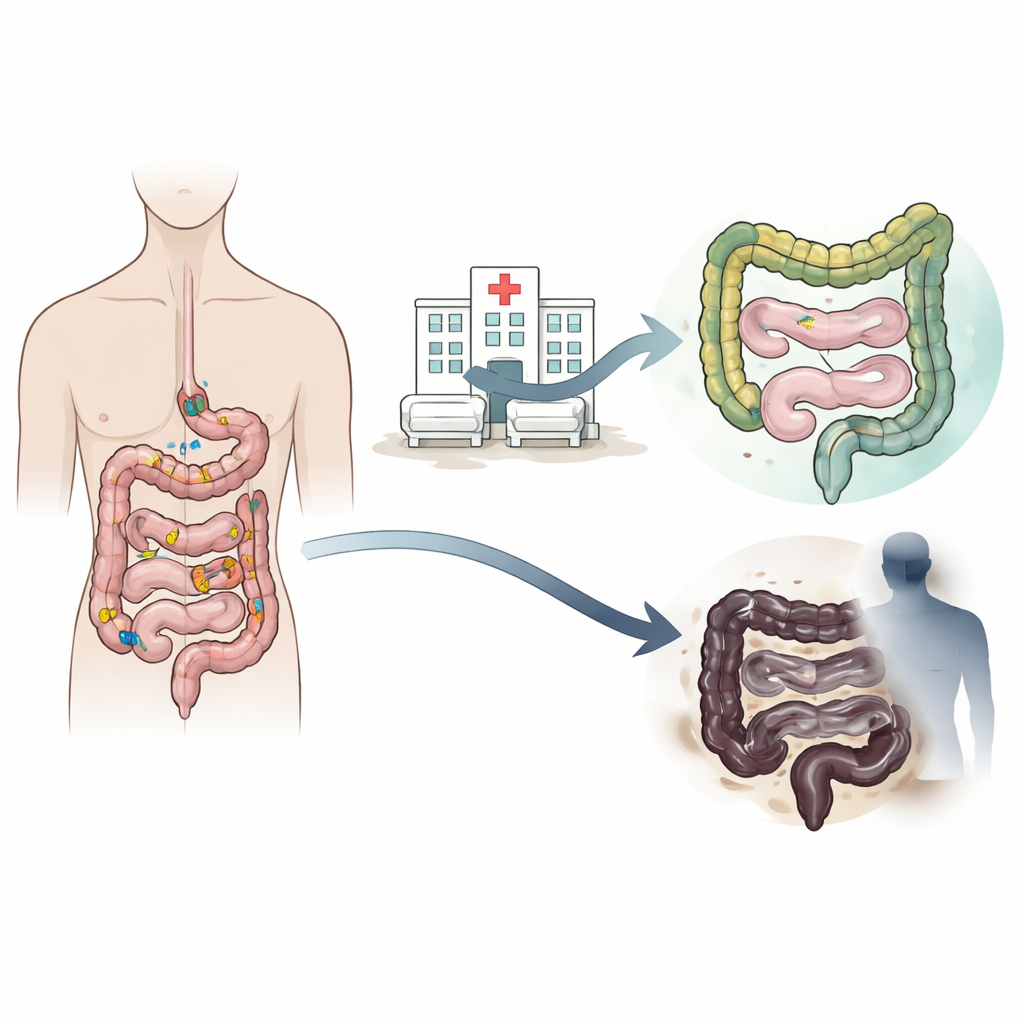
About seven out of ten patients had a mechanical blockage—an actual physical obstruction—while the rest had a form of temporary bowel paralysis called ileus, often triggered by infection in the abdomen. Two causes topped the list for mechanical obstruction: internal scar bands (adhesions) and cancers of the bowel, each responsible for about one in five cases. Hernias, where intestine slips through a weak spot in the abdominal wall, and twisting of the gut (volvulus) were also common. Many ileus cases were linked to “secondary peritonitis,” a serious inflammation caused by a burst appendix, perforated ulcer, or similar leak inside the abdomen. Alarmingly, many patients with blockage from cancer had symptoms for more than two weeks before seeking care, suggesting that warning signs were missed or help was out of reach.
How Doctors Diagnose and Treat in a Limited-Resource Setting
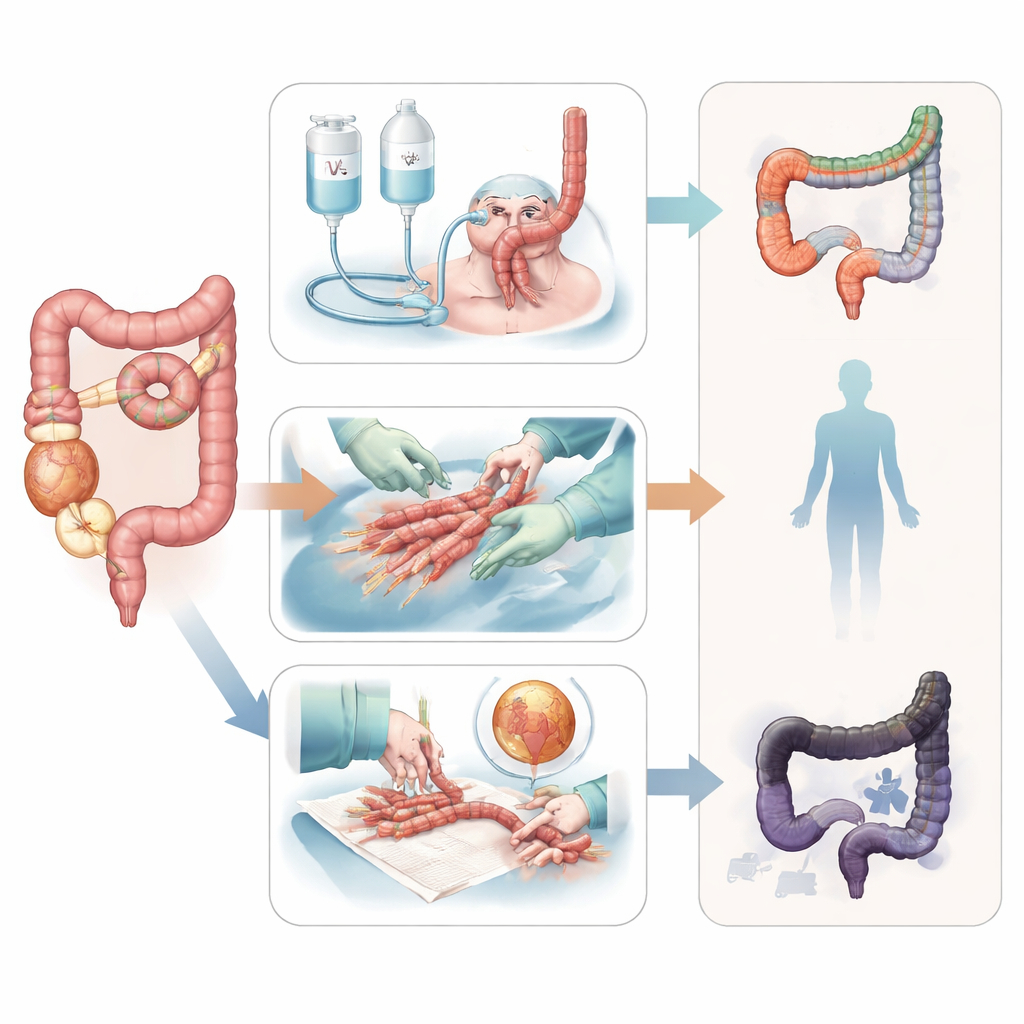
Because high-tech imaging is expensive and not always available, the hospital relied heavily on simple X-rays to look for telltale fluid levels and swollen loops of bowel. Ultrasound and CT scans were used more selectively, for example when a mass, twisted bowel, or lack of blood flow was suspected. A small number of patients with suspected large-bowel cancer also had colonoscopy to directly view the growth. Initial treatment for almost everyone included fluids, correction of salts in the blood, and a tube to drain the stomach. Only about one in seven patients improved with non-surgical care alone. Most required an operation, ranging from cutting away scar bands and repairing hernias to removing diseased segments of bowel, sometimes ending with a temporary or permanent stoma on the abdominal wall to divert stool.
Who Survived—and Who Did Not
Four out of five patients recovered without major problems, but nearly one in five developed serious complications such as wound breakdown, leakage of bowel contents through abnormal openings, or lung and kidney issues. Overall, roughly one in seven patients died in the hospital. Deaths were most common in people whose bowel had lost its blood supply (mesenteric ischemia), those with cancers blocking the gut, and those with trapped hernias. Older age and long delays before arriving at the hospital sharply increased the risk of dying; among patients who had been sick for more than two weeks, almost half did not survive. A small number of patients had a repeat blockage within 30 days, mainly from adhesions or recurring cancer.
Why Early Action and Prevention Matter
For a general reader, the key message is both sobering and hopeful. Intestinal obstruction is common, dangerous, and often strikes people in the prime of life, especially where medical resources are stretched thin. Yet many of the worst outcomes in this study were linked to problems that can be prevented or caught earlier: avoidable scar tissue, long-neglected hernias, and cancers discovered only when they finally blocked the gut. The authors argue that timely surgery for hernias, efforts to reduce internal scarring, earlier cancer screening, and rapid treatment when symptoms of obstruction first appear could save many lives, particularly in low-resource settings similar to Yemen.
Citation: Alashaby, S.S., Gilan, W.M., Al-absy, T.A. et al. Etiology, clinical profile, management, and outcomes of intestinal obstruction in a resource-limited setting: a prospective study. Sci Rep 16, 10962 (2026). https://doi.org/10.1038/s41598-026-45380-w
Keywords: intestinal obstruction, bowel blockage, emergency surgery, colorectal cancer, resource-limited hospitals