Clear Sky Science · en
Stability of salivary cortisol, alpha-amylase, and chromogranin A after long-term storage
Why spit can help us study stress
Spitting into a small tube may not sound like science, but saliva has become a powerful window into how our bodies respond to stress. Because it is easy and painless to collect, saliva is widely used in research and in large sample banks that store specimens for future studies. This article asks a simple but important question for anyone using such banks: if saliva sits in a very cold freezer for years, do key stress signals inside it still tell a trustworthy story?
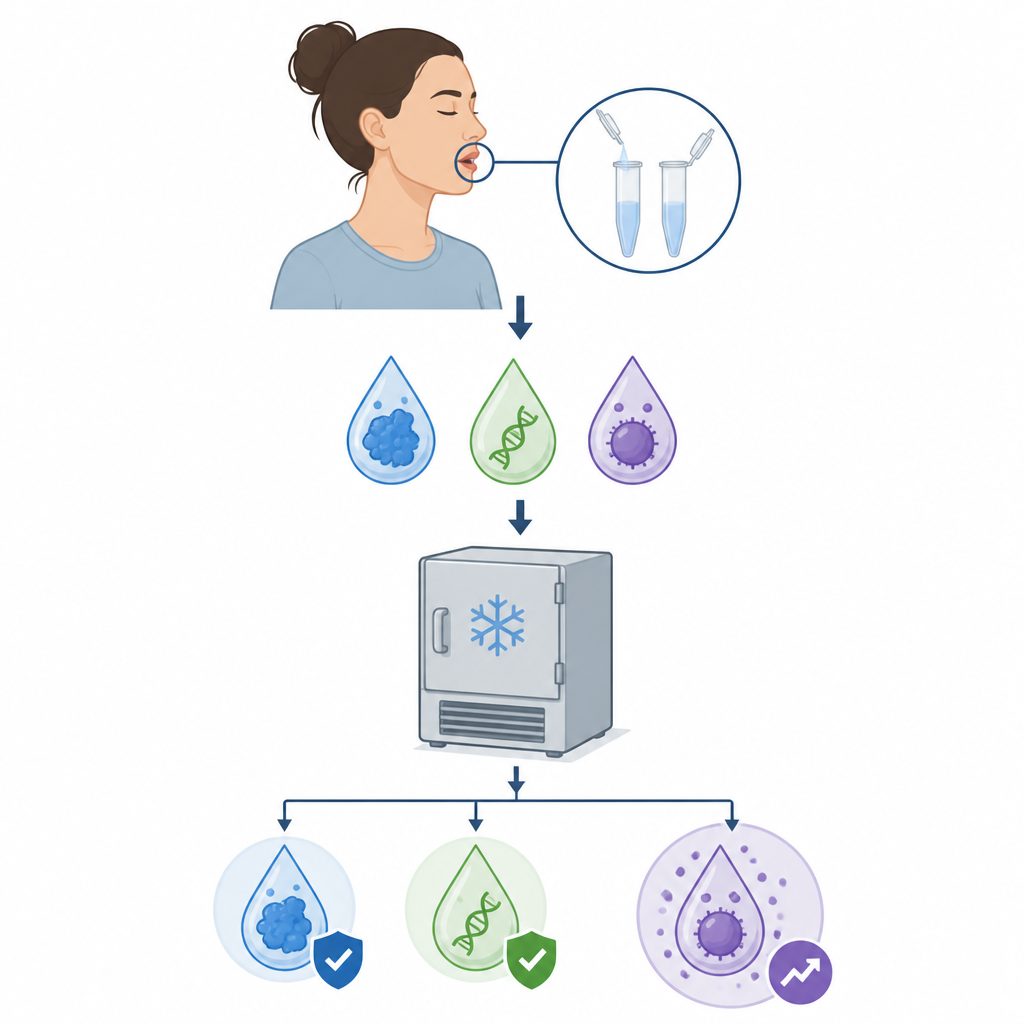
Three stress clues hiding in saliva
The researchers focused on three common stress markers found in saliva. One is cortisol, a hormone often called the body’s main stress signal. A second is alpha amylase, an enzyme linked to the “fight or flight” branch of the nervous system. The third is chromogranin A, a protein released along with other stress chemicals. All three are used to track how people react to pressure, from exams to illness, and are often measured from saliva stored in freezers for later analysis.
Putting frozen samples to the test
To see how well these stress clues survive over time, the team drew on saliva samples from earlier studies. Volunteers had given saliva between 2019 and 2020, and the samples were quickly cooled and then kept in a deep freezer at about minus 80 degrees Celsius. The scientists had already measured the three markers soon after collection. In 2023 they thawed the same samples and measured the markers again, comparing the new readings with the originals after three, three and a half, or four years of storage.
What stayed steady and what changed
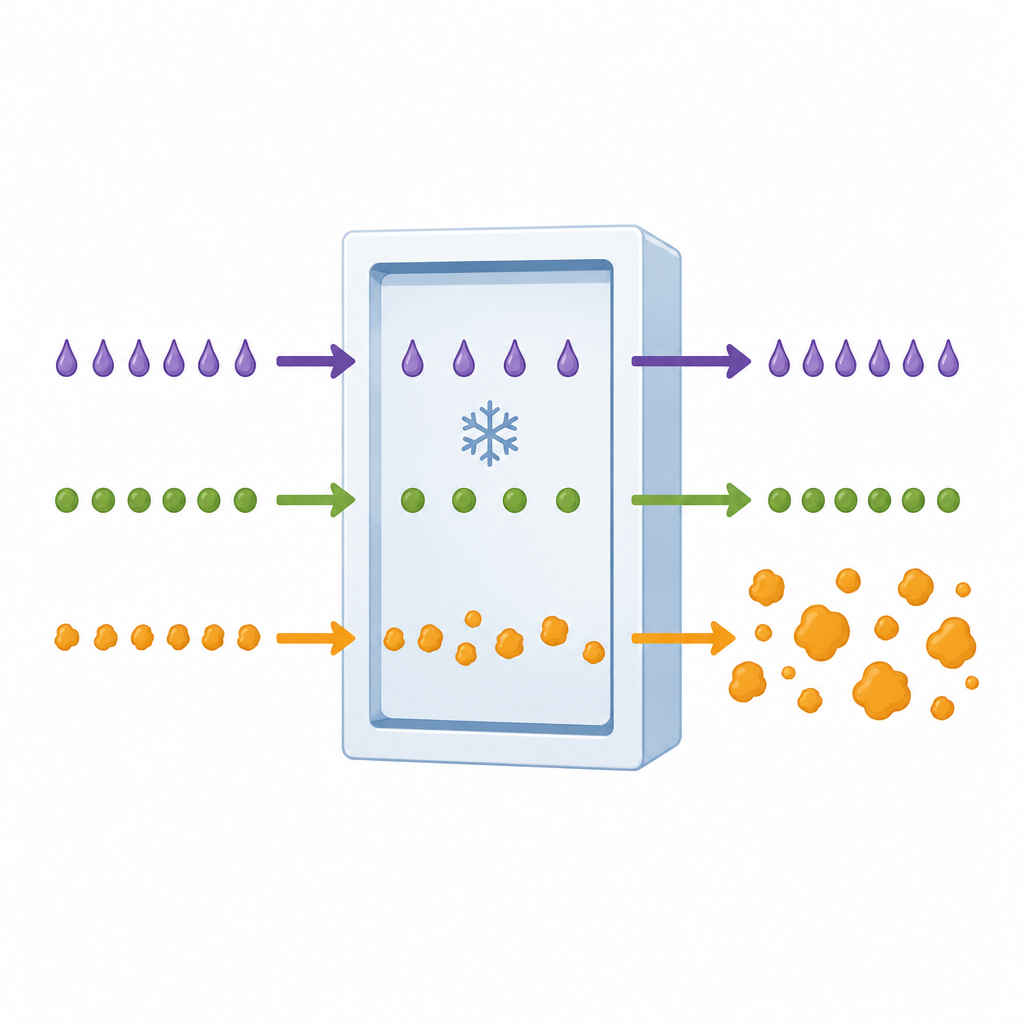
The results were reassuring for two of the markers. Cortisol levels in the remeasured samples were almost the same as before, and small ups and downs were within the expected range of normal test variation. Alpha amylase behaved in a similar way, even after four years on ice. Both markers also showed similar spread in values before and after storage, suggesting that the long freeze did not add extra noise to the data. In contrast, chromogranin A told a different story. Its levels were much higher after three to three and a half years in the freezer, and the readings varied more from person to person, hinting at changes in the protein or in how the test detects it.
Why the unstable marker matters
The surprising rise in chromogranin A over time raises several questions. It is not yet clear whether the protein itself breaks into pieces that the test still picks up, whether storage changes the sample in some other way, or whether small details in how the test is carried out play a larger role. The study also showed how switching test kits between the first and later measurements can make chromogranin A readings hard to compare. Together, these points suggest that using this marker from long-stored samples may give a distorted picture of stress levels, unless methods are carefully checked and storage times are kept short.
What this means for future saliva studies
For anyone planning or using saliva banks, the message is clear. Cortisol and alpha amylase in saliva can be stored for up to four years in a very cold freezer with little loss of reliability, making them strong choices for long-term projects and later reanalysis. Chromogranin A, however, appears unstable over such periods, so it is safer to measure it soon after collection or to treat old results with caution. By sorting out which stress signals last and which do not, this work helps ensure that future studies based on frozen spit rest on solid ground.
Citation: Pachimsawat, P., Jantaratnotai, N. Stability of salivary cortisol, alpha-amylase, and chromogranin A after long-term storage. Sci Rep 16, 14975 (2026). https://doi.org/10.1038/s41598-026-45312-8
Keywords: saliva, stress biomarkers, cortisol, biobanking, sample storage