Clear Sky Science · en
Prevalence and predictors of hypotension on hospital arrival in traumatic brain injury: a prehospital HEMS cohort study
Why this matters for everyday emergencies
When someone suffers a serious blow to the head—after a car crash, a fall, or a sports accident—what happens in the minutes before they reach the hospital can shape the rest of their life. This study looks at one crucial factor in that narrow window: low blood pressure on the way to the hospital. Using data from helicopter emergency missions across Germany, the researchers ask how often people with traumatic brain injury arrive at the hospital with dangerously low blood pressure, and which patients are most at risk. Their answers help clarify where emergency teams should focus their efforts to protect the injured brain.
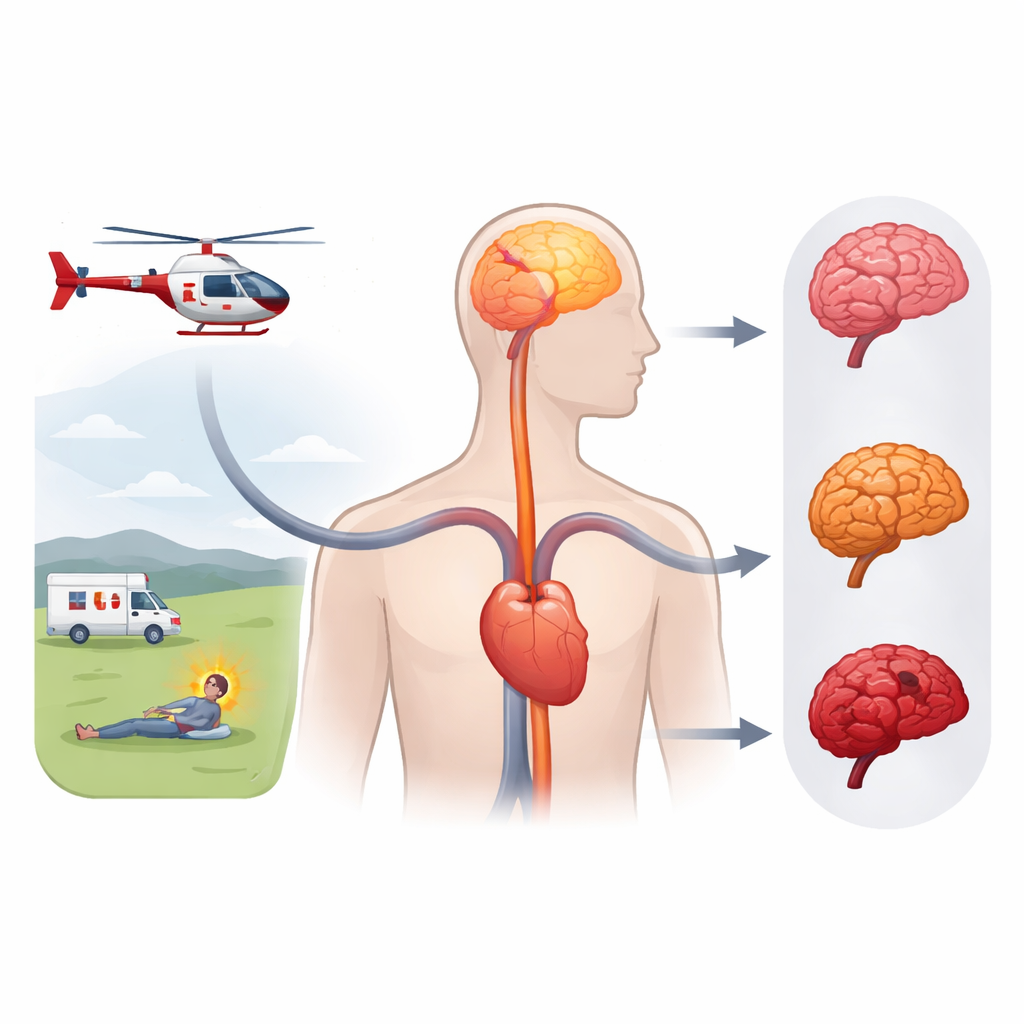
Head injuries and the hidden danger of low pressure
A traumatic brain injury is not just about the initial blow. After the first impact, the brain is vulnerable to a second wave of damage if it does not receive enough blood and oxygen. Low blood pressure starves the brain of what it needs to heal and has long been linked to higher death rates, worse thinking and movement, and longer intensive care stays. Even a single dip in pressure during rescue can tip the balance toward poorer outcomes. Guidelines increasingly suggest keeping blood pressure higher than once thought, but real-world data on how well this is achieved in the prehospital setting—especially in Germany—have been sparse.
Who was studied in the helicopter missions
The team examined more than 20,000 adults with documented traumatic brain injury who were treated by physician-staffed helicopter emergency medical services between 2017 and 2021. These missions typically involve severely injured or critically ill patients where advanced care is needed quickly. For each patient, rescuers had recorded blood pressure at two points in time: when the helicopter team first made contact and again on arrival at the hospital. The researchers defined dangerous low pressure as a systolic blood pressure below 90 millimeters of mercury, following current German rules. They also grouped injuries by how badly the brain was affected—mild, moderate, or severe—and by whether the head injury was isolated, accompanied by other injuries, or part of full-blown multiple trauma affecting several body regions.
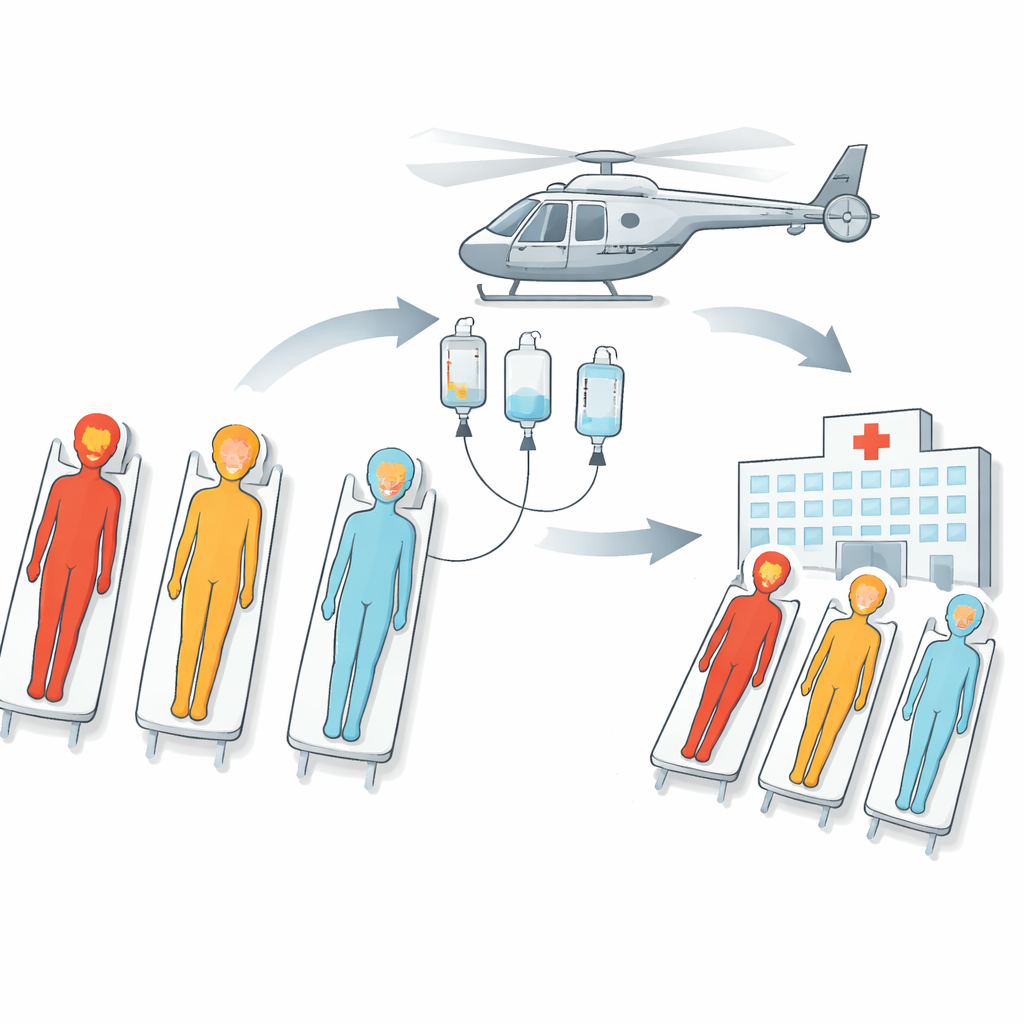
How often low pressure persisted to hospital arrival
Across all patients, arriving at the hospital with very low blood pressure was relatively rare, happening in about 3 out of every 100 cases. But this average hides striking differences between groups. Among patients whose pressure was already low when the helicopter team first met them, more than a third still had dangerously low pressure on arrival at the hospital. By contrast, only about 1 in 70 patients with normal initial pressure arrived with low pressure. The risk was highest in those with severe brain injury combined with major trauma to other parts of the body; in this subgroup, nearly 1 in 5 reached the hospital with dangerously low pressure. Even when the researchers used a higher cut-off—reflecting newer international thinking that the brain may need more pressure than previously believed—the same high‑risk groups stood out.
What the patterns reveal about high-risk patients
To separate out the effects of different factors, the researchers used statistical modeling. The clearest signal was that low pressure at first contact was by far the strongest warning sign that a patient would remain unstable. Severe brain injury itself, and being part of a major multi‑system trauma, each added further risk. Age had a smaller but measurable influence, while sex did not matter. The study could not track how long low pressure lasted or what specific treatments were given, and it did not include hospital outcomes such as survival or long‑term brain function. Even so, the consistent pattern across tens of thousands of missions strongly suggests that certain patients are both harder to stabilize and more likely to arrive in danger.
What this means for future emergency care
For non-specialists, the core message is straightforward: in serious head injuries, early blood pressure matters a great deal, and some patients are clearly more vulnerable than others. Adults with severe brain injury who are already hypotensive when the helicopter team arrives—especially if they are also badly injured elsewhere—form a high‑risk group in whom every effort should be made to quickly and firmly stabilize circulation before reaching the hospital. While this study cannot prove which exact treatments work best, it gives emergency services and policymakers a clearer target population for improving protocols, testing higher blood pressure goals, and refining the use of fluids, medications, and blood products. In short, keeping the pressure up early may spare the brain from a preventable second hit.
Citation: Macaitė, A., Scholl, L.S., Schwietring, J. et al. Prevalence and predictors of hypotension on hospital arrival in traumatic brain injury: a prehospital HEMS cohort study. Sci Rep 16, 9648 (2026). https://doi.org/10.1038/s41598-026-45208-7
Keywords: traumatic brain injury, prehospital care, helicopter emergency medical services, hypotension, polytrauma