Clear Sky Science · en
Current status survey and risk factor analysis of metabolic dysfunction-associated steatotic liver disease among adolescents in Hainan Province
Why Teen Liver Health Matters
Most parents worry about their teenagers’ grades, screen time, or sleep—but probably not their liver. Yet a quiet condition called metabolic dysfunction-associated steatotic liver disease (MASLD), often described as a “fatty liver,” is becoming more common in young people worldwide. This study looks closely at teenagers in Hainan Province, China, to find out how many already have this problem and which everyday habits—what they eat, how active they are, how they sleep—make a difference. The findings offer practical clues for families, schools, and communities that want to protect children’s long-term health.
Taking a Snapshot of Teen Health
Researchers surveyed and examined 1,611 middle- and high-school students aged 10 to 19 from eight schools in five cities across Hainan. They used a stratified random sampling method to make sure the sample reflected different regions and backgrounds. Each participant filled out a detailed questionnaire about family situation, daily routines, diet, and sleep, and then received an abdominal ultrasound and a liver fat measurement with a FibroScan device. Using international diagnostic guidelines, the team checked whether students had excess fat in the liver together with signs of metabolic strain, such as overweight or abnormal blood pressure or blood sugar.
How Common Is Fatty Liver in Hainan Teens?
The study found that 7.64 percent of the adolescents met the criteria for MASLD—roughly one in thirteen teenagers. This rate is somewhat higher than the average reported in other parts of China, suggesting that teen liver health is a particular concern in Hainan. Most participants had a normal body weight, but about 14 percent were overweight or obese, and these heavier teens were much more likely to have fatty liver. The researchers also graded how severe the liver fat was and observed that some lifestyle and family factors not only influenced whether MASLD appeared but also how advanced it became.
Habits That Harm and Habits That Help
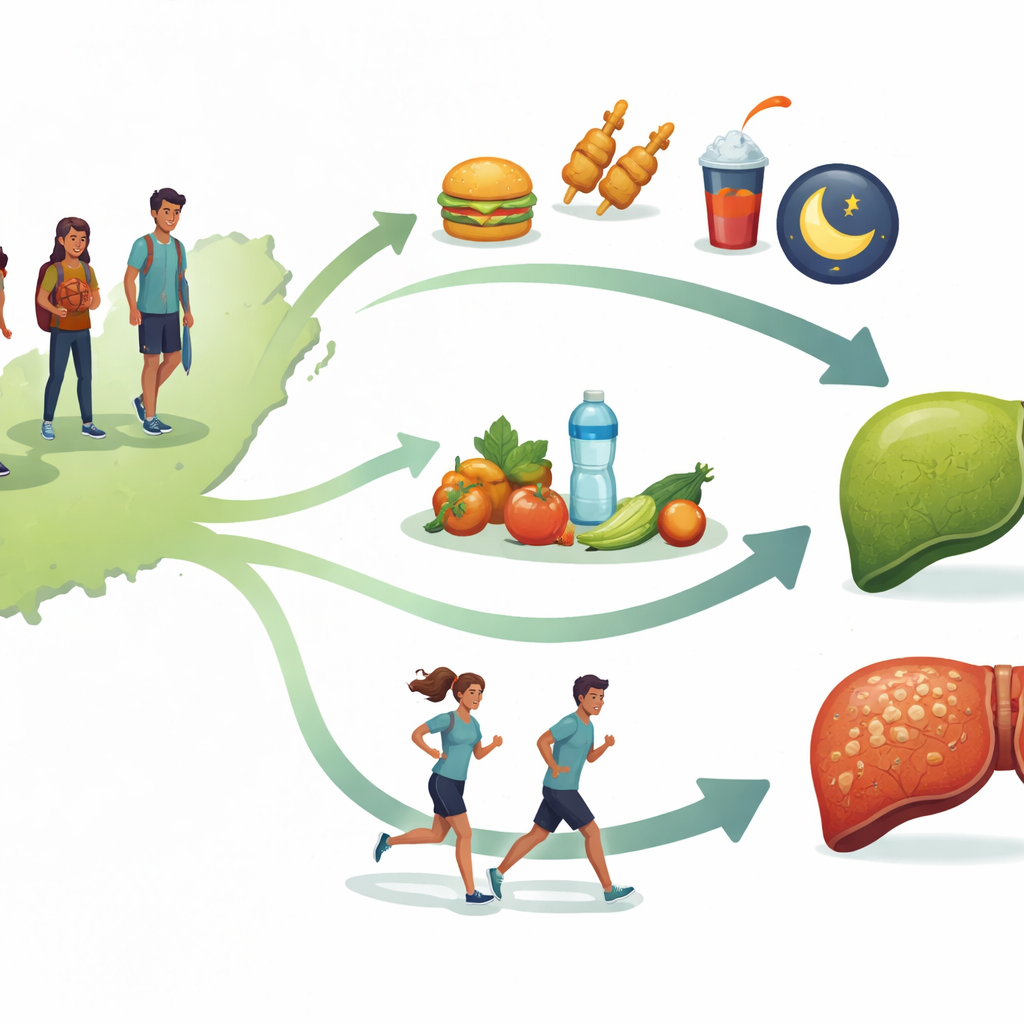
By comparing many possible influences, the team identified a handful of powerful risk factors. Teens who were overweight or obese had substantially higher odds of MASLD. Having close relatives with fatty liver also greatly increased risk, pointing to a strong genetic or shared-family component, though the authors caution that the estimate may be exaggerated because relatively few teens reported such a history. Eating out often—at restaurants or with takeout—was another major risk factor, as was frequently eating processed meats like hot dogs and grilled skewers. These foods tend to be rich in fat, salt, and calories. In contrast, regularly eating fresh vegetables and fruits clearly lowered the chance of fatty liver and also appeared to reduce the likelihood that mild disease would progress to more serious stages.
The Hidden Role of Sleep, Exercise, and Stress
Beyond food and body weight, the study explored how daily routines interact. Patterns such as staying up late, exercising less than three times per week, and having sleep disorders were associated with MASLD in simpler comparisons. When the researchers ran more complex models, they saw hints that some combinations—like often dining out together with staying up late, or being overweight together with little exercise—might work together to push risk higher, though the statistical certainty of these interactions was limited. Interestingly, students who described themselves as introverted showed higher rates in basic analyses, raising the possibility that mood, stress, and social habits indirectly influence liver health through activity levels and coping behaviors.
What This Means for Families and Schools
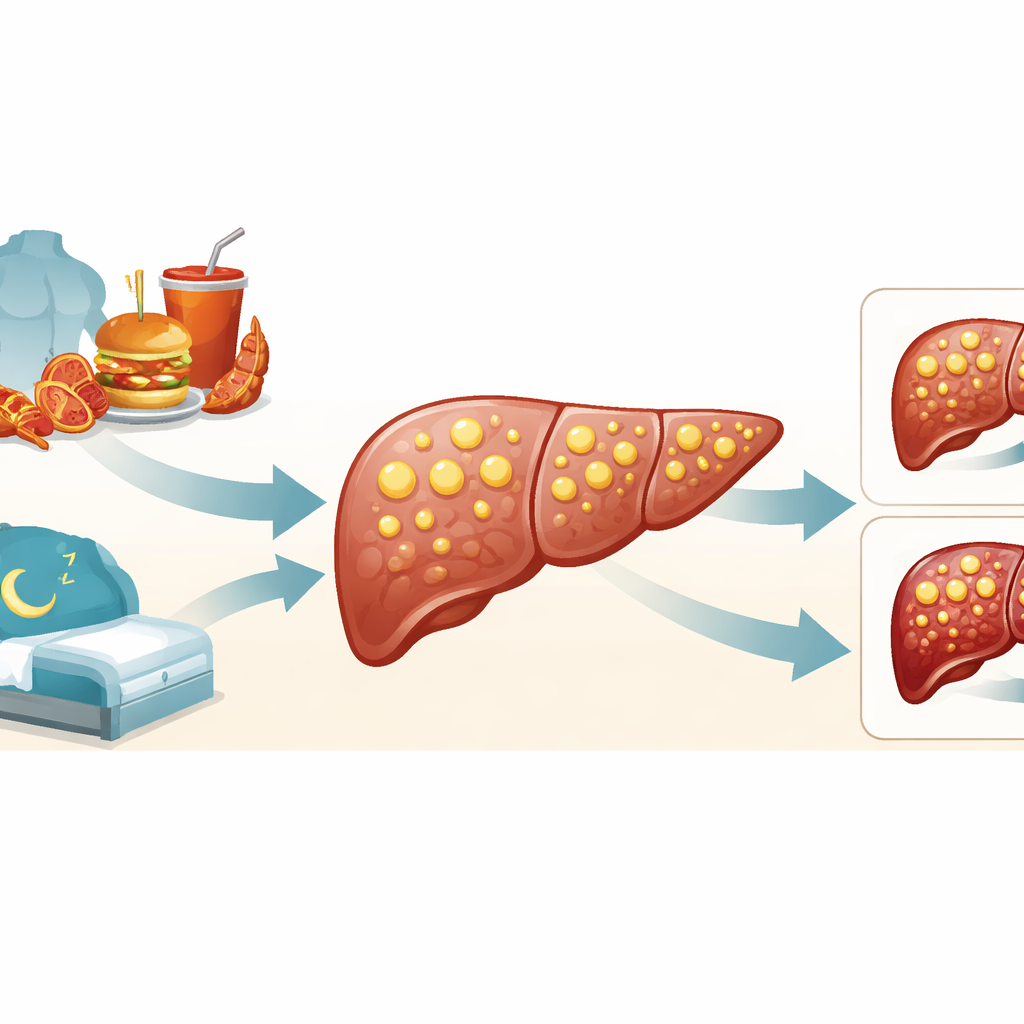
To a layperson, the takeaway is straightforward: a teenager’s liver quietly tracks the balance between calories in, calories out, and restorative rest. In this large Hainan survey, fatty liver was not rare, and it clustered in teens who were heavier, frequently ate rich, processed foods away from home, and came from families with a history of similar liver problems. On the positive side, something as simple as a daily habit of eating fruits and vegetables was linked to meaningful protection. The authors argue that preventing MASLD in young people will require coordinated efforts—healthier school meals, family guidance on cooking and sleep, chances for regular exercise, and public education about liver health. Taking these steps early could help today’s teenagers avoid serious liver and heart problems decades down the road.
Citation: Zhou, S., Zhang, D., Chen, R. et al. Current status survey and risk factor analysis of metabolic dysfunction-associated steatotic liver disease among adolescents in Hainan Province. Sci Rep 16, 9551 (2026). https://doi.org/10.1038/s41598-026-45173-1
Keywords: adolescent fatty liver, MASLD, diet and liver health, childhood obesity, Hainan youth health