Clear Sky Science · en
Oral mucosal scrapes capture cancer associated microRNA expression consistent with histopathology
Why a gentle mouth scrape could matter
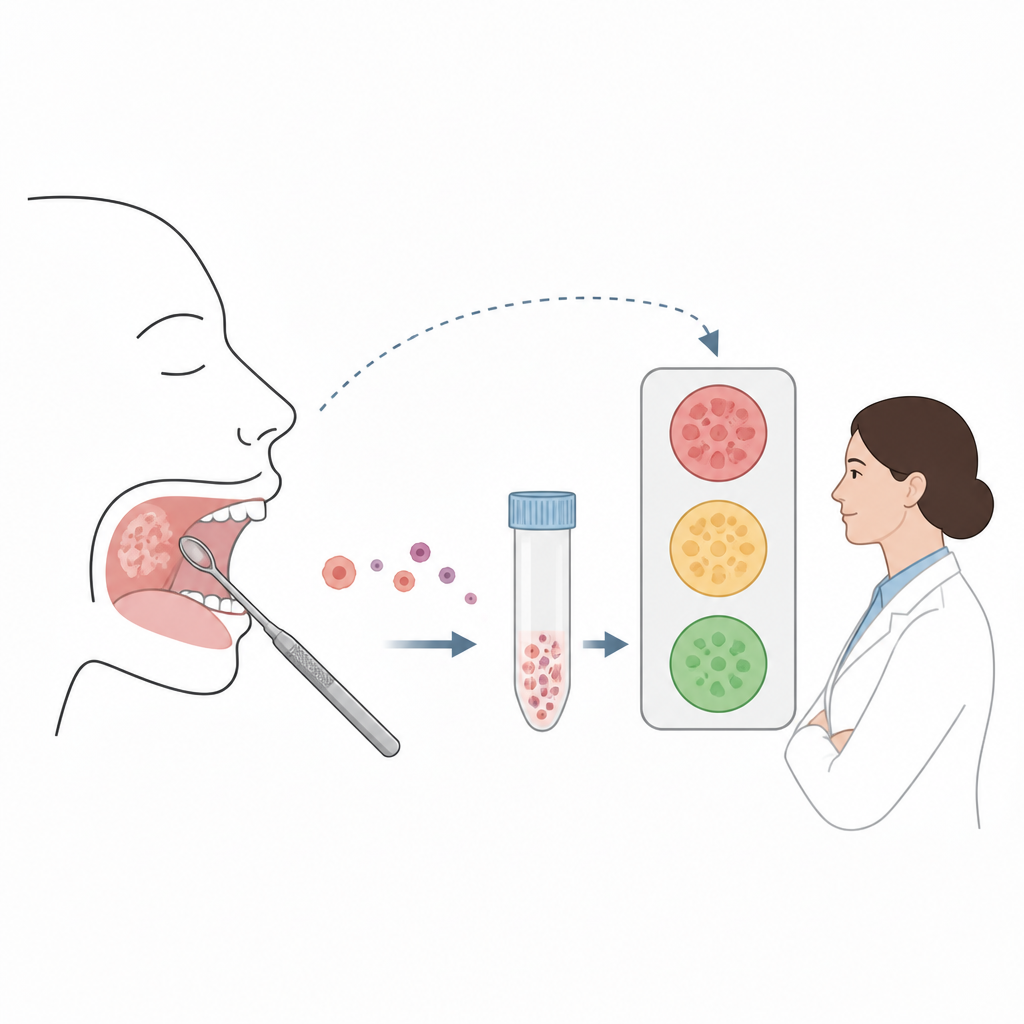
Many people develop white or red patches inside the mouth that may or may not turn into cancer. Today, doctors rely on taking small pieces of tissue for lab study, a procedure that is uncomfortable and only samples a tiny part of the affected area. This study explores whether a simple scrape of the mouth lining can reveal tiny molecules linked to cancer risk, offering a quicker, less invasive way to decide who really needs a biopsy and who can be safely monitored.
Trouble spots in the mouth
Oral squamous cell carcinoma is a common mouth cancer that often starts from long standing problem areas such as white patches, red patches, or rough thickened spots. These are called oral potentially malignant disorders, and only a small fraction will ever become cancer. The challenge for dentists and oral medicine specialists is telling the dangerous patches from the harmless ones early enough to act, without putting every patient through repeated surgical biopsies of large or multiple areas.
From tissue cutting to gentle scraping
The current gold standard, histopathology, requires cutting out a piece of tissue and studying its structure under a microscope. This provides detailed information, but only from the exact spot that was sampled and only at one moment in time. Choosing that spot is partly a matter of clinical judgment, and different pathologists can sometimes grade the same sample differently. Oral scrapes, in contrast, are collected by gently running a small curette over the lesion surface to gather surface and slightly deeper cells. The procedure is quick, causes less discomfort than vigorous brushing, yields many cells, and can be repeated over time at different sites in the mouth.
Tiny molecular messengers as risk signals
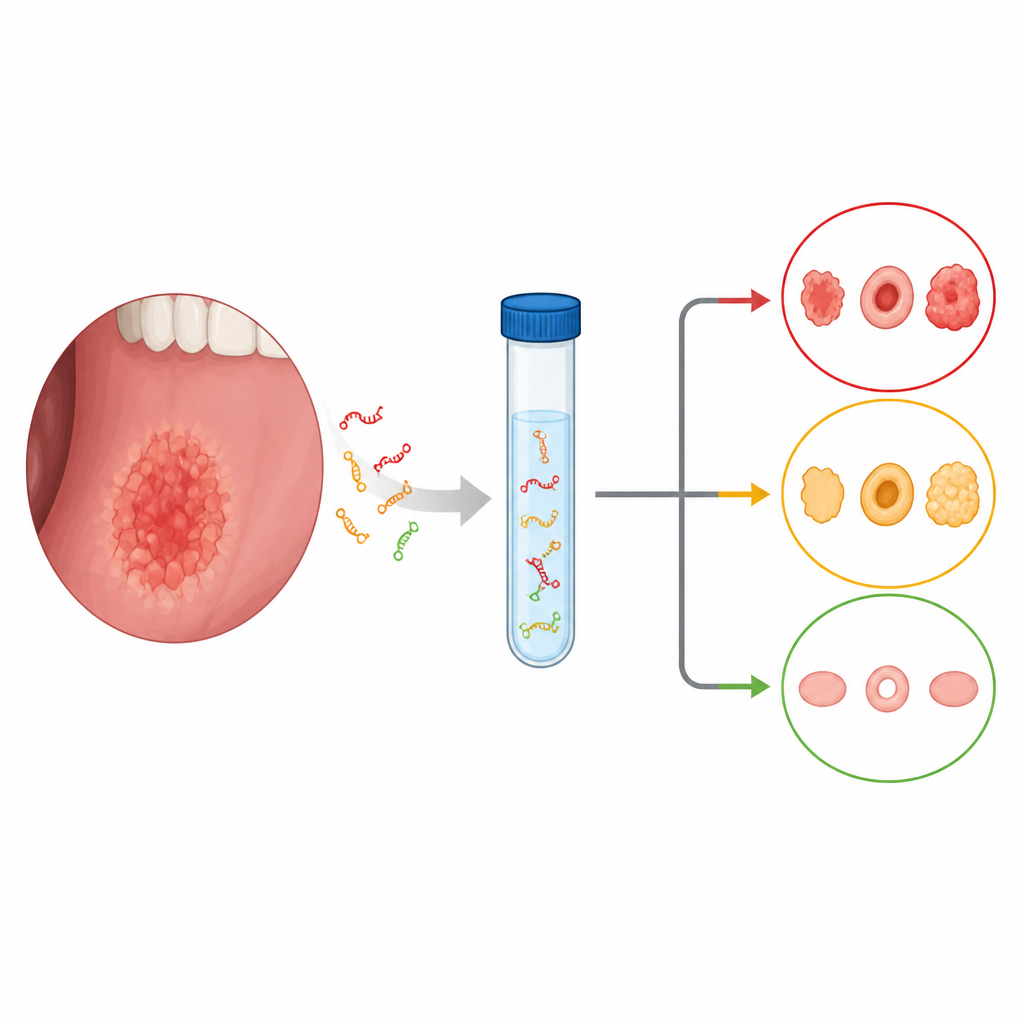
The researchers focused on microRNAs, very small molecules that help control how genes are switched on and off. Some microRNAs are known to behave differently in normal tissue, pre cancerous lesions, and cancers. The team selected ten microRNAs that previous work had linked to mouth cancer and its progression. They collected 41 scrapes from suspicious mouth areas in 33 patients who were already scheduled for biopsy. From each scrape they measured the levels of the selected microRNAs and compared these patterns with the later biopsy results, which were classified into high, moderate, or low risk groups based on standard criteria.
Building a traffic light style risk tool
Using these measurements, the team built a stepwise algorithm that boils complex molecular data down to simple risk categories. The first step combines two microRNAs, miR 21 and miR 99a, into a single score. High values of this score flagged lesions that were cancer or had severe changes, correctly identifying nearly all of them and separating them from less worrisome lesions. In the second step, a third microRNA, miR 181, helped split the remaining cases into moderate or low risk. Overall, all clear cut non dangerous conditions were correctly placed in the low risk group, while lesions that were cancer, severely abnormal, or soon to become cancer were placed in the high risk group. The researchers also followed some patients over time and found that changes in the microRNA based risk sometimes anticipated how lesions would evolve.
What this could mean for patients
For patients, this approach raises the possibility of assessing the danger level of mouth patches using a quick scrape rather than repeated cutting biopsies, while still relying on biopsy when needed for a final diagnosis. A scrape based microRNA test could help doctors choose which areas to sample, how often to review a patient, and when surgery is truly necessary. Although the study was relatively small and needs to be confirmed in larger groups, it offers a proof of concept that patterns of tiny molecules in mouth cells can mirror what pathologists see in tissue and help sort lesions into high, moderate, and low concern.
Citation: Kaunein, N., McCullough, M., Butler, C. et al. Oral mucosal scrapes capture cancer associated microRNA expression consistent with histopathology. Sci Rep 16, 14947 (2026). https://doi.org/10.1038/s41598-026-45078-z
Keywords: oral cancer, oral lesions, microRNA, non invasive testing, cancer risk