Clear Sky Science · en
A lasso-based model combining miRNA and clinical variables predicts future risk of breast and ovarian cancer
Why a simple blood test for cancer risk matters
Many women worry about their chances of developing breast or ovarian cancer but never qualify for genetic testing, or receive unclear results when they do. This study explores whether a routine blood sample, combined with basic health information, could flag women who carry a hidden pattern of risk similar to that seen in classic hereditary cancer syndromes. Such a tool could help more people learn about their risk earlier, long before any tumor appears.
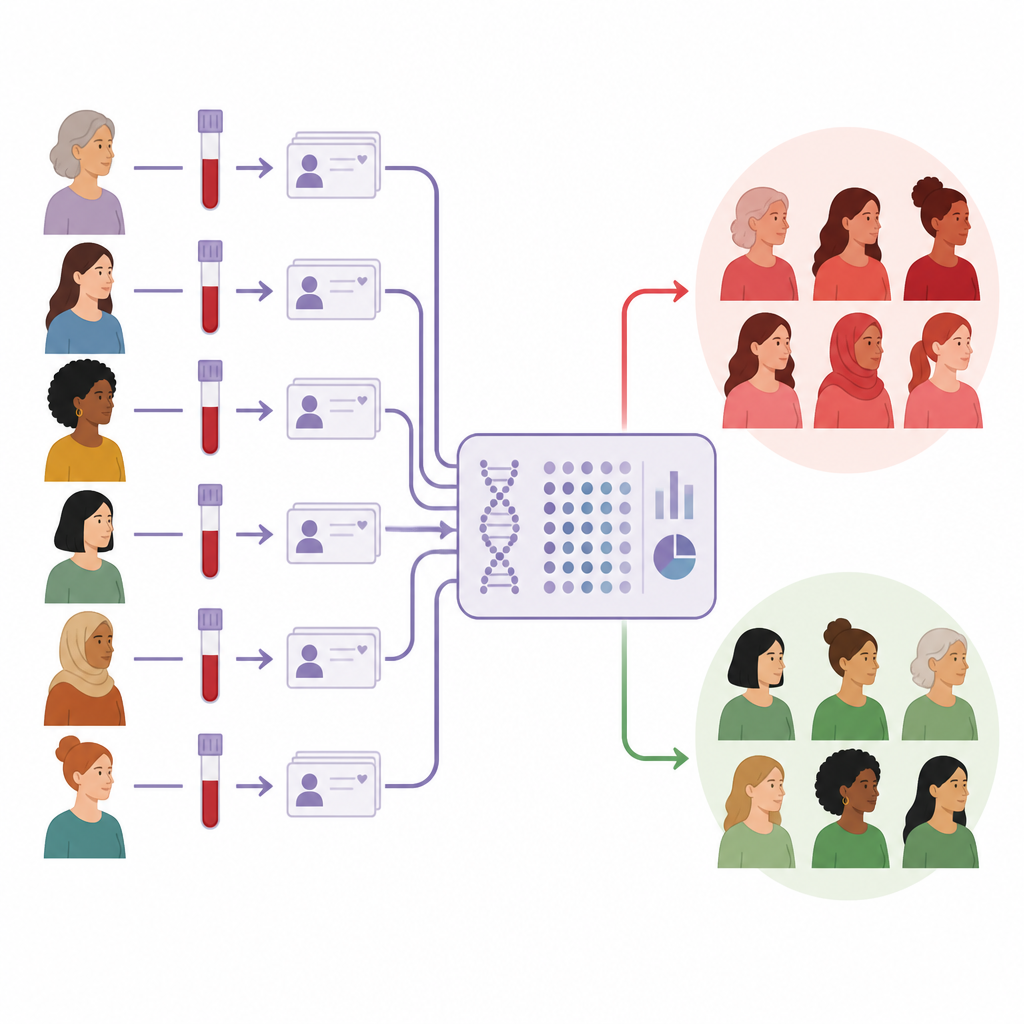
A closer look at hidden hereditary risk
Hereditary breast and ovarian cancer syndrome is often driven by harmful changes in two genes called BRCA1 and BRCA2. Carriers face much higher lifetime risks of breast and ovarian cancer, and sometimes other cancers as well. Yet only a small fraction of carriers ever learn they have these mutations, because current guidelines limit genetic testing to people with strong personal or family histories. These rules can miss many at-risk women, especially those from racial and ethnic groups that have been underrepresented in past genetic studies.
Tiny blood signals and everyday health data
The researchers focused on microRNAs, tiny molecules that help control how genes behave and can be measured in blood. Earlier work showed that women who carry BRCA mutations have distinct microRNA patterns even when they do not have cancer. In this study, blood samples from 1831 women in a health system biobank were analyzed for 179 different microRNAs and paired with simple clinical information such as age, family history of cancer, and reproductive history. A statistical method called lasso was used to shrink this large collection of measurements down to two key combined signals, one capturing microRNA patterns and the other capturing clinical features.
Building a practical risk score
Using these condensed signals, the team trained a computer model to distinguish between known BRCA mutation carriers and women presumed not to carry such mutations. The model assigned each woman a "BRCAness" score, reflecting how much her profile resembled that of a carrier. In cross-checked testing on the biobank group, the model identified carriers with high accuracy, correctly separating most women at elevated risk from those at lower risk. Importantly, this performance remained strong across different age groups, among women with and without prior cancer, and between non-Hispanic white participants and women from other racial and ethnic backgrounds.
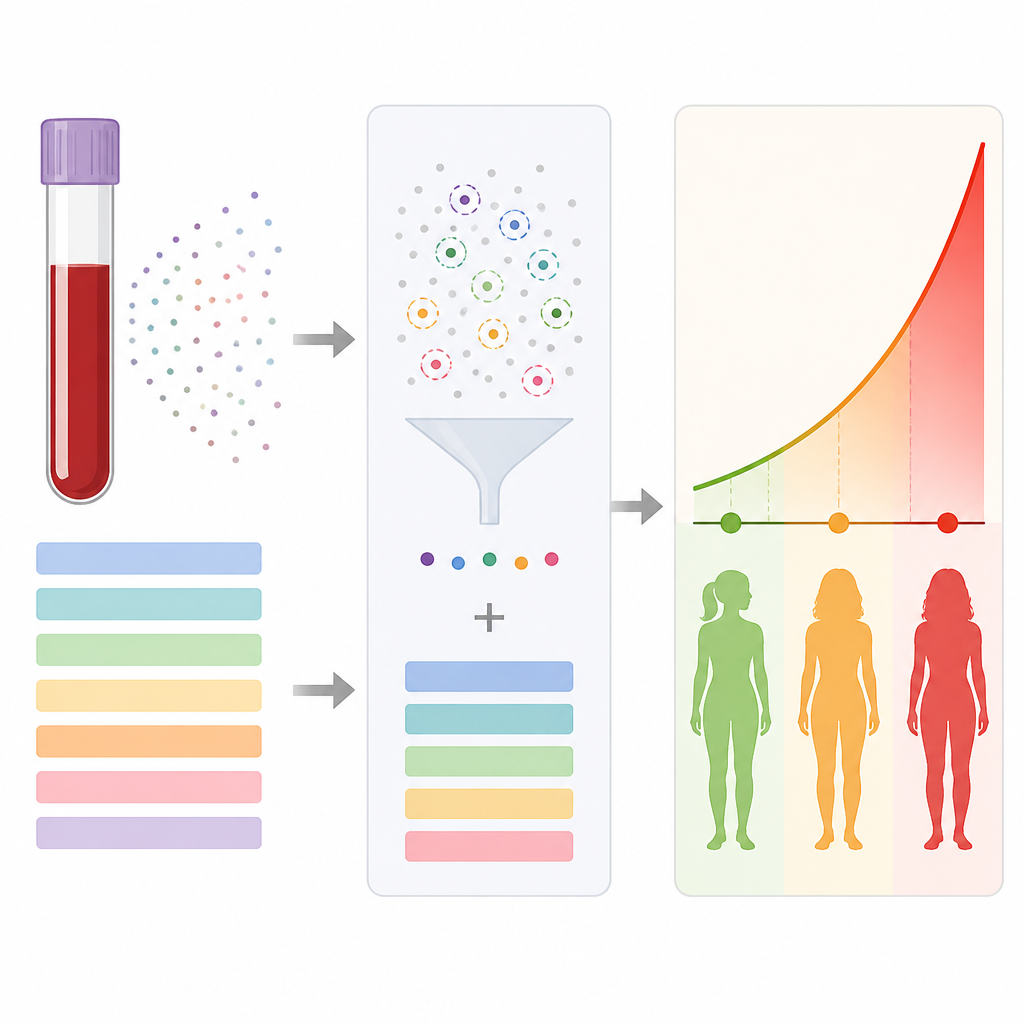
From carrier-like profiles to future cancer risk
The crucial question was whether this BRCAness score actually tracked with the chance of developing cancer in the future. To test this, the researchers applied their model to an independent group of 1044 postmenopausal women from a large U.S. screening trial, most of whom were considered average risk and had no known genetic test results. In this group, higher BRCAness scores were tightly linked to higher five-year risk of ovarian cancer. Women with mid-range scores had several times the average risk, while those with very high scores had roughly eightfold higher risk over five years. The model could also directly predict which women would develop ovarian cancer within five years with moderate accuracy, even though most blood samples were collected more than a year before diagnosis.
What this work could mean for patients
This study suggests that a relatively simple test combining microRNA measurements and routine clinical information can estimate a woman’s long-term risk of ovarian cancer and flag profiles that look like those of BRCA mutation carriers. While it does not replace genetic testing or act as a stand-alone diagnostic tool, such a score could help identify women who would benefit from formal genetic counseling, closer monitoring, or prevention discussions. If confirmed in further studies and expanded to other genes and cancers, this approach could make personalized cancer risk assessment more accessible and equitable.
Citation: Webber, J.W., Wollborn, L., Mishra, S. et al. A lasso-based model combining miRNA and clinical variables predicts future risk of breast and ovarian cancer. Sci Rep 16, 14813 (2026). https://doi.org/10.1038/s41598-026-45020-3
Keywords: ovarian cancer risk, BRCA mutations, microRNA blood test, hereditary breast and ovarian cancer, cancer risk prediction