Clear Sky Science · en
Characterization of T-cell receptor loci and expressed repertoire reveals a capacity for robust T-cell response in Atlantic cod (Gadus morhua)
Why a Cold-Water Fish Matters for Human Health
The Atlantic cod has a strangely wired immune system: it lacks key components that textbooks describe as essential for fighting infections, yet it thrives in cold northern seas and supports major fisheries. This paper explores how cod T cells – the white blood cells that remember and attack invaders – manage to generate a rich defensive arsenal despite this odd genetic setup. Understanding this “rule‑bending” immune strategy may broaden our view of how vertebrates, including humans, can successfully fight disease using different biological blueprints.
A Fish with a Missing Immune Toolkit
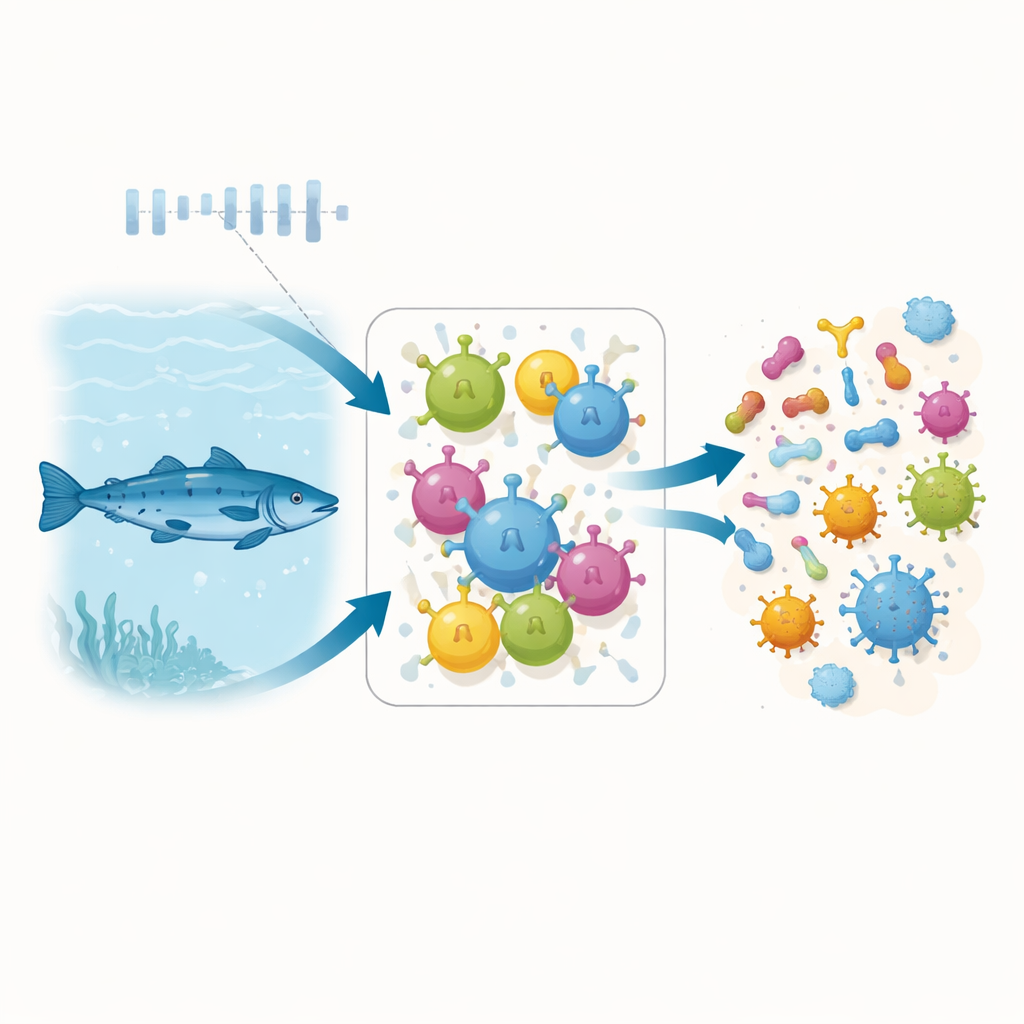
Most vertebrates rely on a set of molecules called MHC class II and a partner protein named CD4 to help T cells recognize germs and to build long‑lasting antibody responses. Atlantic cod have lost the genes for both. Earlier work also suggested they have weak, slow antibody responses and perhaps limited immune memory. That raises an obvious puzzle: how do they avoid being wiped out by infections in the wild? The authors reasoned that a key part of the answer must lie in the fine details of the cod’s T‑cell receptors – the tiny, highly variable proteins on the surface of T cells that sense dangerous microbes.
Mapping the Cod’s Immune Blueprint
To tackle this question, the researchers first combed through a high‑quality cod genome to find and annotate all four types of T‑cell receptor chains: alpha, beta, gamma and delta. These chains are encoded in long stretches of DNA called loci, where many small gene pieces can be shuffled to create new receptor shapes. In cod, the alpha and delta chains share a common stretch of DNA on one chromosome, while the beta chains occupy a separate chromosome in three repeated blocks, and the gamma chains form compact mini‑clusters nearby. Compared with some other fish species, cod carry a relatively modest collection of these gene pieces in their genome – fewer starting parts with which to build receptors.
Reading the Active Repertoire Inside the Spleen
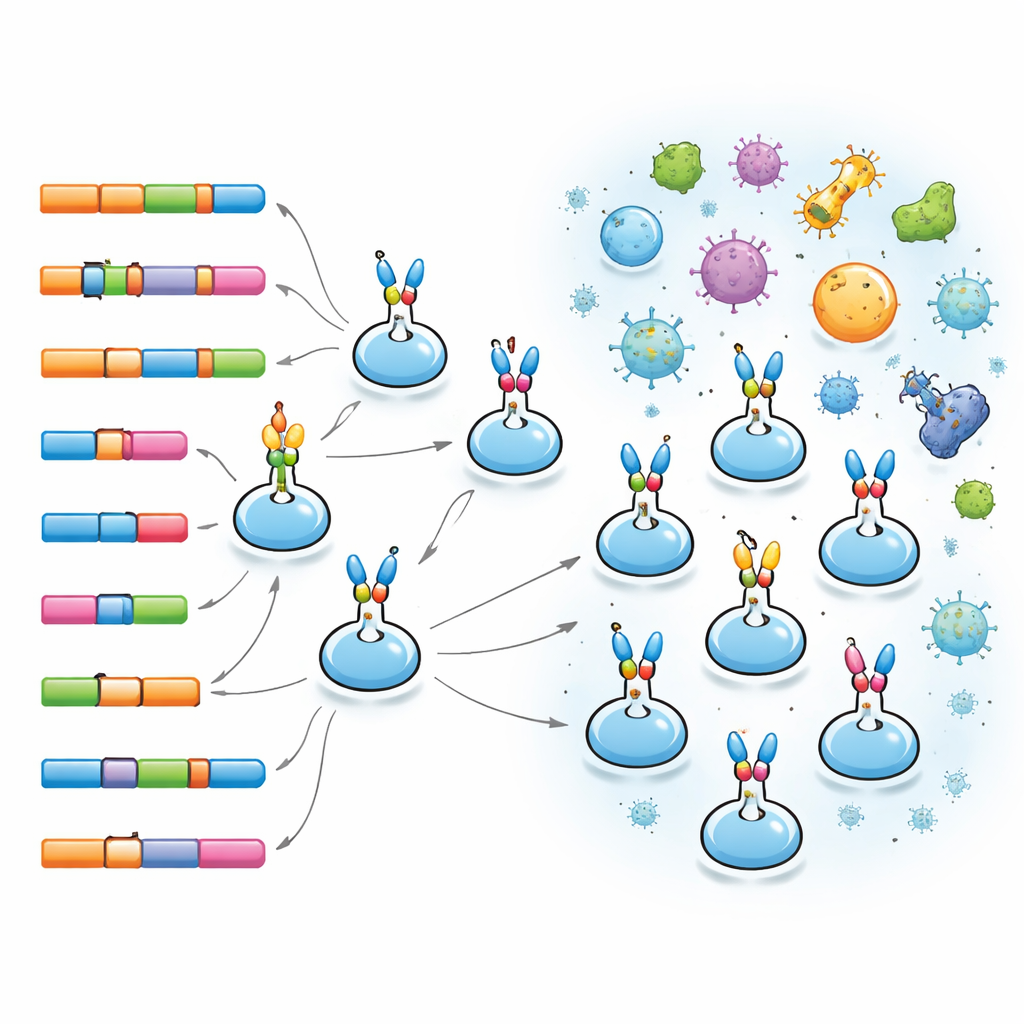
Having charted the genomic layout, the team then asked what the cod actually uses in real life. They collected spleen cells from seven healthy young fish and used a deep‑sequencing method to read millions of T‑cell receptor sequences, focusing on the hypervariable “CDR3” region that largely determines what the receptor can recognize. From these data they reconstructed the set of distinct receptors present in each fish. Despite the limited number of gene pieces in the genome, the expressed repertoire was surprisingly rich: thousands of unique alpha, beta and delta receptors and hundreds of gamma receptors were detected in each spleen sample, implying that a whole cod carries millions of distinct T cells.
How Cod Squeeze More Variety from Fewer Genes
The results show that cod compensate for modest starting diversity in several ways. When the gene segments are stitched together to form a receptor, extra DNA letters can be randomly added or removed at the junctions; in cod, this step seems to be widely used, especially for alpha and delta chains, boosting variety without needing many distinct gene copies. The three repeated beta‑chain blocks appear to have arisen from recent duplication events and can also mix their parts across blocks, further expanding possible combinations. Interestingly, most of the receptor sequences were “private,” meaning unique to individual fish, while only small fractions were shared across animals. Delta chains, in particular, showed a large underlying potential diversity but an unusually high proportion of non‑functional attempts, hinting at an aggressive trial‑and‑error process during T‑cell development.
What This Means for Disease Defense
Putting the pieces together, the study suggests that Atlantic cod have evolved a lean but flexible way to build T‑cell diversity. Instead of relying on a huge library of pre‑built gene segments, they start from a compact genomic toolkit and generate much of their variety during the recombination process, ending up with a broad, mostly individual‑specific T‑cell receptor repertoire. This diverse cellular defense likely helps compensate for their weak antibody‑based responses and unusual loss of standard helper pathways. The work provides a crucial baseline for tracking how cod T‑cell repertoires shift during vaccination or infection and illustrates that there is more than one workable design for a vertebrate immune system.
Citation: Györkei, Á., Johansen, FE. & Qiao, SW. Characterization of T-cell receptor loci and expressed repertoire reveals a capacity for robust T-cell response in Atlantic cod (Gadus morhua). Sci Rep 16, 14483 (2026). https://doi.org/10.1038/s41598-026-45018-x
Keywords: Atlantic cod immunity, T-cell receptors, fish immune system, adaptive immunity, immune diversity