Clear Sky Science · en
Influence of recurrence risk perception on depressive mood in first-time stroke patients and the mediating effect of coping styles and perceived discrimination
Why worry after the first stroke?
Surviving a first stroke is often only the beginning of a long journey. Many patients live with a constant worry that another stroke might strike, along with changes in mood, energy, and social life. This study explores how fear of having another stroke connects to depression, and how everyday ways of coping and feeling judged or excluded by others can either worsen or relieve that emotional burden.
Living under the shadow of another stroke
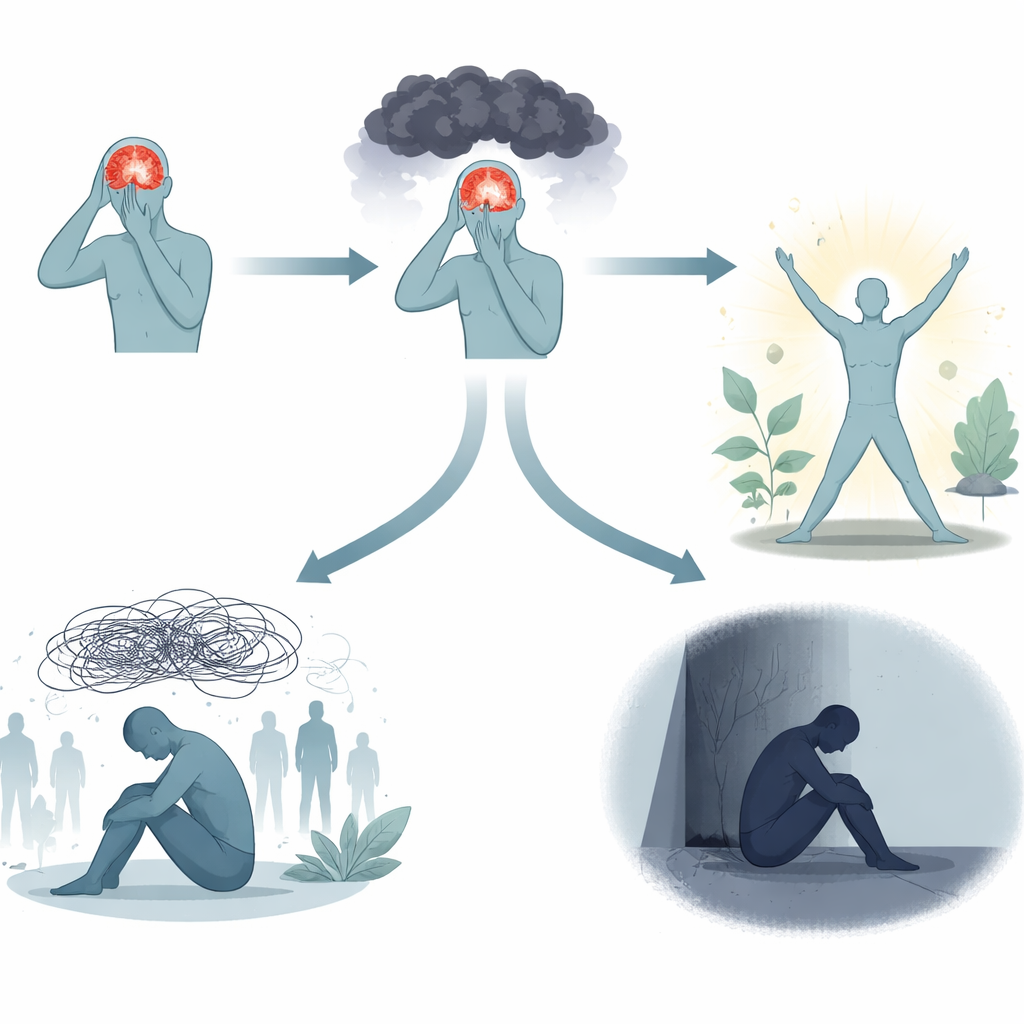
The researchers focused on people who had experienced their first-ever stroke and were preparing to go home from the hospital. Stroke is a major cause of death and disability worldwide, and in China, where the study took place, new strokes and stroke-related deaths are alarmingly frequent. Beyond physical disability, many patients struggle with low mood; about one in three develop post-stroke depression. The team wanted to understand how strongly patients sensed the risk of a second stroke, and whether that sense of danger was linked to depressive symptoms.
How patients cope and how others treat them
To do this, the team surveyed 375 first-time stroke patients using standard questionnaires. These tools measured how serious patients thought a recurrence would be, how likely they believed it was, and what behaviors or medical factors they associated with that risk. They also assessed depression, different ways of coping with illness, and how often patients felt looked down upon, treated unfairly, or otherwise discriminated against because of their health condition. Coping styles were grouped into three patterns: facing problems head-on, avoiding them, or giving up and feeling resigned. Perceived discrimination covered both personal slights and broader feelings that society holds negative views about people with stroke-related disabilities.
Fear, reaction, and feeling pushed aside
The results drew a clear picture. Patients who felt a stronger danger of another stroke tended to report more depressive symptoms. They were less likely to confront their illness actively and more likely to rely on avoidance or resignation. These less helpful strategies, in turn, were tied to higher levels of depression. At the same time, those who felt more discriminated against—whether by individuals or by society at large—also showed greater fear of recurrence and more severe depressive moods. Patients with high perceived discrimination were more inclined toward negative coping styles, suggesting a vicious cycle in which worry, withdrawal, and feeling judged reinforce one another.
The chain from worry to mood
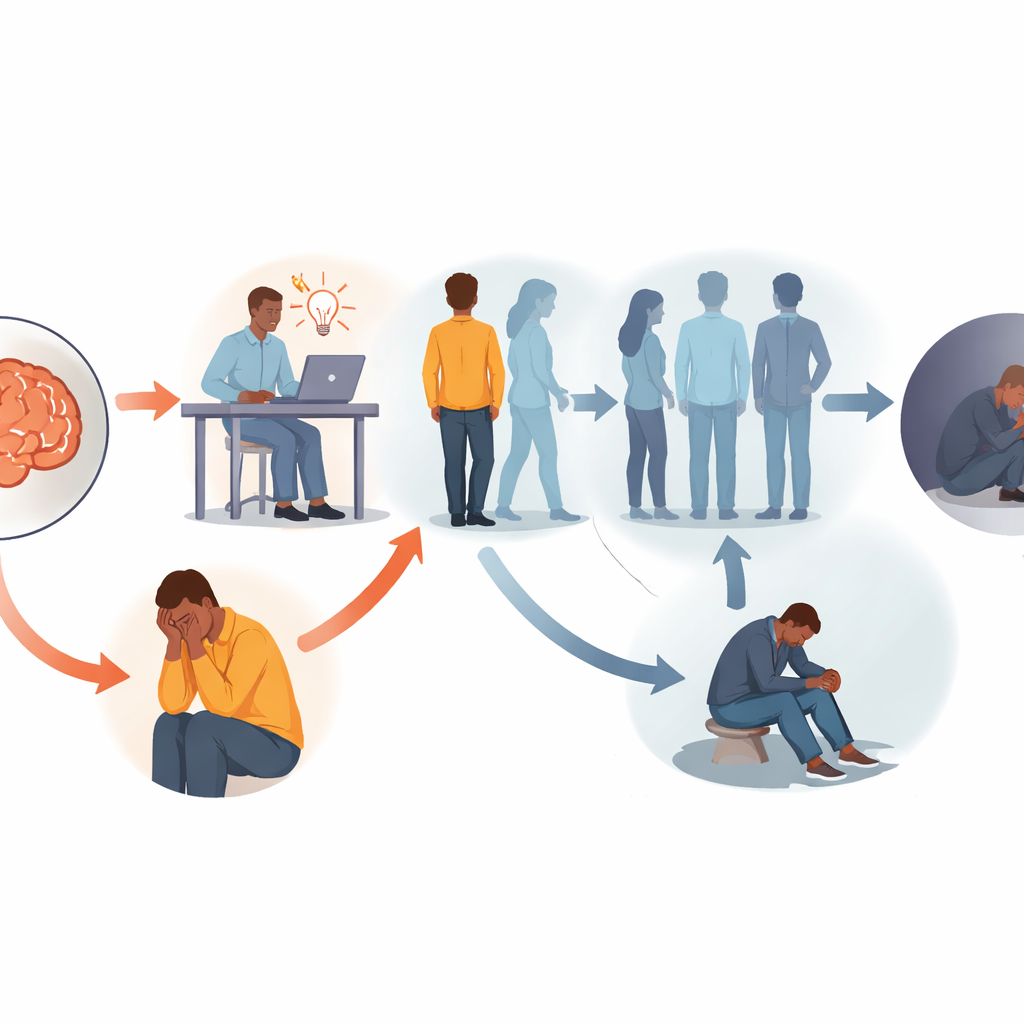
Using statistical models, the authors tested how these factors fit together. They found that fear of another stroke had a direct link to depression, but also an important indirect path. Part of its impact flowed through coping styles: greater worry pushed people toward avoidance and resignation, which were associated with worse mood. Another part moved through perceived discrimination: patients who felt at risk also tended to sense more prejudice, which was tied to higher depression levels. A smaller but meaningful "chain" pathway ran from fear of recurrence to coping style, then to perceived discrimination, and finally to depression, highlighting how inner thoughts, behavior, and social experience can align to shape emotional health.
What this means for patients and care teams
For a layperson, the message is straightforward: after a first stroke, how you think about the chance of another one, how you deal with that fear, and how supported—or judged—you feel can all influence your mood. The study suggests that helping patients form a realistic but not catastrophic view of recurrence, teaching more active, problem-solving ways to cope, and reducing stigma in families and communities could ease depression. While biology and brain injury still play a major role, paying attention to these psychological and social links offers practical avenues to support recovery and improve life after stroke.
Citation: Wang, H., Zhu, D., Yan, Z. et al. Influence of recurrence risk perception on depressive mood in first-time stroke patients and the mediating effect of coping styles and perceived discrimination. Sci Rep 16, 10632 (2026). https://doi.org/10.1038/s41598-026-45015-0
Keywords: stroke recovery, post-stroke depression, coping styles, health-related stigma, recurrence risk