Clear Sky Science · en
Pacemaker implantation is associated with post-ablation atrial fibrillation recurrence mediated by plasma CILP1
Why this heart study matters
Atrial fibrillation, a fast and irregular heartbeat, is one of the most common rhythm problems worldwide and a major cause of stroke. Many patients undergo a burning procedure called catheter ablation to tame the faulty signals in the heart. Others also need a pacemaker to keep a slow heartbeat from dipping too low. This study asks a simple but important question: when a person has both ablation and a pacemaker, does that pacemaker quietly raise the chances that the rhythm problem will come back, and can a blood test warn us in advance?
Who was studied and what was measured
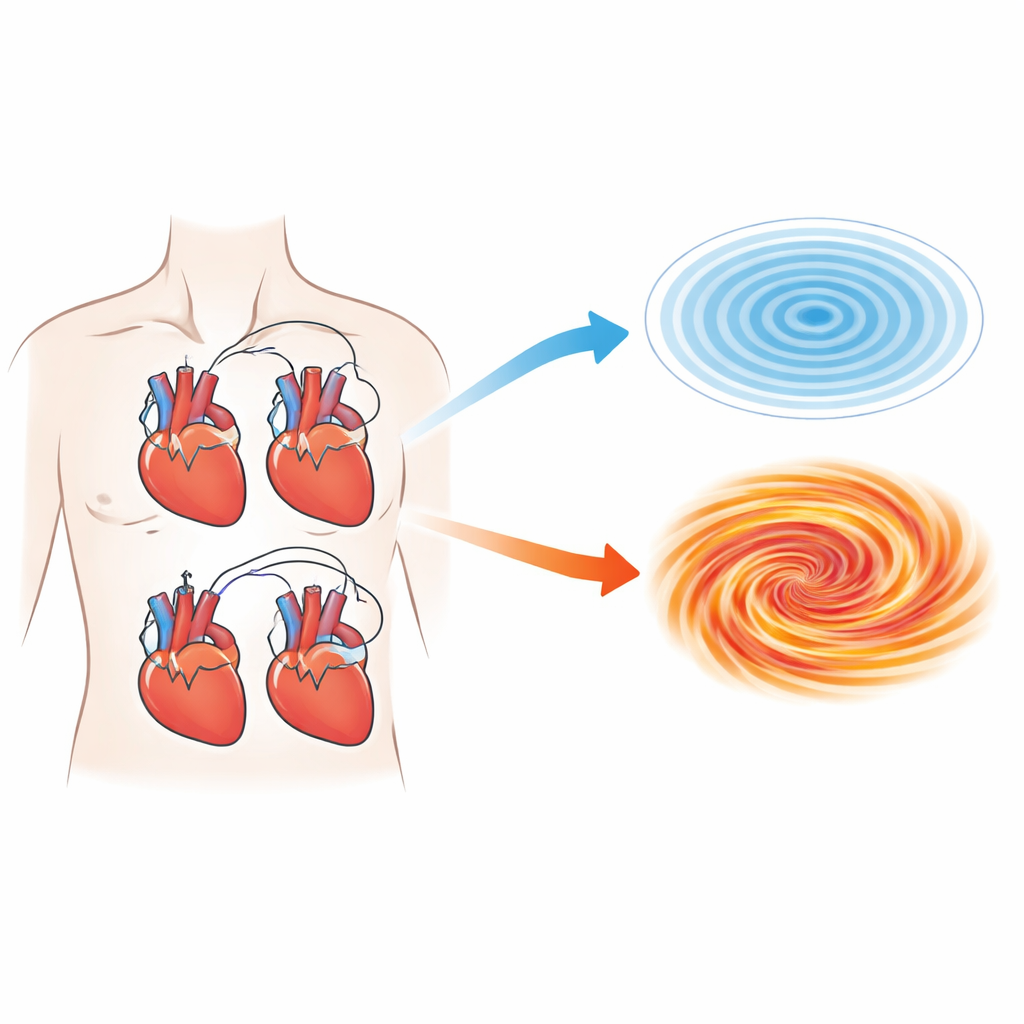
The researchers followed people with brief, on‑and‑off episodes of atrial fibrillation who were having their first ablation. Some of them also had pacemakers, usually because of slow heart rhythms. To make a fair comparison, patients with and without pacemakers were carefully matched for age, sex, blood pressure, diabetes, kidney function, heart pumping strength, and other medical problems. Everyone underwent the same high‑tech ablation guided by magnetic navigation, and they were then tracked for roughly one and a half to two years to see whose atrial fibrillation returned.
Pacemakers and the risk of rhythm coming back
Even after accounting for many background differences, people with pacemakers were more likely to see their irregular heartbeat return after ablation. In the first group that the team studied, having a pacemaker roughly doubled the risk of recurrence. A second, independent group of patients showed a similar pattern, with pacemaker carriers facing more than triple the risk compared with matched patients without devices. These findings suggest that needing a pacemaker is more than just a marker of a sicker heart; the presence of the device and the way it paces the upper heart chambers may help set the stage for the rhythm problem to re‑emerge.
Hunting for a blood signal
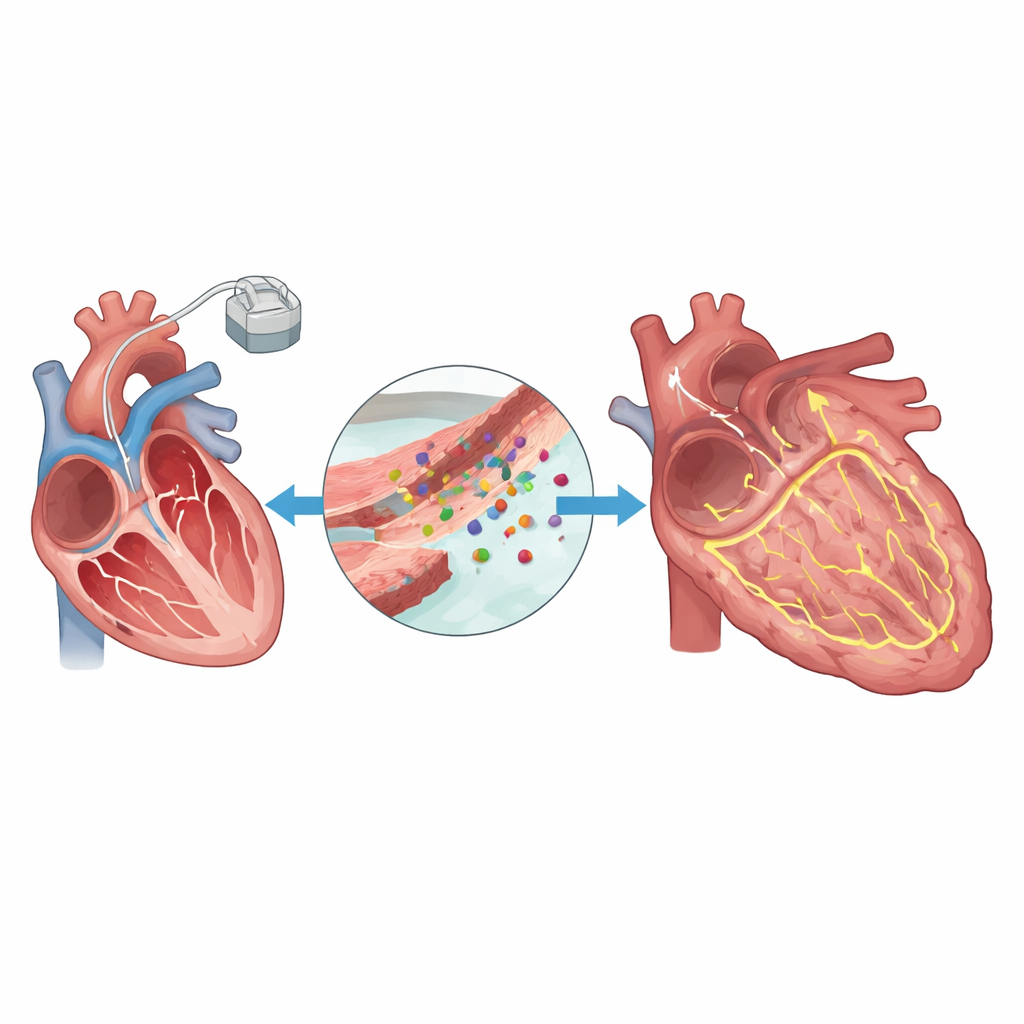
To understand what might link pacemakers to repeat atrial fibrillation, the researchers turned to proteomics, a technique that surveys thousands of proteins in the blood at once. In a small pilot set of patients with and without pacemakers, they found dozens of proteins that differed between the two groups. Many of these proteins were related to the material that surrounds and supports heart cells, hinting at changes in the heart’s scaffolding. One protein stood out: CILP1, a molecule known from other studies to be involved in tissue scarring and stiffening.
A scarring protein that predicts trouble
The team then measured CILP1 levels in a larger set of patients. Those with pacemakers had higher amounts of this protein in their blood. People whose atrial fibrillation later returned also tended to have higher CILP1 levels before their ablation. When the researchers looked at prediction, CILP1 did a respectable job of telling apart patients who would have a recurrence from those who would not, performing about as well as the size of the left upper heart chamber, a well‑known marker of risk. Even after adjusting for several clinical factors, higher CILP1 remained linked to a greater chance of relapse.
Connecting the dots between device, protein, and risk
Using statistical tools designed to explore pathways rather than simple one‑to‑one links, the authors asked whether CILP1 might partly explain the connection between pacemakers and repeat atrial fibrillation. Their analysis suggested that about one‑third of the extra risk seen in pacemaker patients could be traced, in a statistical sense, through elevated CILP1. This does not prove that the pacemaker directly causes scarring through this protein, but it supports the idea that patients with pacemakers may have more structural changes in the upper heart chambers, mirrored by higher CILP1 in the bloodstream.
What this could mean for patients
For people living with both a pacemaker and atrial fibrillation, this work suggests that their device may quietly raise the chances that an ablation will not be the final word. A simple blood test for CILP1, if confirmed in larger studies, could help doctors identify patients at higher risk of the rhythm coming back, tailor follow‑up more closely, or plan more aggressive treatment up front. While the study is observational and based on relatively small protein screening, its message is clear in everyday terms: in some hearts, the combination of a pacing device and subtle scarring, signaled by CILP1 in the blood, may make atrial fibrillation harder to cure for good.
Citation: Liu, J., Zhou, T., Lin, C. et al. Pacemaker implantation is associated with post-ablation atrial fibrillation recurrence mediated by plasma CILP1. Sci Rep 16, 14267 (2026). https://doi.org/10.1038/s41598-026-44907-5
Keywords: atrial fibrillation, pacemaker, catheter ablation, cardiac fibrosis, biomarkers