Clear Sky Science · en
Machine learning modelling of a nonlinear environmental index with sensitivity analysis for groundwater assessment
Why the Water Beneath Our Feet Matters
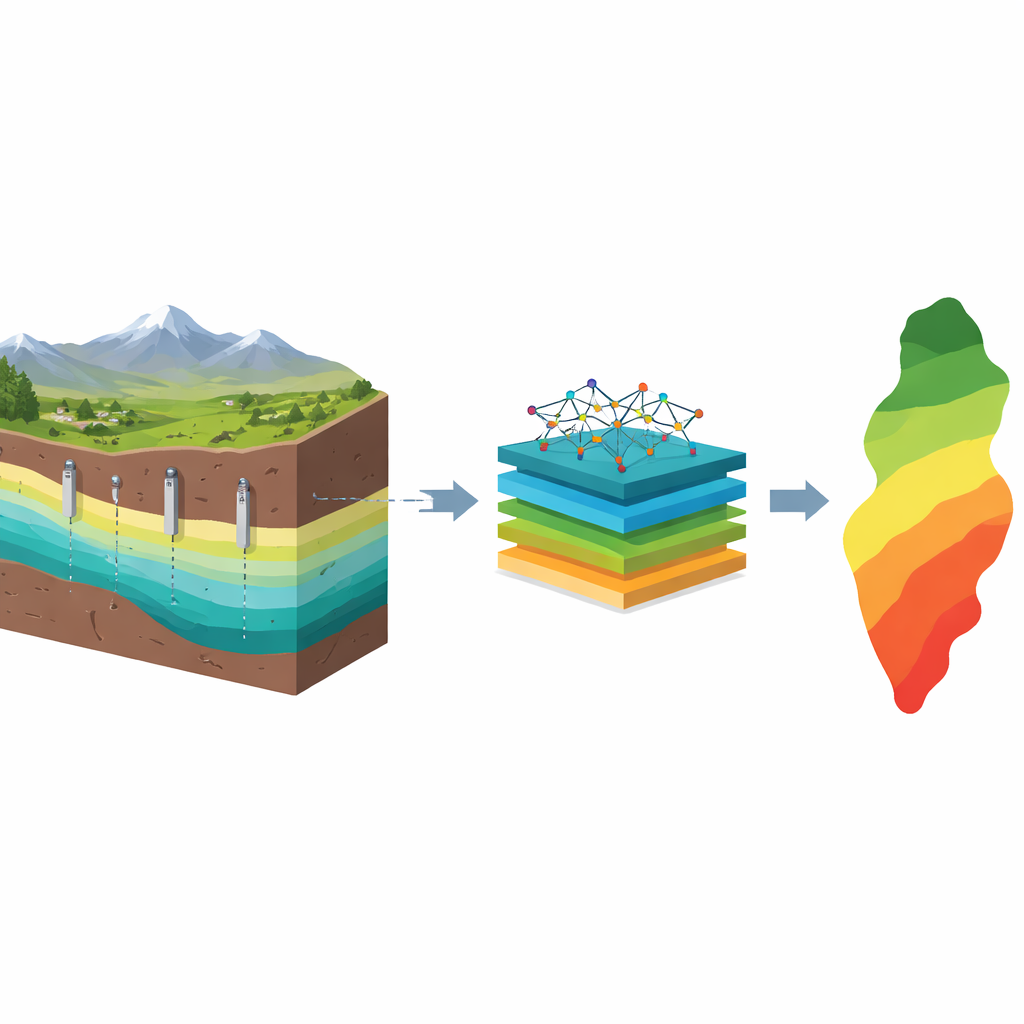
In many dry parts of the world, including southern Iran, people rely on underground water as their main source of drinking and irrigation water. But this hidden resource can slowly turn too salty or polluted without obvious warning at the surface. This study looks at the Marvdasht aquifer, which supplies a city and hundreds of villages, and shows how modern data tools can track where the water is still safe to drink, where it is deteriorating, and which ingredients in the water matter most.
Turning Many Measurements into One Clear Score
Groundwater contains a mix of dissolved minerals and salts, such as sodium, calcium, magnesium, chloride, and sulfate. Each of these affects health and pipe corrosion in different ways, and reading long tables of numbers from dozens of wells quickly becomes overwhelming. To simplify this, the researchers used a Groundwater Quality Index, or GWQI. This index combines 11 routinely measured properties of water into a single score, using World Health Organization guidelines as a reference. Low scores indicate excellent water, while high scores signal water that is too salty or otherwise unsuitable for drinking.
What the Wells Reveal About the Aquifer
Using data from 70 wells collected over a decade, the team found that much of the Marvdasht aquifer is already stressed. Only about one quarter of samples had low levels of total dissolved solids, a measure of overall salt content, that are considered good for drinking. All samples fell into the “hard” or “very hard” categories, meaning high levels of calcium and magnesium. The northern part of the aquifer, recharged by a dam and flowing through limestone, still shows mostly good to excellent water. As the water moves southward, however, it dissolves more salts from gypsum-rich rocks and mixes with agricultural and urban return flows, becoming significantly saltier and less suitable for households.
Finding the Most Important Ingredients in the Water
Not every chemical in groundwater has the same impact on its safety. The study used a sensitivity analysis to ask a simple question: if one ingredient is removed from the index, how much does the overall score change? The answer was clear. Total dissolved solids and electrical conductivity, both measures of salinity, caused the largest shifts in the groundwater quality index. Chloride, sodium, and water hardness were also major drivers. In contrast, properties like potassium and bicarbonate played only a minor role. This means that in this aquifer, rising salinity and related ions are the main warning signs that groundwater is becoming unfit for drinking.
Teaching Computers to Predict Water Quality
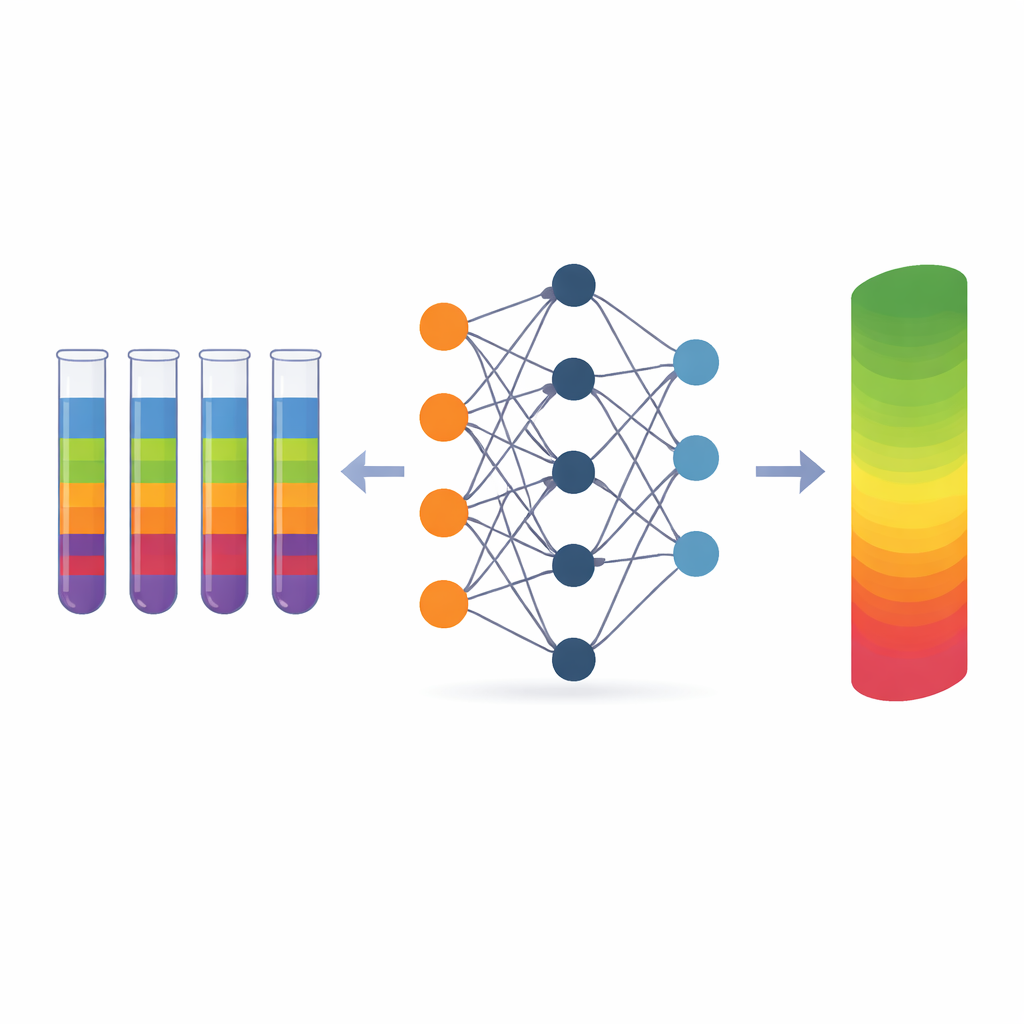
Calculating an index for every new sample and updating detailed maps by hand can be slow and expensive. To speed things up, the researchers trained three types of computer models—artificial neural networks, support vector machines, and random forests—using the existing water chemistry data. Once trained, these models can estimate the groundwater quality index directly from the measured ions and salts, even at locations or times where the index has not yet been calculated. Among the three, the neural network model stood out: it reproduced the index with extremely high accuracy and low error, capturing the complex, nonlinear way in which different chemicals combine to affect overall quality.
What This Means for People and Policy
For residents and decision-makers, the message is double-edged. On the one hand, large areas in the southern and southeastern parts of the Marvdasht aquifer already have groundwater that is too salty and hard for safe drinking, and the trend is closely tied to both local geology and human activities. On the other hand, the study shows that by combining a simple, easy-to-understand index with machine learning and digital maps, it is possible to monitor these changes efficiently and pinpoint high-risk zones. In practical terms, this approach offers a cost-effective early warning system for managing wells, limiting pollution, and planning alternative supplies in arid regions where every drop of clean water counts.
Citation: Azma, A., Liu, Y. & Alemu, E.T. Machine learning modelling of a nonlinear environmental index with sensitivity analysis for groundwater assessment. Sci Rep 16, 14595 (2026). https://doi.org/10.1038/s41598-026-44906-6
Keywords: groundwater quality, water salinity, machine learning, water resources, aquifer monitoring