Clear Sky Science · en
Eco-friendly corrosion mitigation for copper in desalination acid cleaning using plant extract
Why protecting copper matters
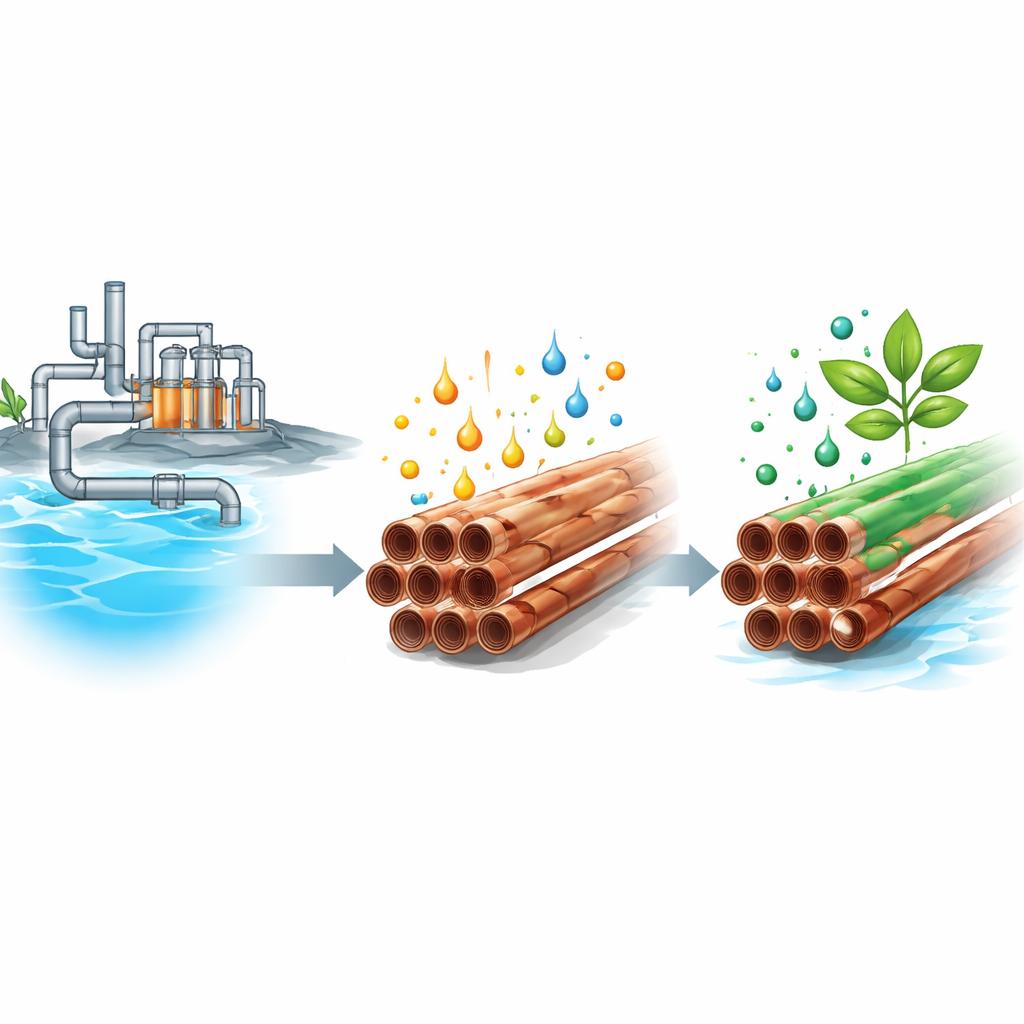
Fresh water from the sea relies on huge desalination plants packed with copper pipes that move heat quickly and efficiently. To keep these systems running, operators periodically wash the pipes with strong acid to dissolve mineral scale. That same acid, however, can aggressively eat away at the copper itself, shortening equipment life and risking contamination of the water supply. This study explores whether a natural extract from the Acacia farnesiana plant can act as a gentle, eco‑friendly shield that protects copper during these harsh cleaning steps.
Everyday cleaning with hidden costs
Inside a desalination plant, copper tubes sit in hot, salty water and gradually pick up crusty deposits of minerals like calcium carbonate. To clear these deposits, operators circulate hydrochloric acid through the tubes. While effective at cleaning, this acid also strips copper atoms from the metal surface, especially in the presence of chloride ions from seawater, leading to pits and rough, weakened tube walls. Conventional chemical additives can slow this damage, but many are synthetic, toxic, or environmentally persistent. Finding a plant‑based alternative that can safely enter the waste stream without harming people or marine life would be a major step toward greener water treatment.
A plant-based shield for metal
The researchers focused on a commercial extract of Acacia farnesiana, a shrub known as sweet acacia. The extract, dissolved in water and acid, contains a mixture of naturally occurring fatty acids. When they added small amounts of this extract to a 1 molar hydrochloric acid solution—the kind used for cleaning—they measured how fast copper samples lost weight, how easily electrical current passed across the metal–acid interface, and how corrosion currents changed. Across all three methods, the extract slashed corrosion by more than 94 percent at the highest test concentration, with a top performance of about 97 percent. These results mean that under typical cleaning conditions, only a tiny fraction of the usual copper loss would occur when the plant extract is present.
How the natural coating builds itself
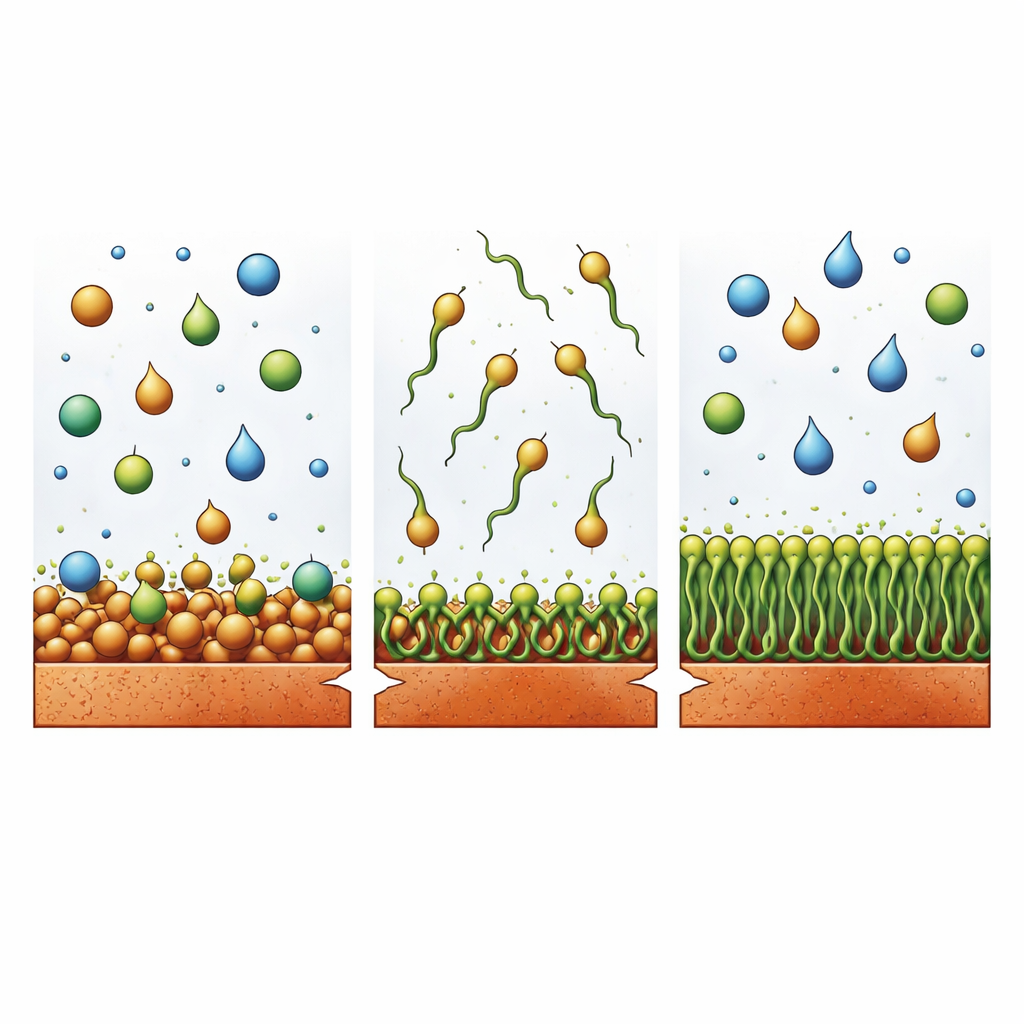
To understand why the extract works so well, the team analyzed its ingredients and watched how they behaved on the metal surface. High‑performance liquid chromatography revealed that two long‑chain unsaturated fatty acids, linoleic and oleic acid, dominate the mixture. Each molecule has a reactive “head” group that can latch onto copper and a long oily “tail” that dislikes water. Microscopy images showed that, without the extract, copper surfaces in acid become rough and covered in corrosive chloride crystals, whereas with the extract they appear smooth and intact. Spectroscopy confirmed that the fatty acids truly attach to the copper, changing their chemical signature as they bond. Together, these clues indicate that the molecules first anchor to the copper through their head groups and electron‑rich bonds, then pack side‑by‑side so their tails form a tight, water‑repelling film that blocks acid and chloride from reaching the metal.
Stable protection under real-world conditions
The team also tested how robust this natural film is over time and at different temperatures, reflecting the demands of industrial cleaning. Over three hours—the typical duration of an acid wash—the protective effect remained very high. Even after 72 hours of exposure, efficiency stayed above 90 percent, suggesting a generous safety margin for unexpected delays. At higher temperatures, corrosion increased somewhat and protection weakened slightly, which matches a picture in which some molecules are physically adsorbed and can desorb as the system warms. Still, the film remained effective enough to be practical for hot cleaning operations. Computer‑based calculations supported this dual action, showing that the key fatty acids are well suited to donate electrons to copper and build a mixed physical and chemical barrier.
Cleaner water with greener chemistry
In simple terms, this study shows that a liquid derived from Acacia farnesiana can wrap copper in a self‑assembled, oil‑like coat that keeps most of the acid at bay. By reducing copper loss by more than 95 percent, the extract could extend the life of expensive heat exchangers, cut maintenance costs, and lower the risk of metal contamination in desalinated water. Because the active molecules are natural fatty acids—similar to components of vegetable oils—they are far less likely than traditional inhibitors to pose long‑term environmental or health hazards. As desalination becomes ever more important for supplying fresh water to growing populations, such plant‑based corrosion protectors offer a promising route to keep the process both reliable and environmentally responsible.
Citation: Thabet, H.K., Alshammari, O.A.O., Ashmawy, A.M. et al. Eco-friendly corrosion mitigation for copper in desalination acid cleaning using plant extract. Sci Rep 16, 9845 (2026). https://doi.org/10.1038/s41598-026-44764-2
Keywords: desalination, copper corrosion, green inhibitors, plant extracts, acid cleaning