Clear Sky Science · en
Impact of microbiome-modulating strategies in cancer patients receiving immunotherapy (MSIT): A systematic review and meta-analysis
Why tiny gut residents matter for cancer treatment
Most people think of cancer treatment in terms of surgery, chemotherapy, or newer immune-based drugs. Few realize that the trillions of microbes living in our intestines may quietly influence whether those immune drugs succeed or fail. This paper brings together evidence from dozens of clinical studies to ask a simple but important question: if we deliberately reshape the gut microbiome using tools like probiotics or stool transplants, can we help cancer immunotherapy work better and still stay safe for patients?
How friendly microbes talk to our defenses
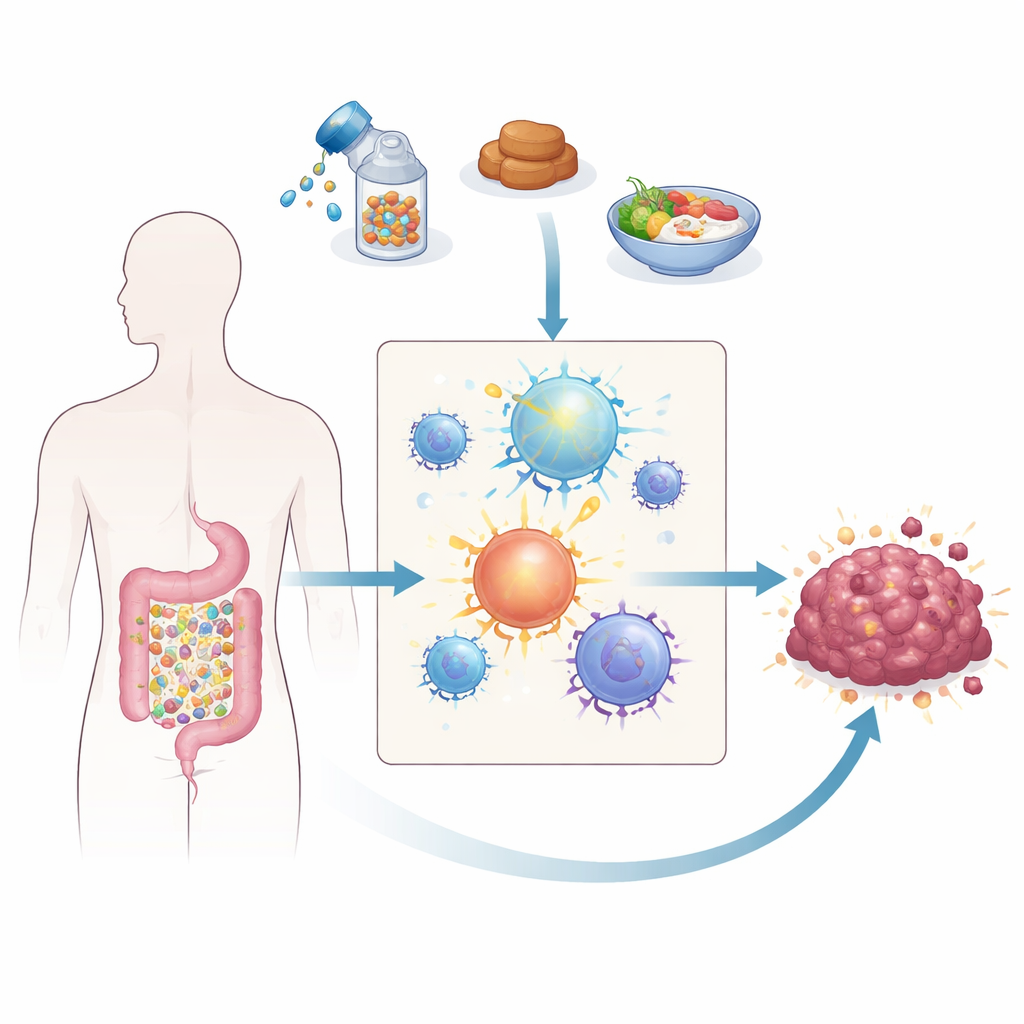
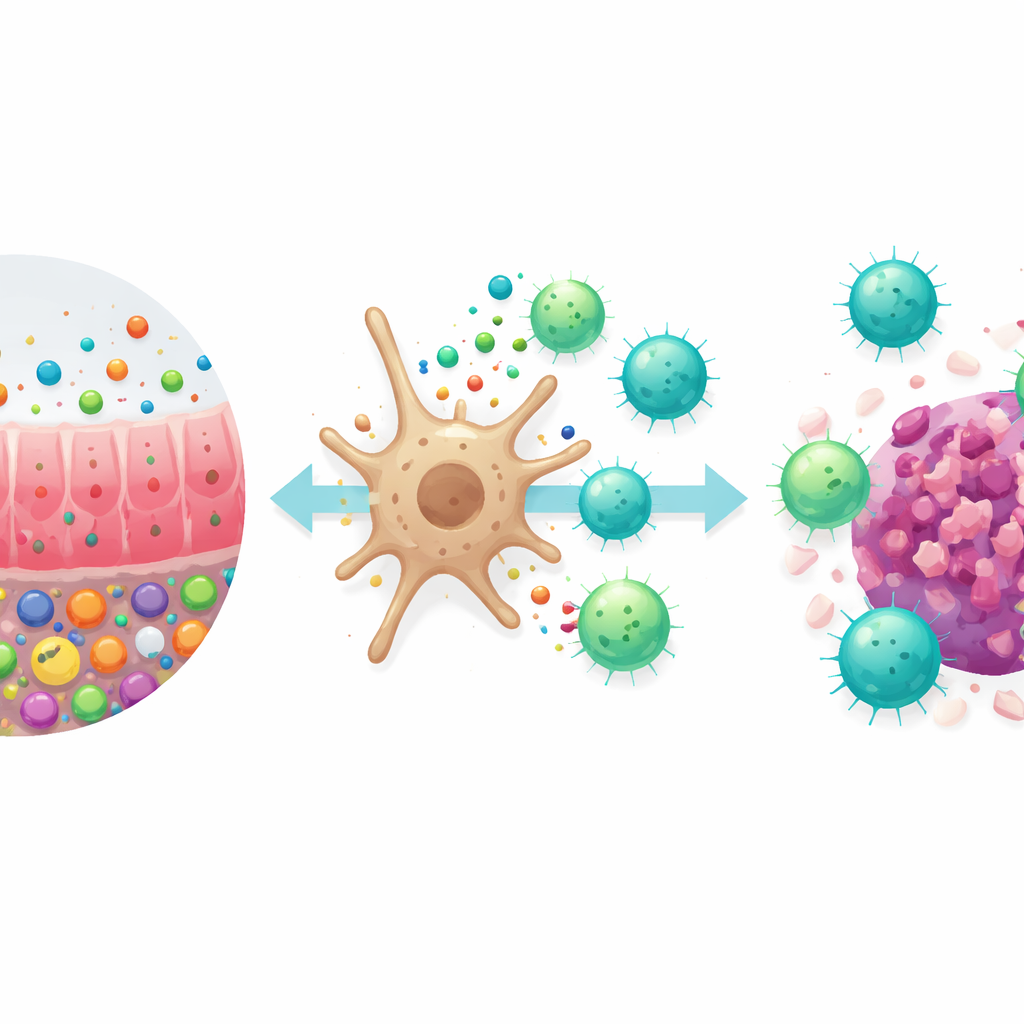
The authors start by explaining why the gut microbiome has captured oncologists’ attention. Helpful bacteria in the intestine help train immune cells, strengthen the gut barrier, and produce small molecules that fuel immune activity throughout the body. Certain bacterial groups have repeatedly been linked with better responses to immune checkpoint inhibitors, a class of drugs that "release the brakes" on T cells so they can attack tumors. Animal experiments show that wiping out gut microbes with antibiotics can blunt these drugs, while restoring specific microbes can bring their effects back. That science has inspired several ways to nudge the microbiome in patients: giving live "good" bacteria as probiotics, combining them with supportive dietary fibers (synbiotics), or transferring entire microbial communities through fecal microbiota transplantation (FMT).
What the researchers did to pull the evidence together
Because individual clinical studies are small and varied, the team performed a systematic review and meta-analysis. They searched major medical databases up to early 2025 for any clinical study in which cancer patients received immune checkpoint inhibitors alongside a microbiome-modulating strategy. Thirty-six studies, including 25 clinical trials and cohort studies, covering 2,746 patients, met the criteria. The cancers ranged from lung and melanoma to gastrointestinal and kidney tumors. The authors carefully extracted data on how many patients’ tumors shrank or stabilized, how their microbiomes changed, and what side effects occurred. They then pooled results where possible and explored subgroups by cancer type, microbiome strategy, and immunotherapy regimen.
Signals that reshaping the gut may boost responses
When all eligible studies were combined, about 40% of patients receiving some form of microbiome modulation plus immunotherapy had tumors that shrank measurably. This figure is higher than typical response rates seen historically with immune checkpoint drugs alone in similar cancers, though direct head-to-head comparisons were rare. Different approaches seemed to favor different cancers: probiotic use was associated with higher response rates in non-small cell lung cancer, while FMT showed encouraging signs in melanoma and metastatic kidney cancer. A smaller synbiotic study in melanoma reported especially high response rates, though it included relatively few patients. Importantly, responders often showed a gut microbiome enriched in bacteria that produce short-chain fatty acids and in Bifidobacterium species, and their overall microbial diversity tended to rise, hinting that a richer, more balanced gut community may go hand-in-hand with better tumor control.
Safety and the limits of current knowledge
Changing the gut microbiome in people whose immune systems are already strained by cancer treatment raises obvious safety concerns. Across 143 patients with detailed safety reporting, most microbiome-related side effects were mild, such as temporary digestive upset, and serious complications were rare, around 1%, with no treatment-related deaths reported. Rates of immune-related side effects from the checkpoint drugs themselves stayed within the range seen in past studies without microbiome interventions. Still, the picture is far from complete. Many trials were early stage, involved small numbers of patients, and used different doses, strains, and timing, making it hard to draw firm conclusions. Statistical tests revealed substantial variability between studies, suggesting that the pooled numbers should be viewed as suggestive signals rather than final answers.
What this means for patients and future care
For now, the takeaway for a lay reader is both hopeful and cautious. This synthesis of clinical research suggests that carefully chosen microbiome-modulating strategies may meaningfully influence how well cancer immunotherapy works, and they appear generally safe in the short term. At the same time, the evidence is not yet strong enough to recommend specific probiotic products or routine stool transplants for every patient on immunotherapy. The authors call for large, well-designed randomized trials that match microbiome strategies to tumor type, use standardized microbes or donor material, and track detailed microbial and clinical changes. If those studies confirm the early promise, future cancer care may routinely include not just scans and blood tests, but also a close look at the microscopic partners in our gut—and personalized plans to recruit them into the fight against cancer.
Citation: Thu, M.S., Le, H.B.C., Duc, N.P. et al. Impact of microbiome-modulating strategies in cancer patients receiving immunotherapy (MSIT): A systematic review and meta-analysis. Sci Rep 16, 13859 (2026). https://doi.org/10.1038/s41598-026-44743-7
Keywords: gut microbiome, cancer immunotherapy, probiotics, fecal microbiota transplantation, immune checkpoint inhibitors