Clear Sky Science · en
Natural convection heat transfer performance of finned heat sinks with different fin materials and geometries
Why keeping gadgets cool matters
From smartphones to solar inverters, modern electronics squeeze more power into ever-smaller spaces. That means they generate a lot of heat in a tight spot. If this heat is not carried away, devices can slow down, fail early, or even shut off for safety. In many real situations, like outdoor equipment, sealed boxes, or battery-powered systems, adding a fan is noisy, uses energy, and can break over time. This study explores how to cool hot surfaces using only the surrounding air, by shaping and choosing the metal "fins" that help carry heat away—offering insight that matters to anyone who wants quieter, more reliable electronics.
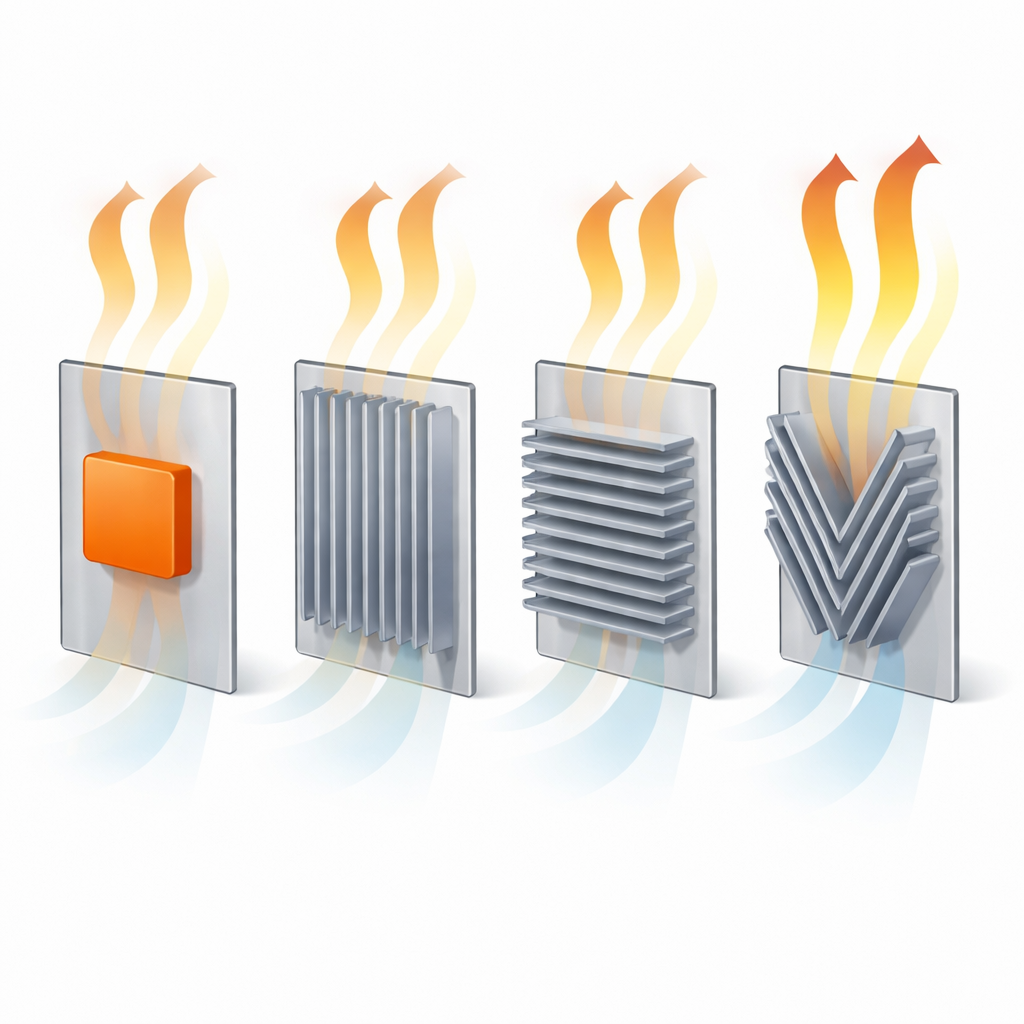
Simple metal plates versus shaped cooling fins
The researchers began with a plain upright aluminum plate heated from the back, much like the wall of an electronics enclosure. Around it was still room air—no fans, no blowers—so the only way to move heat was through natural convection, where hot air rises and cooler air flows in to replace it. They then bolted on different sets of thin metal fins, which act like extra surface area for heat to escape. The study compared three basic shapes: vertical fins, horizontal fins, and V-shaped fins that form angled channels. These were tested under identical conditions to see which combination of shape and material removed heat most effectively.
Testing different metals and fin layouts
To focus on geometry rather than size, all fins had the same height, thickness, spacing, and overall surface area, regardless of shape. What changed were their orientation and the metal they were made from: aluminum, copper, or brass. The plate was heated with electrical power between 25 and 150 watts, and eight carefully calibrated temperature sensors recorded how hot the plate and fins became. By comparing the surface temperatures to the surrounding air, the team could determine how fast heat was leaving the system, and how much each fin arrangement reduced the temperature compared with the bare plate.
How fin shape steers the flow of air
The measurements revealed that simply adding fins helped, but the way they were arranged mattered even more. Vertical fins provided straight channels that encouraged warm air to rise between them, lowering the plate temperature compared with the flat surface. Horizontal fins added surface area but partially blocked the natural upward flow, so they did not cool as well as the vertical design. The standout performers were the V-shaped fins. Their angled channels guided air to enter from below, speed up, and mix as it warmed and rose. This disturbed the thin, sluggish layer of hot air that otherwise clings to a surface, allowing cooler air to reach the metal more effectively and carry heat away.
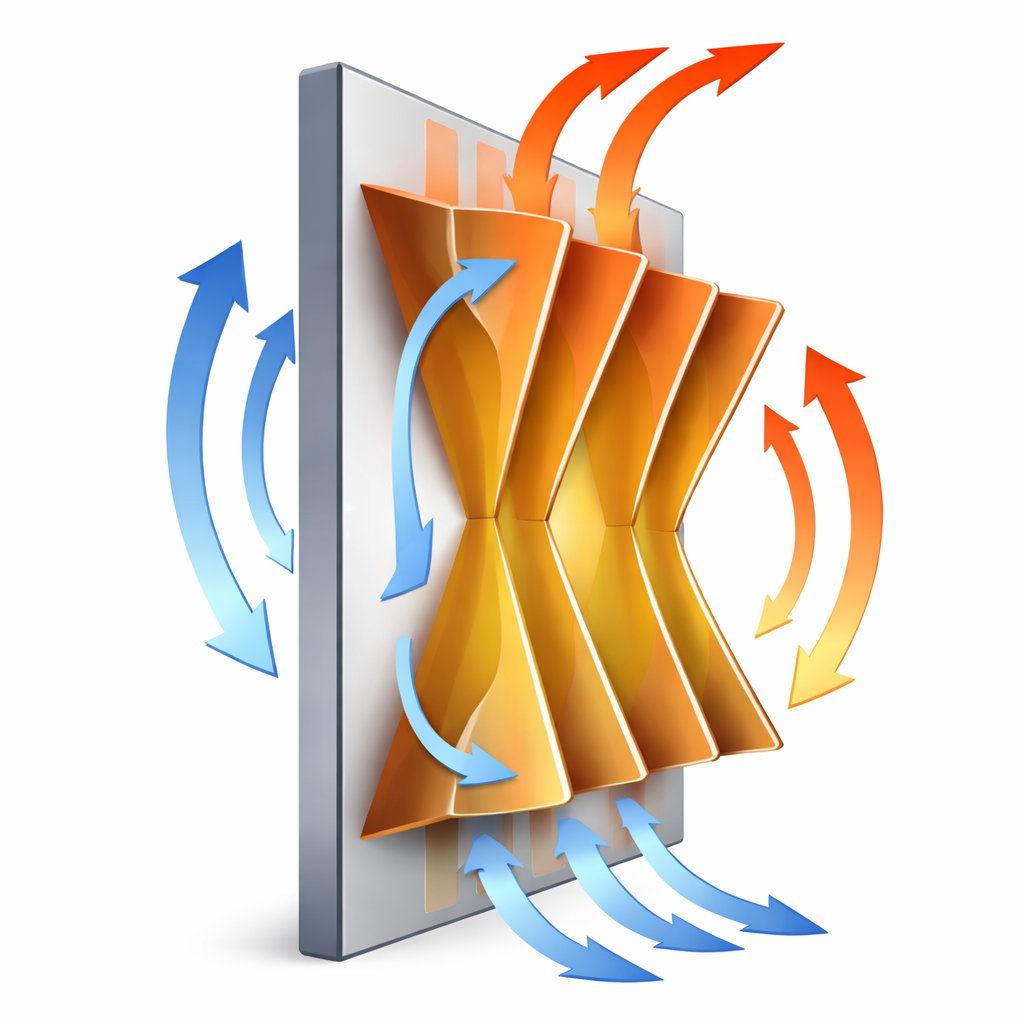
Why copper V-fins come out on top
Material choice layered another effect on top of geometry. Copper conducts heat better than aluminum, which in turn conducts better than brass. In vertical fin layouts, copper consistently kept the plate cooler than aluminum, and brass lagged behind. But again, shape dominated the results. For all three metals, switching from straight vertical fins to V-fins clearly reduced the temperature difference between the hot plate and the room and raised the measured cooling performance. The copper V-fin design delivered the strongest effect: at the highest power setting, it reached the largest heat removal rate and cut surface temperatures by roughly 15 to 20 percent compared with the plain plate, with an overall improvement in cooling performance of about 30 to 40 percent.
What this means for future quiet cooling
To a non-specialist, the key message is that you can cool electronics more effectively without adding fans simply by smartly shaping and choosing the fins attached to a hot surface. The study shows that angled V-shaped fins, especially when made from a good heat-conducting metal like copper, give the air better paths to flow and mix, which dramatically boosts natural cooling. At the same time, aluminum V-fins offer a strong improvement with less weight and cost. These insights provide practical, experimentally tested guidance for engineers designing fanless devices—from LED lamps to outdoor routers—helping them build systems that run cooler, last longer, and stay silent.
Citation: Wani, S., Shinde, S., Malwe, P.D. et al. Natural convection heat transfer performance of finned heat sinks with different fin materials and geometries. Sci Rep 16, 14231 (2026). https://doi.org/10.1038/s41598-026-44684-1
Keywords: passive cooling, heat sinks, natural convection, fin geometry, electronic thermal management