Clear Sky Science · en
Comparative genomics and biocontrol potential of five Bacillus strains isolated from grapevine rhizosphere
Why This Matters for Wine Lovers and Growers
Grapevines around the world are under siege from gray mold, a destructive fungus that can wipe out yields and spoil the flavor, color, and aroma of wine. Today, this disease is mostly held in check with synthetic fungicides that can leave residues in vineyards and bottles alike. This study explores a greener alternative: naturally occurring soil bacteria from Argentine vineyards that might protect vines from disease while keeping chemicals out of the glass.
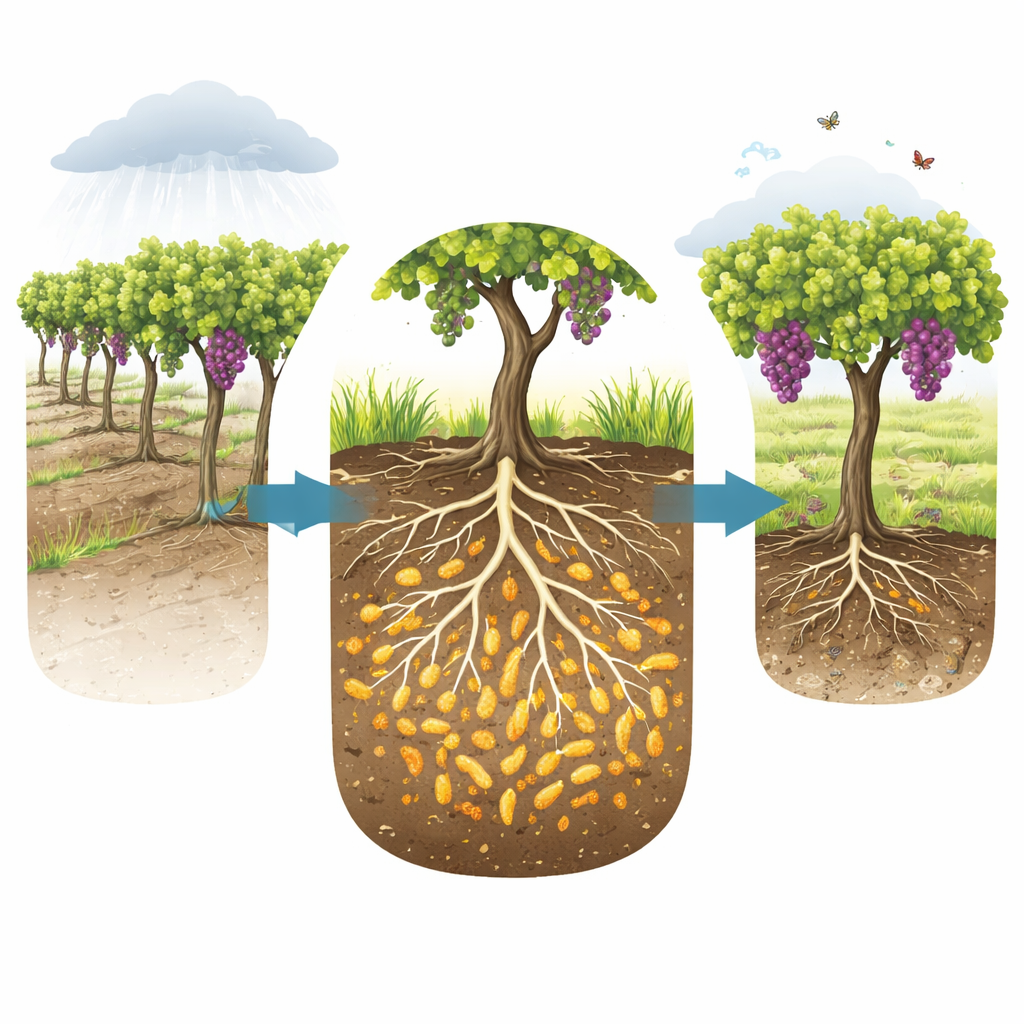
A Hidden Community Around Vine Roots
Grapevines do not live alone. Their roots are surrounded by a busy underground community of microbes that feed on root exudates and, in return, can help plants fend off stress and disease. From this root zone, the researchers had previously isolated five strains of Bacillus, a group of hardy, spore-forming bacteria already used in some eco-friendly crop treatments. All five strains could slow down important fungal pathogens in lab tests, including Botrytis cinerea, the cause of gray mold, but their exact identity and the way they worked were still unclear.
Sorting the Friendly from the Questionable
To understand what they had found, the team sequenced the complete DNA of each Bacillus strain and compared the genomes to reference databases. Two strains, named AMCV2 and FAU18, clearly grouped with Bacillus subtilis, a species widely regarded as safe and already used as a biological control agent. The other three strains clustered within the Bacillus cereus family, which includes not only useful biopesticides but also bacteria capable of causing food poisoning and other illnesses. Because the boundaries inside this family are fuzzy, the authors combined multiple classification methods and microscopic checks, ultimately assigning these three to Bacillus cereus sensu stricto—a group that carries typical diarrheal toxin genes and therefore requires caution.
Natural Weapons Made by Vineyard Bacteria
The genomic data also revealed what chemical tools these bacteria might use to fight fungi. All five strains carried sets of genes that can direct the production of secondary metabolites—specialized molecules not needed for basic survival but crucial for competition and defense. In the safe B. subtilis pair, AMCV2 and FAU18, the researchers found complete, highly conserved gene clusters for two cyclic lipopeptides, fengycin and surfactin. These soap-like molecules are known to punch holes in fungal membranes and disrupt biofilms. The B. cereus strains, by contrast, showed strong genetic potential to make siderophores, compounds that scavenge iron from the environment, but only incomplete hints of the powerful antifungal lipopeptides.
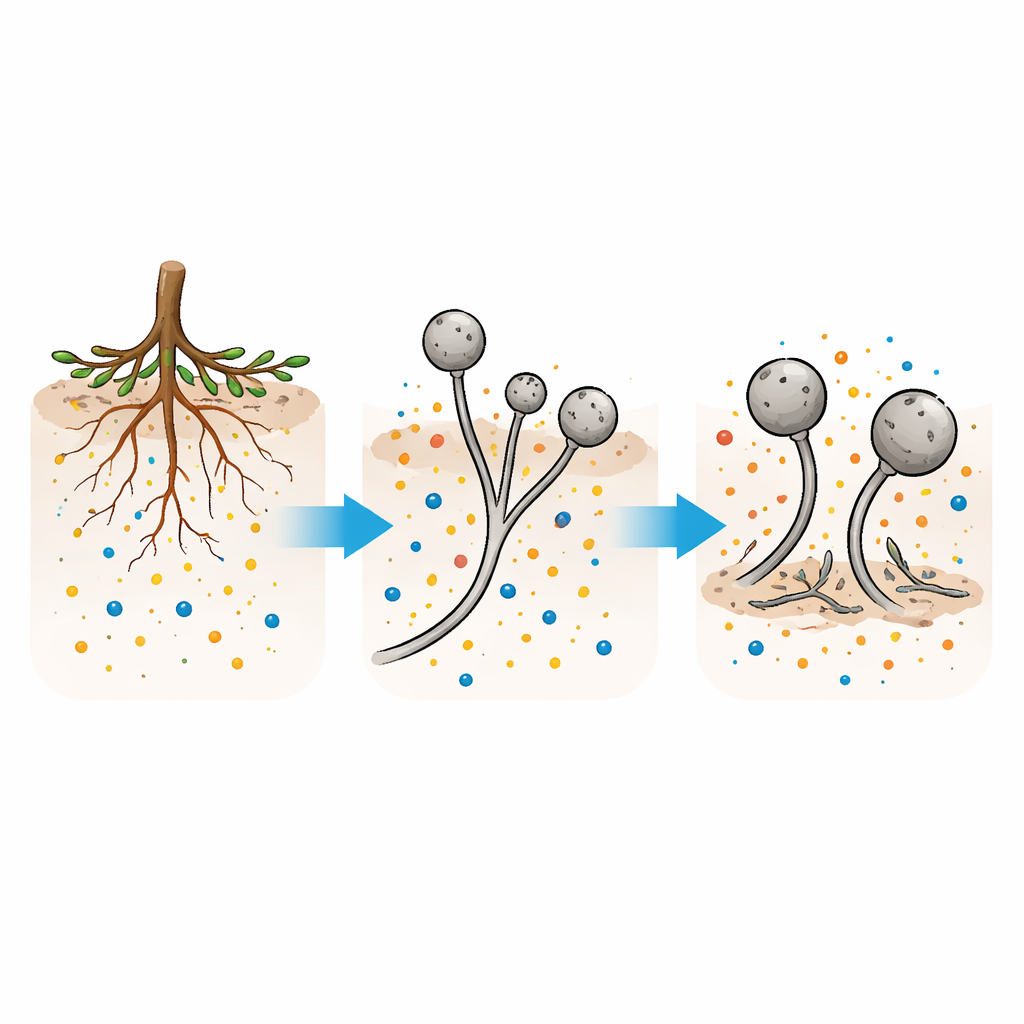
Putting the Bacteria’s Defenses to the Test
To see whether these predictions translated into real-world activity, the team isolated lipopeptides from cultures of each strain and applied them to plates where gray mold was growing. Only the extracts from AMCV2 and FAU18 created clear, long-lasting zones where the fungus failed to advance; the B. cereus strains showed no visible suppression under the same conditions. When the scientists zoomed in on the earliest stage of the fungus’s life cycle—spore germination—they found that lipopeptides from the B. subtilis pair almost completely blocked the sprouting of gray mold spores, while spores in control treatments germinated normally. Combining the two B. subtilis extracts did not boost the effect further, but it did not reduce it either, suggesting that each alone is already highly potent.
Toward Cleaner Vineyard Disease Control
By combining DNA analysis with laboratory tests, this study narrows down which vineyard bacteria are both effective and likely safe to use as living fungicides. The key result is that two B. subtilis strains from Argentine grapevine roots produce strong antifungal lipopeptides that stop gray mold spores from germinating, offering a promising tool for protecting vines without relying on heavy chemical sprays. In contrast, the B. cereus strains, despite making iron-grabbing compounds, showed little direct antifungal action and carry genetic traits that raise safety concerns. Together, the findings point toward AMCV2 and FAU18 as strong candidates for next-generation, Bacillus-based biofungicides that could support more sustainable and residue-free viticulture.
Citation: Lajoinie, D.M., Rocco Welsh, R., Rey, C. et al. Comparative genomics and biocontrol potential of five Bacillus strains isolated from grapevine rhizosphere. Sci Rep 16, 10819 (2026). https://doi.org/10.1038/s41598-026-44555-9
Keywords: grapevine biocontrol, Bacillus subtilis, gray mold, biofungicide, sustainable viticulture