Clear Sky Science · en
5-HMF inhibits glucocorticoid-induced osteoporosis through the VEGFR2/PI3K/AKT pathway
Why bone loss from common drugs matters
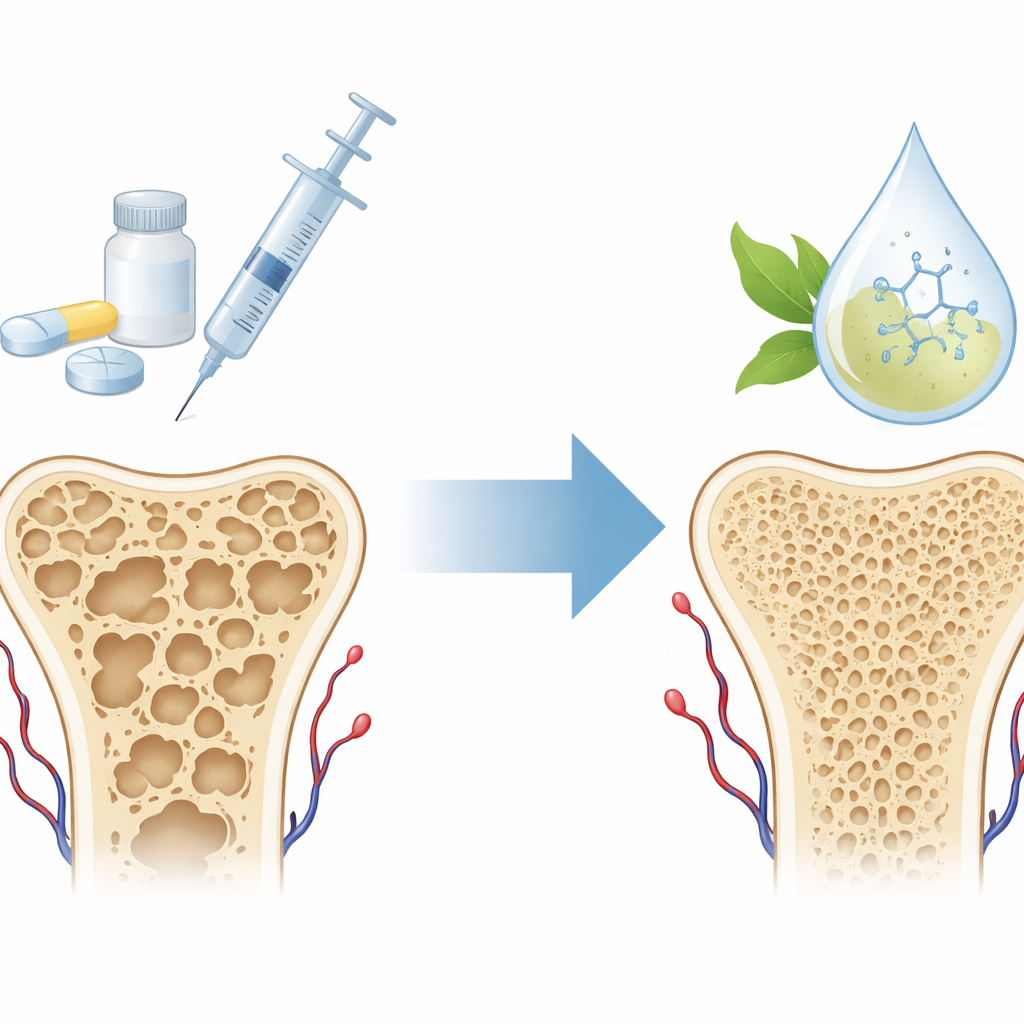
Many people with asthma, arthritis, or autoimmune diseases rely on long-term steroid medicines, known as glucocorticoids, to keep inflammation in check. These drugs can be lifesaving, but they come with a hidden cost: they gradually weaken bones, raising the risk of fractures. This study explores whether a natural food‑derived compound called 5‑HMF can shield bones from steroid‑induced damage, and it uncovers how this small molecule helps bone‑forming cells stay alive and keep building strong skeletons.
A natural helper hiding in everyday sources
5‑Hydroxymethylfurfural, or 5‑HMF, is a small molecule that forms during cooking and is also found in some traditional herbal remedies. Previous work hinted that it can nudge stem cells toward becoming bone‑forming cells rather than fat cells, and that it has antioxidant and anti‑inflammatory effects. The authors wondered if 5‑HMF could counteract the bone‑thinning effects of a widely used steroid, dexamethasone, which is known to slow bone formation, trigger cell death in bone‑building cells, and ultimately contribute to osteoporosis when used for months.
Testing bone cells and bones in living animals
To probe this idea, the team first studied two types of mouse cells that can turn into bone‑forming cells. They exposed them to dexamethasone, with or without added 5‑HMF. The steroid sharply reduced the cells’ ability to grow, mature, and lay down mineral, mimicking what happens in fragile bone. When 5‑HMF was added at low to medium doses, those harmful effects were largely reversed: the cells showed stronger signs of bone‑building activity and formed more mineral deposits. The researchers then moved to a mouse model, giving animals dexamethasone for three months to mimic long‑term treatment in humans, while a treatment group also received daily 5‑HMF by mouth. Scans and microscopic analysis revealed that mice receiving only the steroid lost bone mass and developed thin, sparse internal bone structure, while those given 5‑HMF preserved much more bone and showed denser, healthier‑looking tissue without obvious extra harm to major organs.
How better blood supply and survival signals protect bone
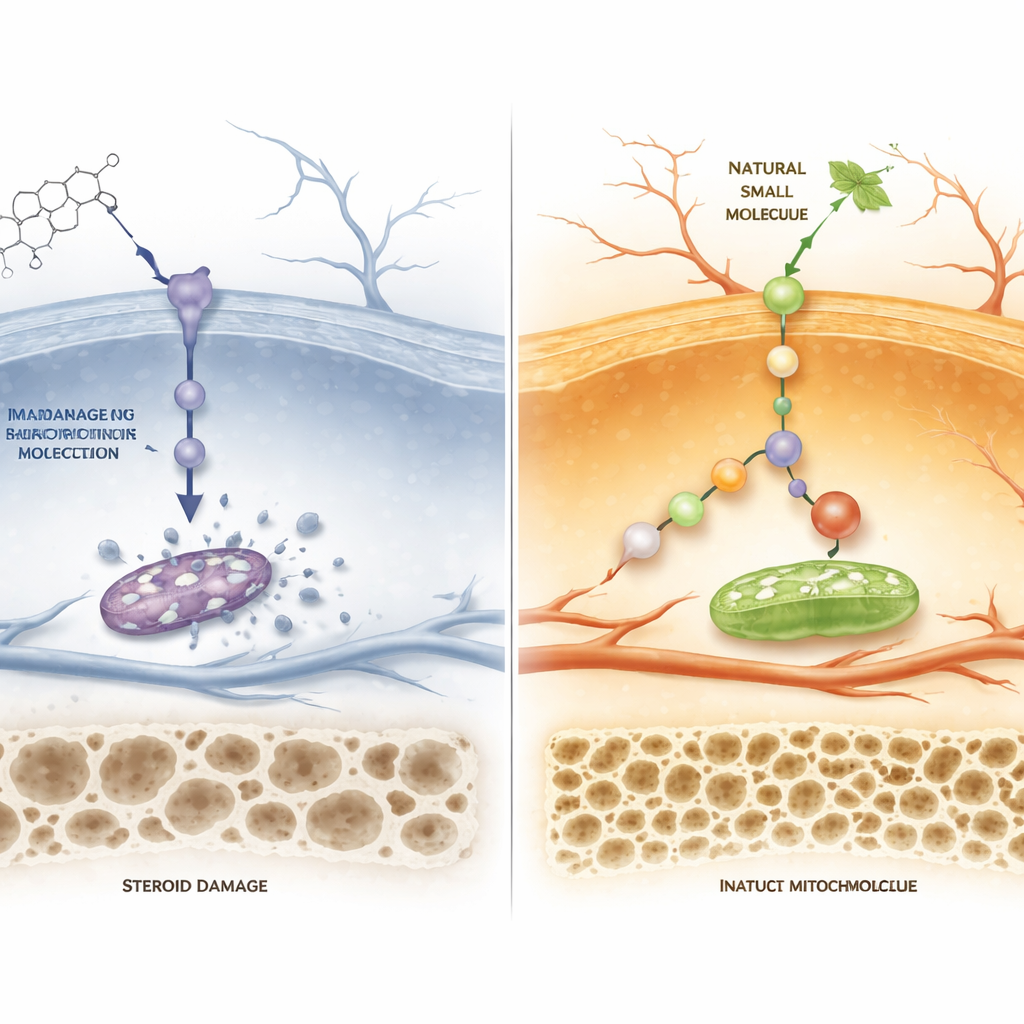
Diving deeper, the study focused on a communication route inside cells that links blood vessel growth, cell survival, and bone formation. A surface sensor called VEGFR2 normally helps blood vessels grow and supports nearby bone cells through an internal signal chain often referred to as the PI3K/AKT pathway. Dexamethasone dulled this signal, lowering the active forms of these proteins and weakening both blood vessel behavior and bone‑building activity. The researchers used computer‑based “network pharmacology” to predict targets of 5‑HMF and found that this VEGFR2‑centered network stood out. In lab tests, 5‑HMF restored the activation of VEGFR2 and its downstream partners in bone‑related cells and improved the ability of human vessel‑lining cells to migrate and form tube‑like networks, hinting that it supports the close partnership between blood vessels and bone.
Blocking the key signal removes 5‑HMF’s benefit
To confirm that this survival pathway was truly essential, the team added a drug that specifically blocks AKT, a central switch in the VEGFR2‑PI3K‑AKT chain. When AKT was inhibited, 5‑HMF could no longer rescue bone‑forming cells from dexamethasone: mineral deposits fell, bone‑related proteins dropped, and signs of programmed cell death reappeared. The balance between proteins that protect cells and those that promote cell suicide shifted back toward damage. These experiments show that 5‑HMF’s protective effect depends on keeping this survival circuitry switched on, allowing bone‑forming cells to resist steroid‑induced stress and continue their work.
What this could mean for patients on steroids
Taken together, the findings suggest that 5‑HMF helps bones weather the long‑term storm of steroid treatment by reactivating a natural survival and growth pathway, bolstering blood vessel support, and preventing bone‑forming cells from dying off. While this work was done in mice and cultured cells, and far more testing is needed before any new therapy reaches patients, it points to a promising strategy: using a small, food‑derived molecule to fine‑tune cell signals rather than simply adding more calcium or blocking bone breakdown. In the future, approaches inspired by 5‑HMF could help people who depend on glucocorticoids keep their bones stronger and their fracture risk lower.
Citation: Liu, S., Fang, F. & Jiang, Y. 5-HMF inhibits glucocorticoid-induced osteoporosis through the VEGFR2/PI3K/AKT pathway. Sci Rep 16, 13986 (2026). https://doi.org/10.1038/s41598-026-44463-y
Keywords: glucocorticoid-induced osteoporosis, 5-HMF, bone formation, cell survival pathways, angiogenesis