Clear Sky Science · en
Seasonal assessment of water quality and major ion chemistry in the lower region of Lake Kariba, Zambia
Why this lake matters to people
Lake Kariba, a vast artificial lake shared by Zambia and Zimbabwe, supplies electricity, food, jobs, and recreation to millions of people. This study looks at whether growing human activities around the lake, such as commercial fish farming and farming on land, are starting to damage the quality of its water. Understanding how clean the water remains through different seasons helps communities and decision makers protect both livelihoods and lake life.
Taking the pulse of a busy lake
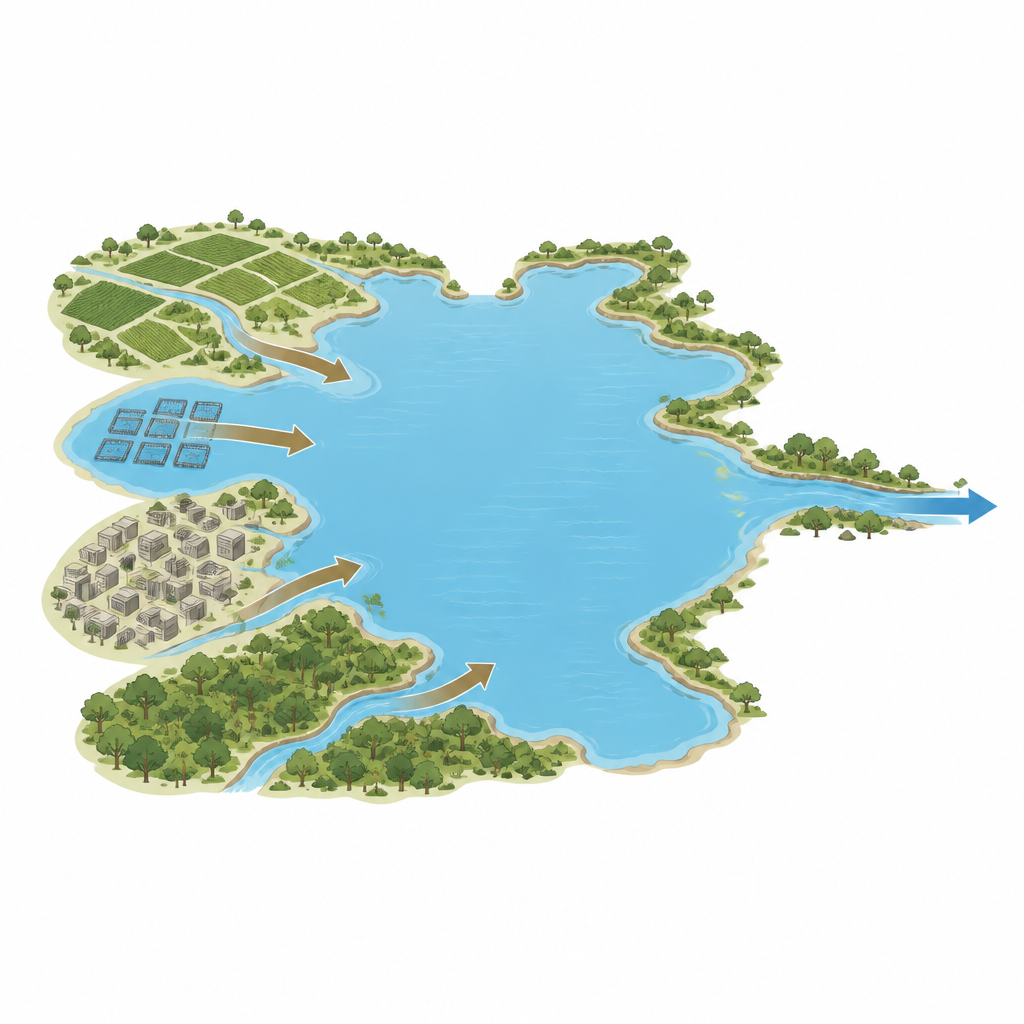
The researchers focused on the lower Zambian part of Lake Kariba, near the dam wall, where water from a large catchment finally gathers and flows out. This area receives influences from many land uses, including cage aquaculture for tilapia, crop fields, villages, tourism facilities, and more natural, vegetated shores. Over three seasons hot dry, cool dry, and rainy they collected 53 surface water samples to capture how conditions change across the year. In each sample they measured basic traits like acidity, temperature, dissolved salts, and a suite of dissolved ions that reveal both natural geology and human pollution.
Measuring the lake’s chemical fingerprint
Using sensitive laboratory instruments, the team quantified key negatively and positively charged ions, including nitrate, phosphate, sulphate, fluoride, chloride, sodium, potassium, calcium, magnesium, silicon, and traces of arsenic. These substances are central to aquatic chemistry and, at high levels, can signal fertiliser runoff, sewage, or industrial waste. They also compared measured levels with drinking water guidelines from the World Health Organization and national standards. Statistical tools were used to see how the many variables move together, to pinpoint likely pollution sources and seasonal patterns that would be hard to spot by eye alone.
What changes with the seasons
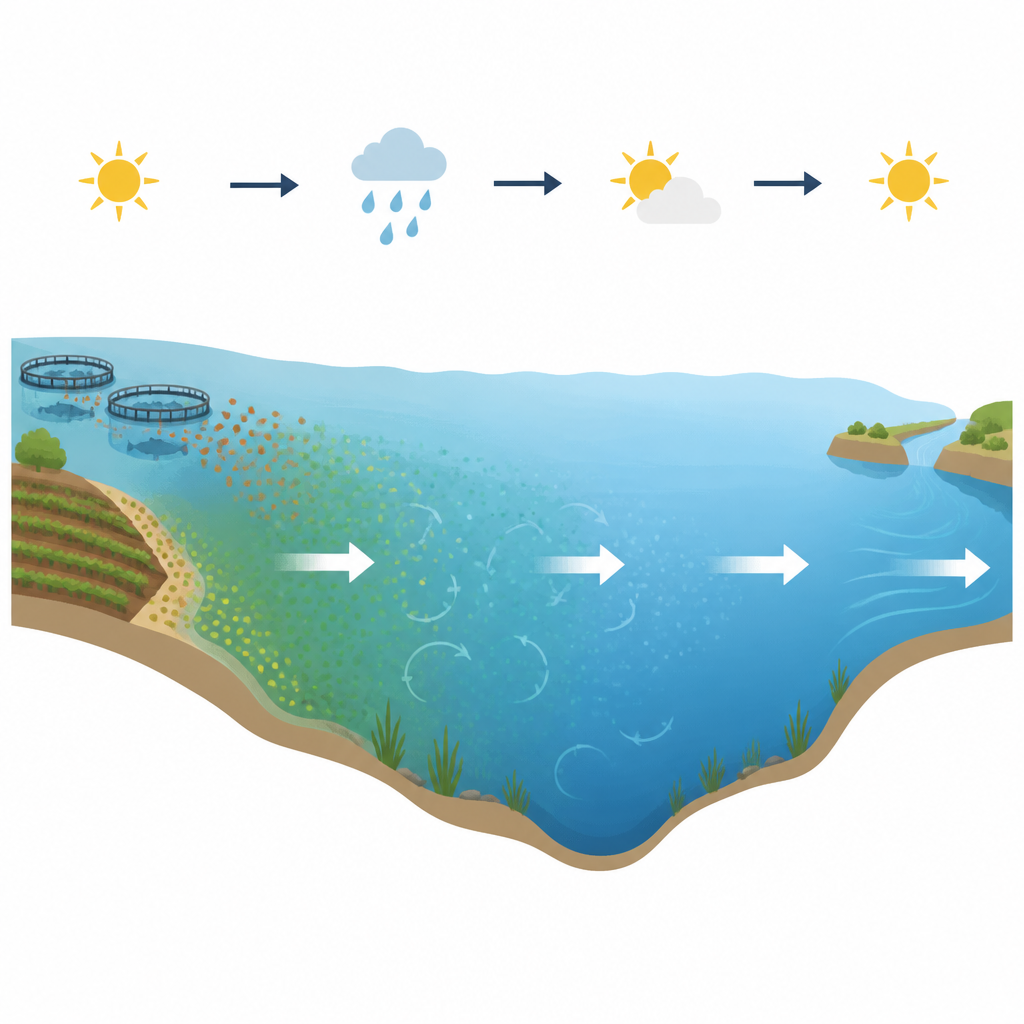
Across three years, the lake’s basic conditions stayed quite steady: the water was slightly alkaline, fairly cool, and low in dissolved salts. Still, some clear seasonal swings emerged. Electrical conductivity and total dissolved solids were a bit higher in the hot dry season, when strong evaporation concentrates dissolved material. Nitrate and some other nutrients rose near fish farms in the cool dry season, likely from uneaten feed and fish waste, while sulphate and other ions spiked after rains washed material off fields and settlements. Even so, the absolute concentrations of most ions remained low, and toxic elements such as arsenic stayed well below safety limits.
Local hot spots in a mostly clean system
By comparing sites and using correlation and principal component analysis, the scientists found that areas near aquaculture cages, hospitality facilities, and agricultural land showed distinct chemical signatures. For instance, certain sites near hotels and a laundry had slightly raised fluoride or phosphate, probably from cleaning agents and wastewater. Fish farming zones were linked to higher nitrate. Farther from these activities, closer to natural vegetation, water chemistry was more muted, suggesting dilution, mixing, and the sheer volume of the reservoir help buffer many local inputs before they reach the dam outflow.
What this means for the future
When the researchers combined all measurements into a single Water Quality Index, the lower part of Lake Kariba consistently fell into the best category, labelled excellent. For now, the lake appears to deliver clean water for people and wildlife despite growing pressure from farms, fish cages, and tourism. However, the study also shows that nutrients and other pollutants are already building up in certain bays and shorelines. To keep the lake healthy in a warming, more heavily used region, the authors argue that regular monitoring, better waste handling, and cautious expansion of aquaculture and agriculture will be essential.
Citation: Monyai, M., Dlamini, M.L., Richards, H. et al. Seasonal assessment of water quality and major ion chemistry in the lower region of Lake Kariba, Zambia. Sci Rep 16, 15196 (2026). https://doi.org/10.1038/s41598-026-44457-w
Keywords: Lake Kariba, water quality, aquaculture, seasonal variation, nutrient pollution