Clear Sky Science · en
Integrated platform for linezolid combinations against rifampicin-resistant Mycobacterium tuberculosis: synergy, macrophage apoptosis, and immune modulation
Why this research matters for everyday health
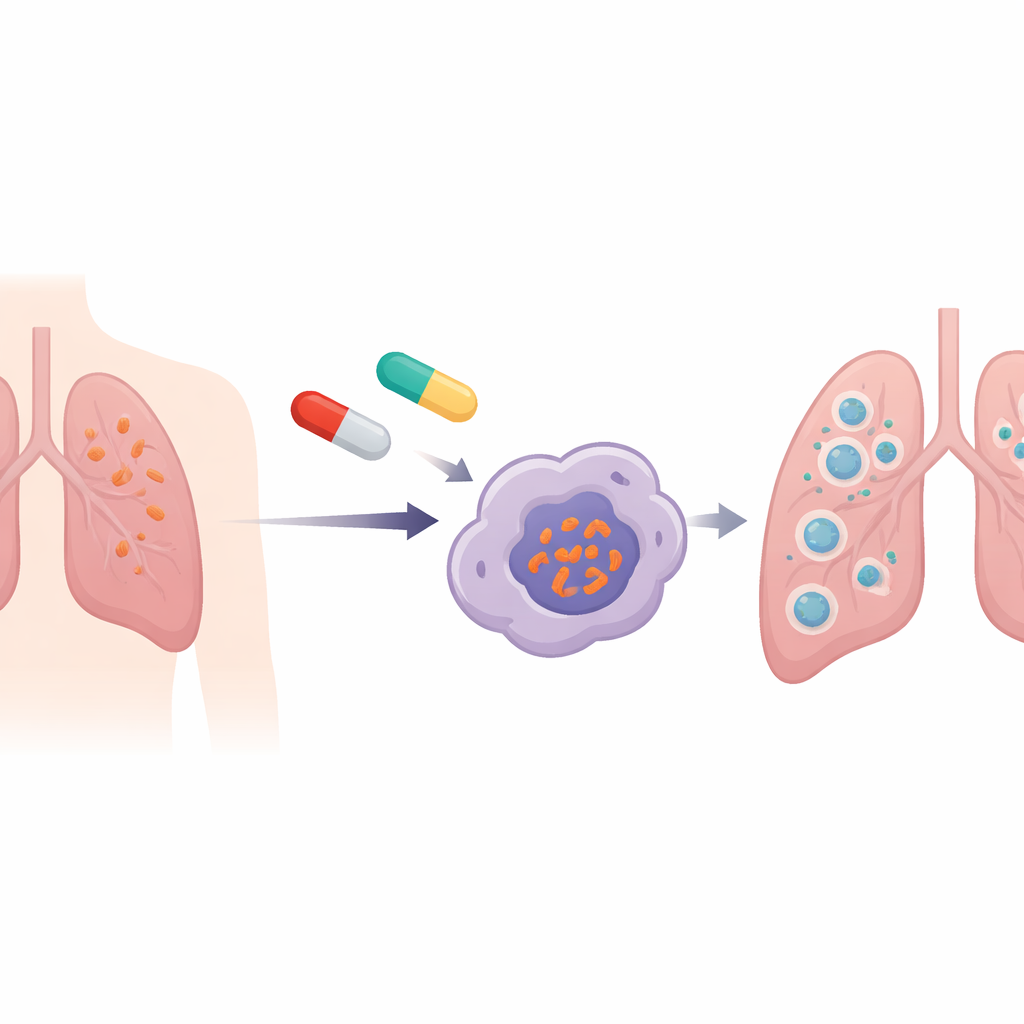
Tuberculosis remains one of the world’s deadliest infectious diseases, and strains that resist standard drugs are especially hard to cure. This study looks at how to make an important TB medicine, linezolid, work better and more safely by pairing it with other drugs and by understanding how these combinations not only kill bacteria but also help the body’s own immune cells fight back.
Finding better partners for a key TB drug
Rifampicin-resistant tuberculosis is notoriously difficult to treat and still kills a large share of those who develop it. Linezolid, a synthetic antibiotic now considered a frontline option for drug-resistant TB, has improved outcomes but is far from perfect on its own. The authors set out to systematically test which companion drugs best boost linezolid’s power against resistant TB bacteria grown in the lab. They focused on five commonly used second-line medicines and asked: which pairings truly work together better than either drug alone?
Testing teamwork between antibiotics
Using a color-based growth test in 96-well plates, the team measured how much of each drug was needed to stop the bacteria. They then applied a standard “checkerboard” method to see how linezolid interacted with each partner. Only two drugs—cycloserine and clofazimine—showed real synergy with linezolid, meaning the combined effect was stronger than the sum of their parts. In contrast, combinations with bedaquiline or two common fluoroquinolone antibiotics did not perform better than using each of those medicines alone, an important finding because such pairings are often used in current treatment plans.
Watching the battle inside immune cells
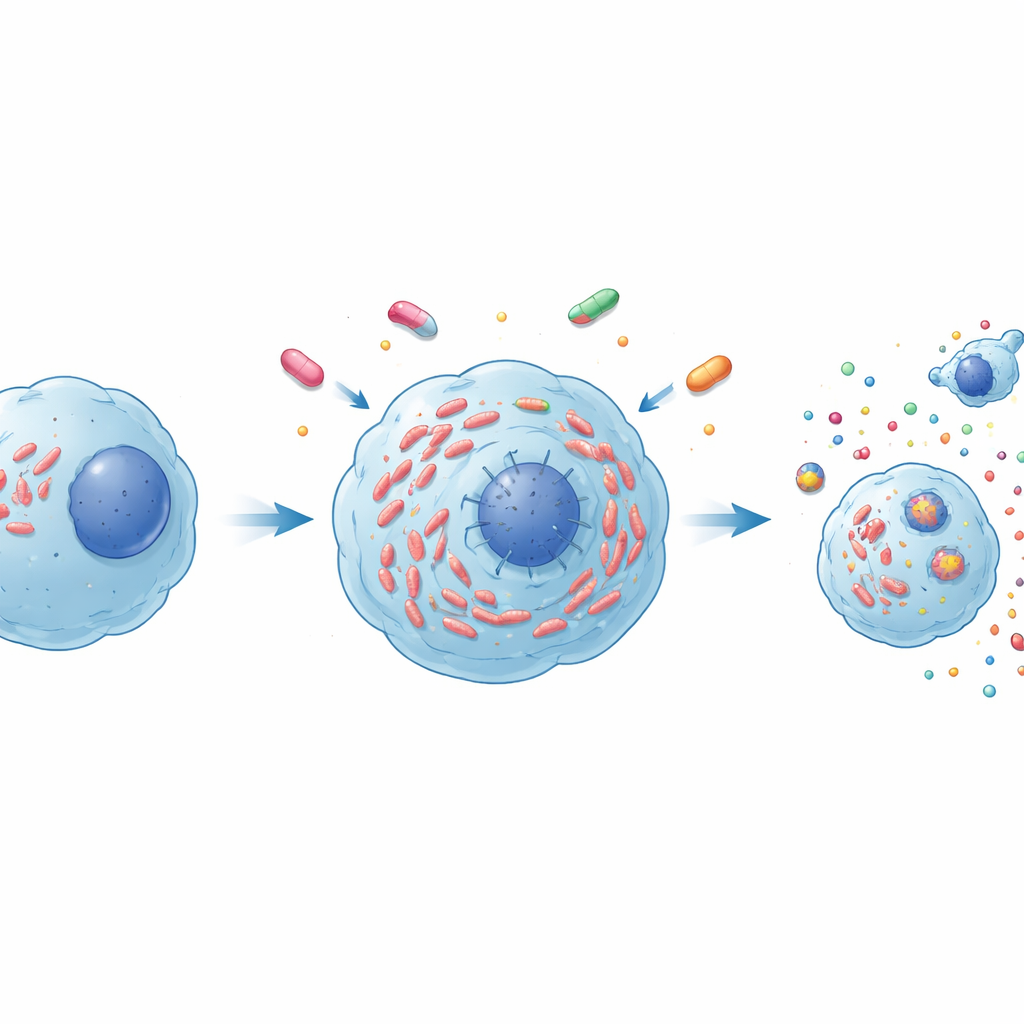
Tuberculosis bacteria live and multiply inside macrophages, the immune cells that normally ingest and destroy invading microbes. To see whether the promising drug pairs also worked in this more realistic setting, the researchers infected human macrophage-like cells with TB and then treated them with linezolid plus cycloserine or clofazimine. Both combinations sharply cut the number of living bacteria inside these cells over two days, with linezolid plus clofazimine showing slightly stronger bacterial killing. The effect grew stronger at higher doses, but even at standard levels the combinations made a clear difference, suggesting that smart pairing might allow effective treatment without pushing doses to more toxic ranges.
Shifting cell death and immune signals
The study also examined how these drug pairs influence the infected macrophages themselves. Both combinations triggered infected cells to undergo apoptosis, a controlled form of cell death that can limit the spread of bacteria. Linezolid plus cycloserine caused a faster and more pronounced early wave of apoptosis, while the clofazimine pairing acted more gradually. At the same time, both combinations nudged immune signaling molecules in a favorable direction: they increased levels of factors linked to protective responses while lowering one, IL-6, that is associated with damaging inflammation. Notably, linezolid plus cycloserine also reduced IL-10, a molecule that tends to dampen protective immunity and help TB bacteria persist, creating a more hostile environment for the pathogen.
Balancing benefits and risks for patients
Because linezolid can cause serious side effects during long courses of therapy, the researchers also analyzed medical records from patients treated with this drug. They found that nerve problems, blood changes, and other adverse reactions were common, particularly in older individuals, women, those receiving higher doses, people with other illnesses, and those treated for longer periods. These observations reinforce the need to combine linezolid wisely, so that its benefits can be achieved without pushing doses so high or for so long that harms outweigh gains.
What this means for future TB care
In plain terms, this work shows that not all drug pairings with linezolid are created equal. Cycloserine and clofazimine stand out as partners that not only help linezolid kill rifampicin-resistant TB bacteria more effectively, including inside immune cells, but also steer the immune response toward one that clears infection rather than shelters it. By providing an integrated lab platform that measures bacterial killing, cell death, and immune signals together, the study offers a practical way to design and refine combination treatments that are both more potent against TB and safer for patients.
Citation: Cui, D., Li, N. & Ren, X. Integrated platform for linezolid combinations against rifampicin-resistant Mycobacterium tuberculosis: synergy, macrophage apoptosis, and immune modulation. Sci Rep 16, 14591 (2026). https://doi.org/10.1038/s41598-026-44422-7
Keywords: tuberculosis, drug-resistant TB, linezolid combinations, host immune response, antibiotic synergy