Clear Sky Science · en
Prediction of hypertensive disorders of pregnancy in advanced-age pregnant women using SHAP value and XGBoost
Why this matters for expectant families
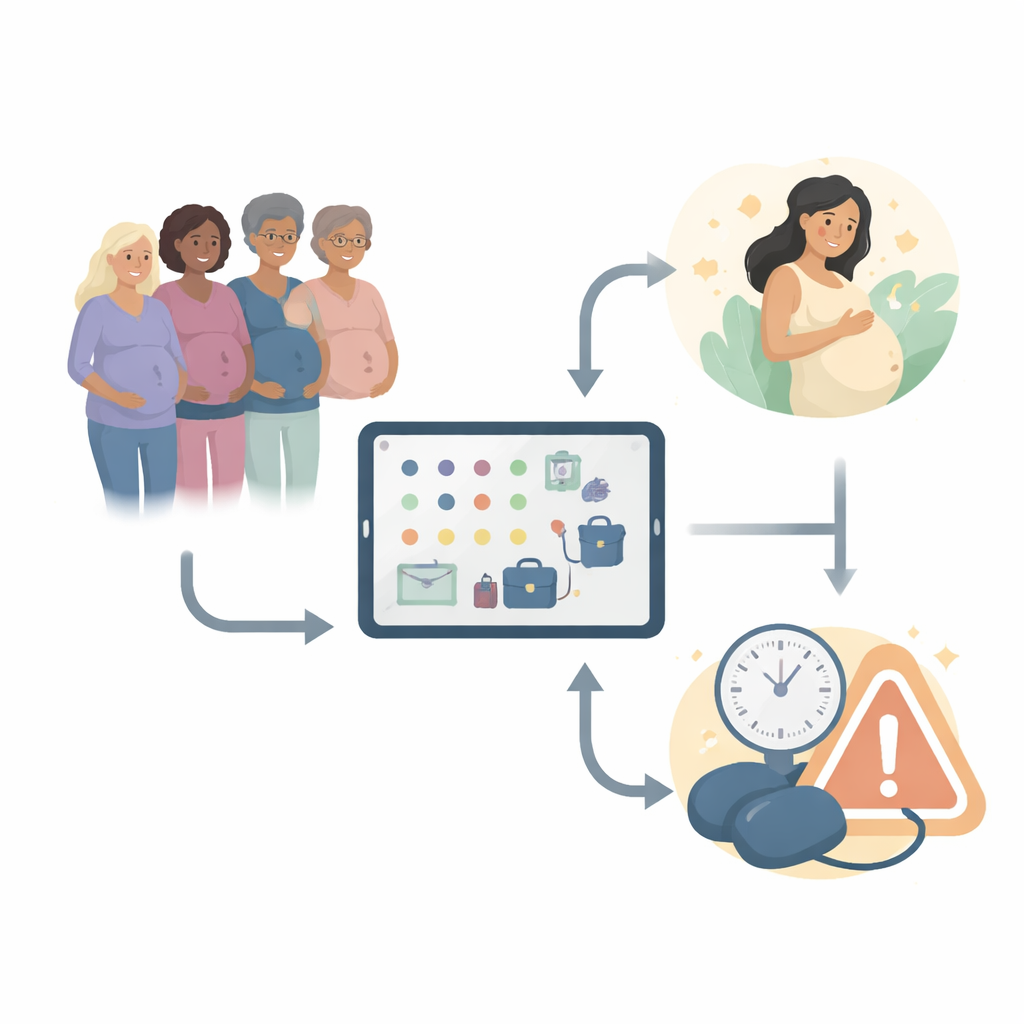
High blood pressure problems in pregnancy are a major cause of illness for mothers and babies worldwide, and they are becoming more common as more women choose to have children in their late 30s and 40s. This study from China asks a very practical question: can we use simple, everyday information—such as early pregnancy blood pressure, weight, family history, and daily habits—to estimate which older pregnant women are more likely to develop these conditions, without expensive lab tests or scans? If so, women and clinicians could act earlier to protect both mother and child.
Blood pressure risks in later pregnancy years
Hypertensive disorders of pregnancy, which include conditions like gestational hypertension and preeclampsia, can lead to preterm birth, poor growth of the baby, and serious complications for the mother. The risk is higher for women aged 35 and older, a group that is growing quickly in China due to social and policy changes. Yet many screening programs focus on blood tests and ultrasound that may be hard to provide to every pregnant woman, especially in areas with limited resources. At the same time, daily behaviors such as physical activity, work patterns, sleep, and screen time are increasingly recognized as important influences on blood pressure, but they are rarely built into formal risk tools.
A large, long-term look at older pregnancies
The researchers followed more than 11,000 pregnant women aged 35 and above who were receiving care at seven major hospitals across China between 2015 and 2019. All had single-baby pregnancies and no long-standing high blood pressure before pregnancy. Women completed detailed questionnaires at five points from early pregnancy through after birth, covering age, weight, education, income, medical and family history, and lifestyle habits like smoking, alcohol use, screen time, working hours, exercise, and sleep. Blood pressure was measured at clinic visits in each trimester. About 9 percent of these women went on to develop a hypertensive disorder during pregnancy.
Turning everyday data into a risk score
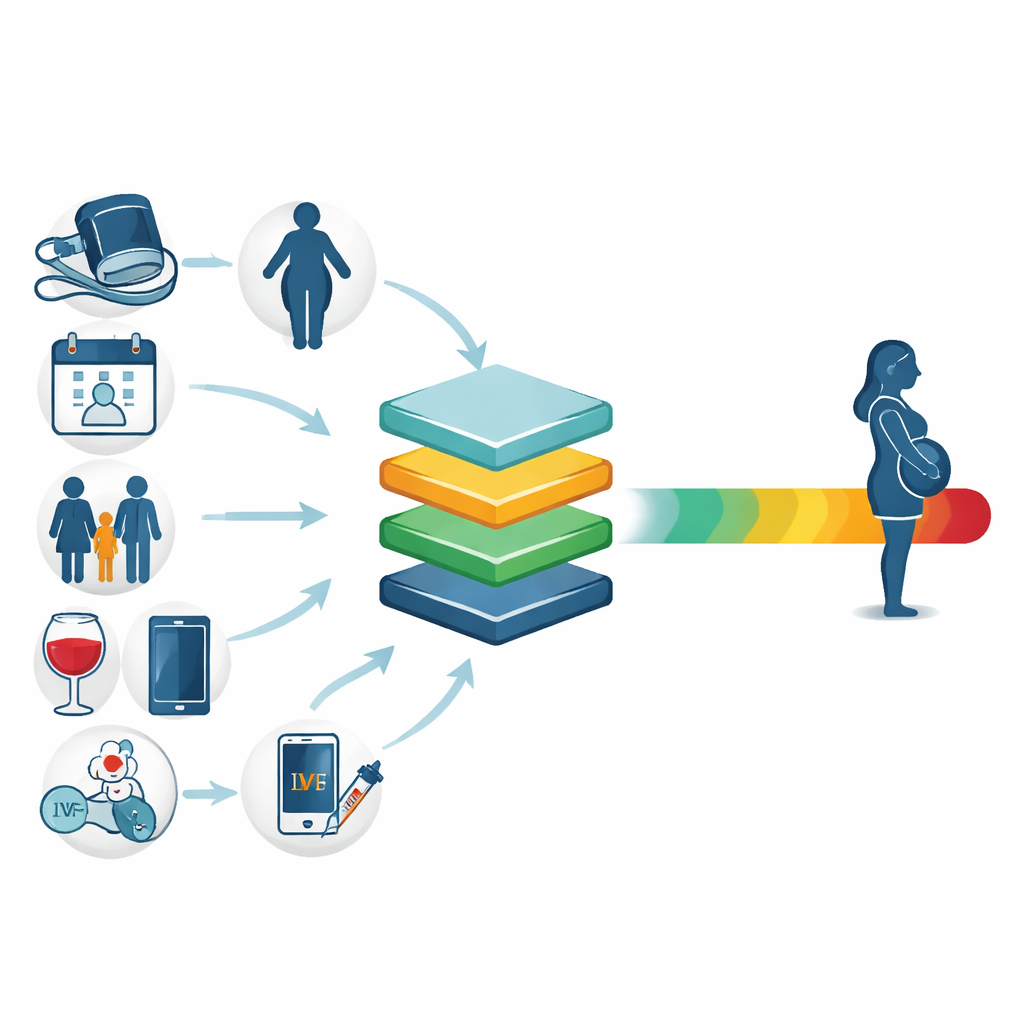
To build a prediction tool, the team first used a statistical method to sift through many possible risk factors and keep only the most informative ones. Nine stood out: early pregnancy systolic and diastolic blood pressure, body mass index, family history of high blood pressure, having had previous births, age itself, alcohol use, assisted reproduction, and daily screen use. They then trained a modern machine-learning algorithm, known as XGBoost, to learn patterns linking these factors to later high blood pressure problems. The model’s performance was tested on separate data and further checked with cross-validation to avoid overfitting. Overall, the tool correctly distinguished higher-risk from lower-risk women with good accuracy, particularly in ruling out those at low risk.
Making the “black box” model understandable
Machine-learning models are often criticized for being hard to interpret. To address this, the authors used a technique called SHAP, which allows them to visualize how much each factor pushes an individual woman’s predicted risk up or down. Early pregnancy blood pressure and body mass index were by far the strongest drivers: higher values clearly raised risk. Family history, age, previous births, assisted reproduction, alcohol use, and screen time also nudged risk upward, although their effects were smaller. Interestingly, women who worked moderate or even longer hours tended to have lower rates of hypertension than those who were unemployed, pointing to a complex relationship between work, income, and health that challenges the simple idea that “less work is always safer” in pregnancy.
What this means for care and daily life
The study shows that a reasonably accurate early warning tool for high blood pressure in older pregnant women can be built from information that is cheap and easy to collect, without relying on specialized tests. While the model is not accurate enough to serve as a diagnosis on its own—its sensitivity is modest—it is well suited for self-screening and community-level programs that identify women who are very unlikely to develop problems and those who should pay closer attention. For expectant mothers in their late 30s or 40s, especially in settings with limited resources, this kind of simple, personalized risk estimate could support timely blood pressure monitoring, lifestyle adjustments, and decisions about when to seek medical review, potentially reducing the toll of hypertensive disorders on mothers and babies.
Citation: Wang, J., Zhu, H. & Gu, W. Prediction of hypertensive disorders of pregnancy in advanced-age pregnant women using SHAP value and XGBoost. Sci Rep 16, 13971 (2026). https://doi.org/10.1038/s41598-026-44411-w
Keywords: advanced maternal age, pregnancy hypertension, risk prediction model, lifestyle factors, machine learning in obstetrics