Clear Sky Science · en
Mechanical performance and python-based TOPSIS ranking of carbon-filled Kevlar/Basalt/S-glass hybrid epoxy composites for automotive structural applications
Stronger, Lighter Car Parts
Modern cars are expected to be lighter to save fuel or battery power, yet tough enough to protect passengers in a crash. This study explores a new recipe for car body materials that could help do both at once. Instead of using traditional metal panels, the researchers combine several high‑performance fibers and a small amount of carbon powder inside a plastic glue, creating a layered material designed specifically for parts like roof panels and other structural pieces.
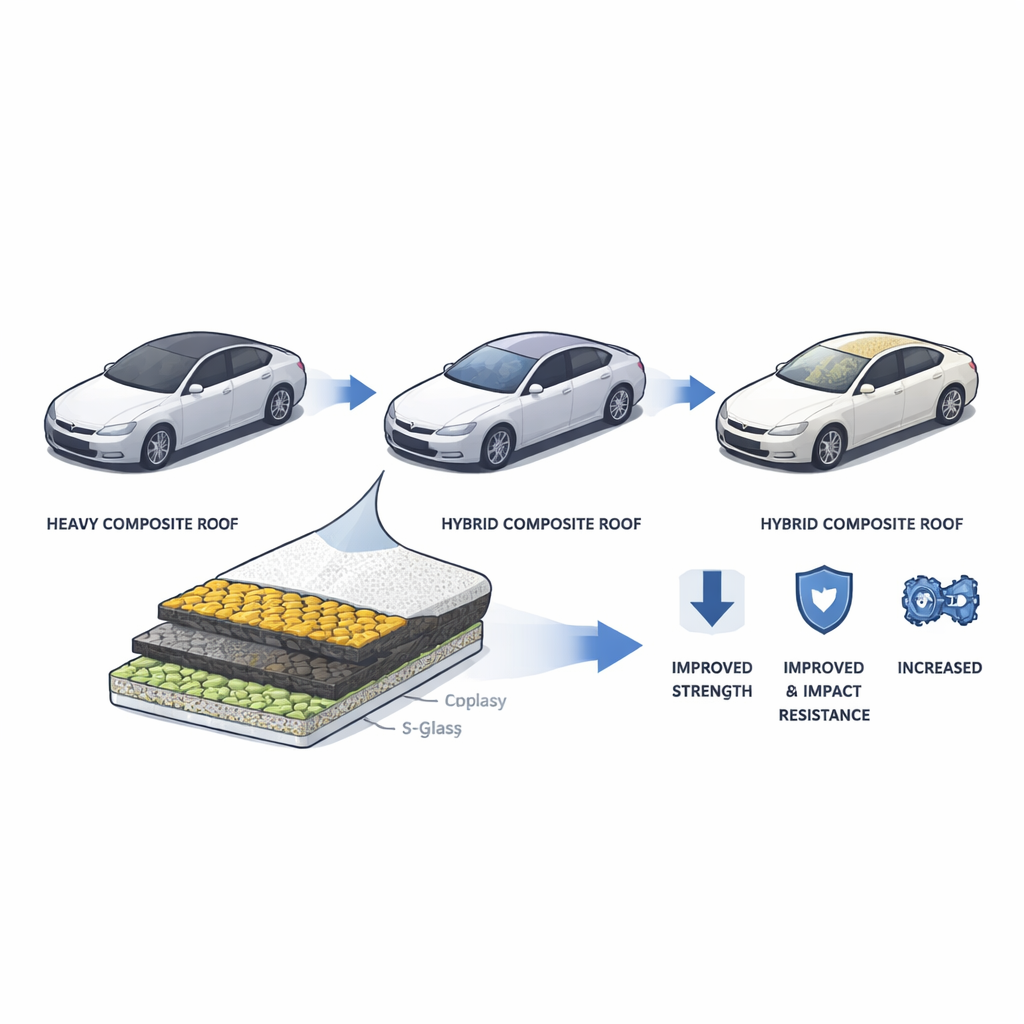
Building a New Kind of Car Panel
The team worked with an epoxy resin, a familiar strong plastic, and reinforced it with three advanced fibers: Kevlar, basalt, and S‑glass. Kevlar is known from body armor for its toughness, basalt comes from volcanic rock and brings strength and heat resistance, and S‑glass is a special type of glass fiber that is stiffer and stronger than regular fiberglass. On top of that, they mixed in 10% by weight of fine carbon powder, which acts like tiny stones in concrete, helping the material resist wear and surface damage.
Single Fibers Versus Smart Layering
Instead of relying on just one fiber type, the researchers compared seven different material layouts: three with only one fiber, three that mixed two fibers, and one that combined all three. Each design used six woven fabric layers stacked in a carefully planned sequence and made by a hand lay‑up method, similar to building up sheets of fabric soaked in resin. By changing how the layers were arranged, they could tune how the material handled stretching, bending, sudden impacts, and surface indentation, all key needs for parts that form a car’s outer shell.
Putting the Materials to the Test
All versions were put through standard mechanical tests. Tensile tests pulled the strips until they broke to measure strength in tension. Flexural tests bent them like a diving board to reveal how much load they could bear in bending. Impact tests struck notched samples with a swinging hammer to see how much energy they could absorb before cracking. Hardness tests pressed a steel ball into the surface to gauge how resistant the material was to dents and wear. Across the board, the tri‑hybrid laminate that combined basalt, Kevlar, and S‑glass with carbon powder came out on top: it had the highest strength in stretching and bending, absorbed the most impact energy, and showed the hardest surface.
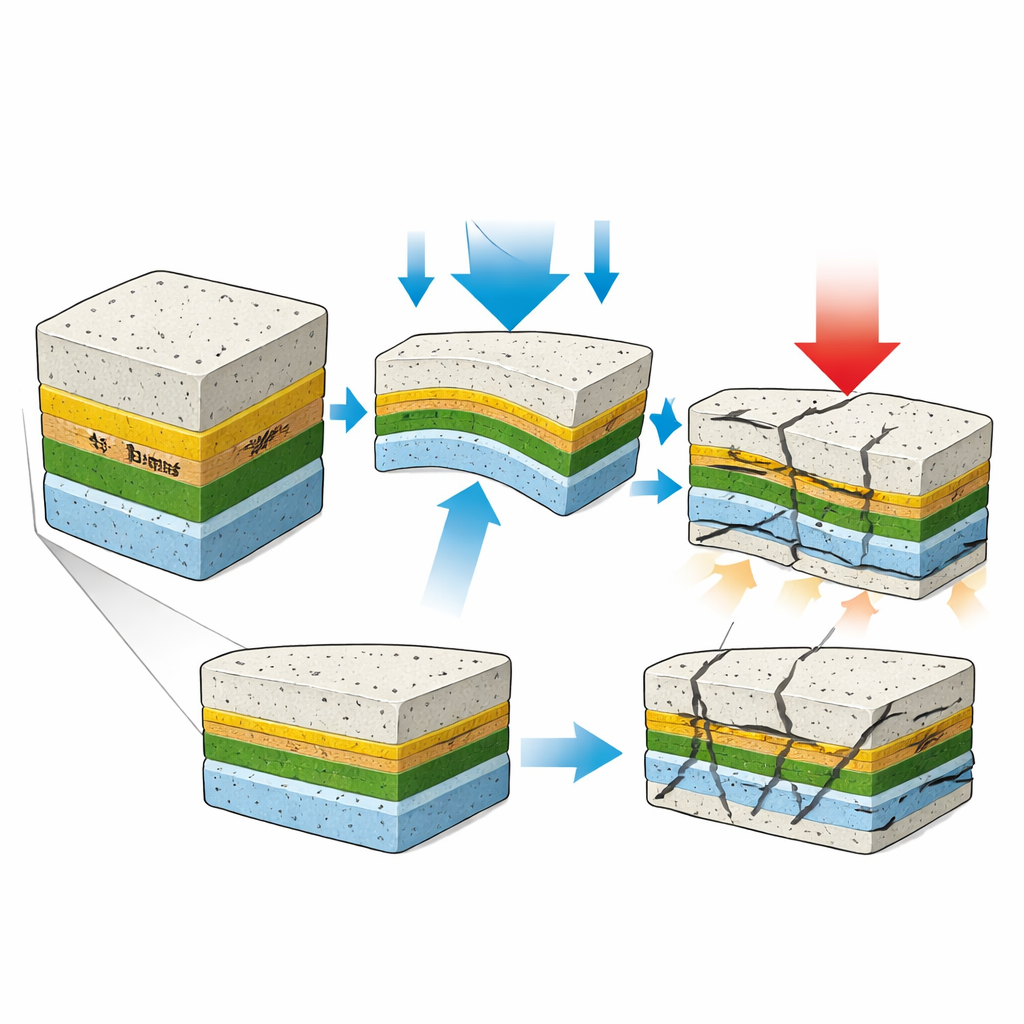
Letting a Computer Rank the Winners
Because car parts must meet many demands at once, the team did not want to choose a “best” material by looking at only one number. They used a decision‑making method called TOPSIS, coded in Python, to weigh all four properties together. Each of the seven composite designs was treated as an option, and the program compared them to an ideal combination of high strength, high impact resistance, and high hardness. The tri‑hybrid material again emerged as the clear winner, while the Kevlar‑only version ranked last, showing that mixing fibers can be more effective than relying on a single champion material.
What This Means for Future Vehicles
For a layperson, the message is simple: by artfully layering different strong fibers and sprinkling in carbon powder, engineers can create panels that are lighter than metal yet better at carrying loads, resisting dents, and soaking up impacts. The basalt–Kevlar–S‑glass composite identified here has the right mix of stiffness, toughness, and surface durability to be a strong candidate for next‑generation roof panels and other load‑bearing car parts. While further work is needed to study long‑term aging and real‑world conditions, this research shows a promising pathway toward cars that are both safer and more energy‑efficient.
Citation: Mohammed, R., Shaik, A.S., L. L. S, M. et al. Mechanical performance and python-based TOPSIS ranking of carbon-filled Kevlar/Basalt/S-glass hybrid epoxy composites for automotive structural applications. Sci Rep 16, 12228 (2026). https://doi.org/10.1038/s41598-026-44376-w
Keywords: hybrid composites, lightweight automotive materials, Kevlar basalt S-glass, carbon-filled epoxy, multi-criteria material ranking