Clear Sky Science · en
Molecular study of the small intestine dysbiosis derived from iron deficiency anaemia
Why the Gut Matters in Iron-Poor Blood
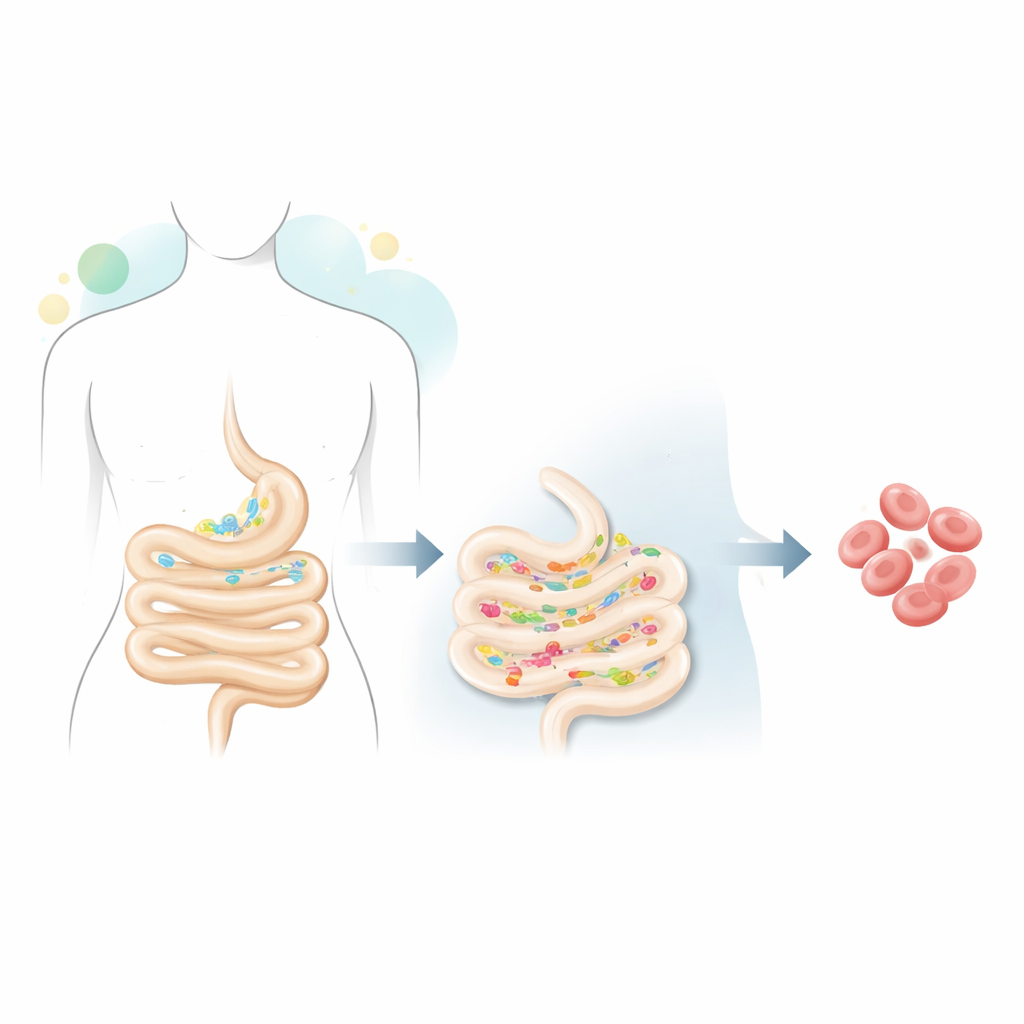
Iron deficiency anaemia is best known for causing tiredness and weakness, but this study shows that the problem may start much earlier in the digestive tract than most people realize. The researchers looked closely at the small intestine—the main gateway for nutrients—to see how a lack of iron reshapes the community of microbes that live there. Their findings suggest that iron deficiency itself may set the stage for a kind of microbial overgrowth that, in turn, makes it even harder for the body to absorb iron, creating a vicious circle.
A Common Blood Problem with Hidden Roots
Iron deficiency anaemia affects roughly one in three people worldwide, especially children, women and older adults. Doctors know that the gut microbiome—the trillions of microbes living in our digestive system—can influence how well we absorb iron, and that some patients with bacterial overgrowth in the small intestine struggle to take up this mineral. What has been unclear is whether the reverse can also happen: can a lack of iron change the small intestine’s microbes so much that they begin to resemble those seen in small intestinal bacterial overgrowth (SIBO), a condition linked to bloating, pain and poor nutrient absorption?
Testing the Gut’s Response to Low Iron
To answer this, the scientists used a well-established rat model of iron deficiency anaemia. One group of animals received a standard diet, while another was fed food deliberately lacking iron for 40 days. Blood tests confirmed that the second group developed clear anaemia, with low red blood cell counts, reduced haemoglobin and depleted iron stores. The team then collected material from three parts of the small intestine—the duodenum, jejunum and ileum—and used DNA-based methods to count bacteria, identify which types were present, and predict what those microbes were doing metabolically.
When the Small Intestine Starts to Look Like the Colon
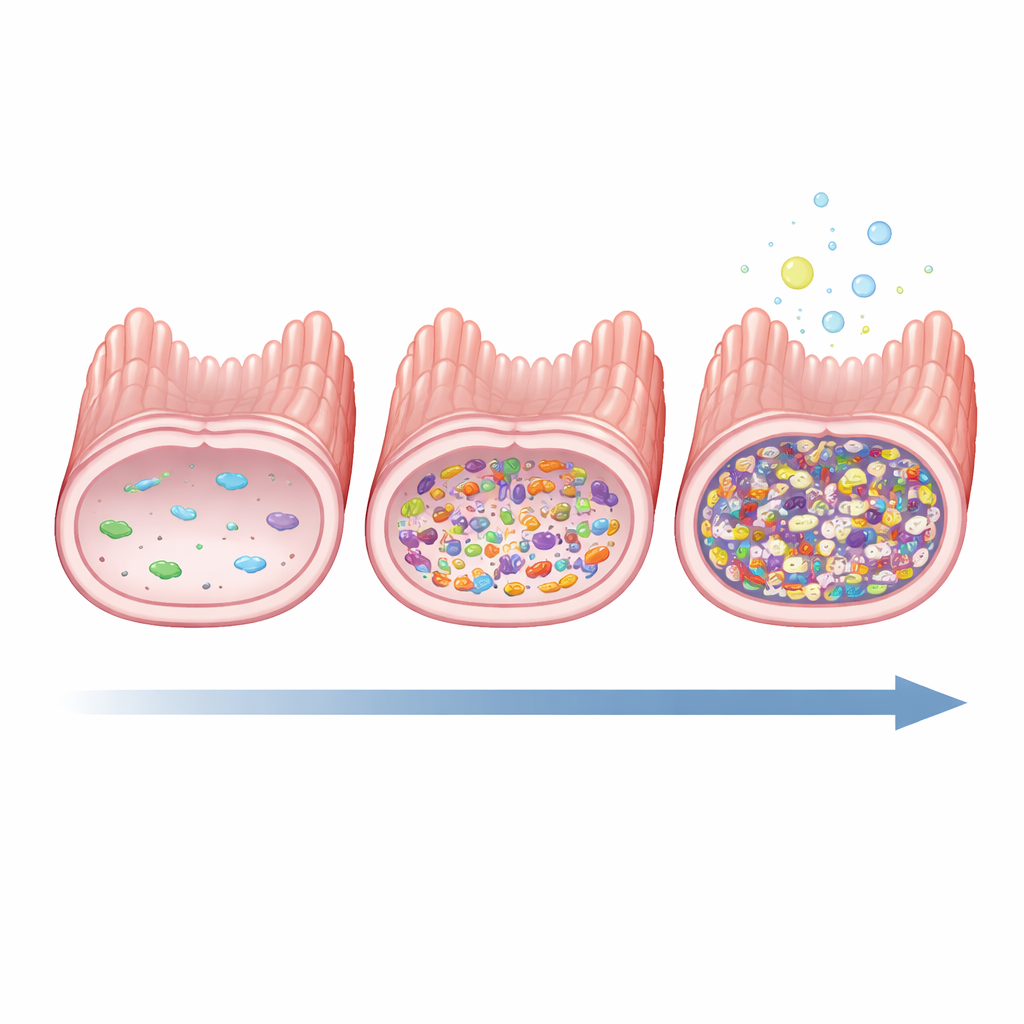
The first striking observation was that overall bacterial numbers rose sharply along the entire small intestine in anaemic animals, reaching levels that previous work has associated with SIBO. Diversity of microbial species also increased, especially toward the far end of the small intestine. Instead of the lean, relatively low-density community that normally lives there, the anaemic animals showed an enrichment of bacteria more typical of the colon, such as Clostridium and Escherichia-Shigella, as well as fermenting groups like Lactobacillus. This pattern was most pronounced in the ileum, hinting that microbes from the large intestine may be encroaching upstream when iron is scarce.
Microbial Activities That Stir Up Gas and Discomfort
Beyond who was there, the researchers asked what these microbes were likely doing. Using computational tools, they inferred the metabolic pathways encoded in the microbial DNA. In all three small-intestine regions, anaemic animals showed more activity in pathways that break down sugars and amino acids and produce gases and short-chain fatty acids, including propionate and butyrate, as well as hydrogen. These are classic signatures of fermentative overgrowth and are closely linked with the gas, bloating and abdominal discomfort often seen in SIBO. The functional changes aligned neatly with the taxonomic shifts, reinforcing the idea that iron deficiency pushes the small-intestinal ecosystem toward a SIBO-like state.
A Vicious Circle Between Microbes and Low Iron
Overall, the study suggests that iron deficiency does more than simply reduce the body’s iron stores; it may also remodel the small intestine’s microbial landscape in ways that favor bacterial overgrowth and excessive fermentation. This, in turn, can damage the gut lining and compete with the host for nutrients, making it even harder to correct the anaemia. For patients, the message is that persistent or relapsing iron deficiency may sometimes reflect not just diet or blood loss, but underlying microbial imbalances in the small intestine. In the future, treatments that combine iron replacement with strategies to prevent or correct SIBO-like changes in gut bacteria could improve recovery and reduce uncomfortable digestive symptoms.
Citation: Soriano-Lerma, A., Soriano-Suárez, J.S., Garcia-Rodriguez, M. et al. Molecular study of the small intestine dysbiosis derived from iron deficiency anaemia. Sci Rep 16, 14298 (2026). https://doi.org/10.1038/s41598-026-44373-z
Keywords: iron deficiency anaemia, small intestine microbiome, bacterial overgrowth, gut dysbiosis, nutrient absorption