Clear Sky Science · en
Synergistic effects of creatine, carbs, protein on repeated sprint performance
Why This Matters for Everyday Athletes
Whether you are a weekend cyclist, a recreational soccer player, or someone who enjoys high-intensity gym classes, you have probably felt your legs burn and your power fade during repeated sprints. This study explores a simple question with big practical implications: can combining common sports supplements—creatine, carbohydrate, and protein—help you sustain more power over multiple all-out efforts than creatine alone?
How the Body Fuels Short, Hard Efforts
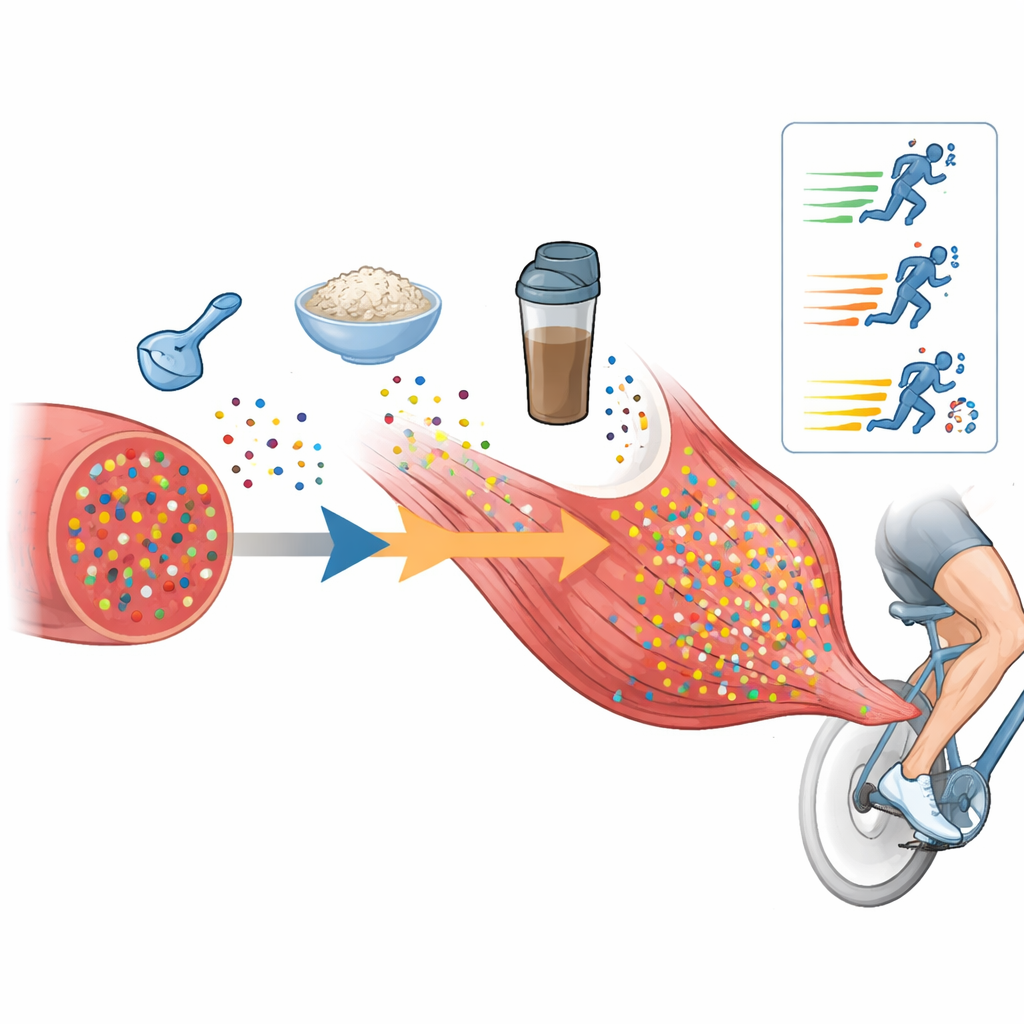
Very short, explosive efforts such as 30-second sprints rely heavily on a rapid energy reserve stored in muscle, often called the phosphocreatine system. These stores are quickly drained when you go all-out, and if they do not recover between sprints, your power drops. Creatine supplements are popular because they boost these high-energy reserves. Carbohydrates and protein, meanwhile, can trigger hormone responses that help shuttle creatine into muscle and provide extra fuel and building blocks for recovery. The researchers wanted to know whether combining all three nutrients would better support repeated sprints than taking creatine on its own.
What the Researchers Did
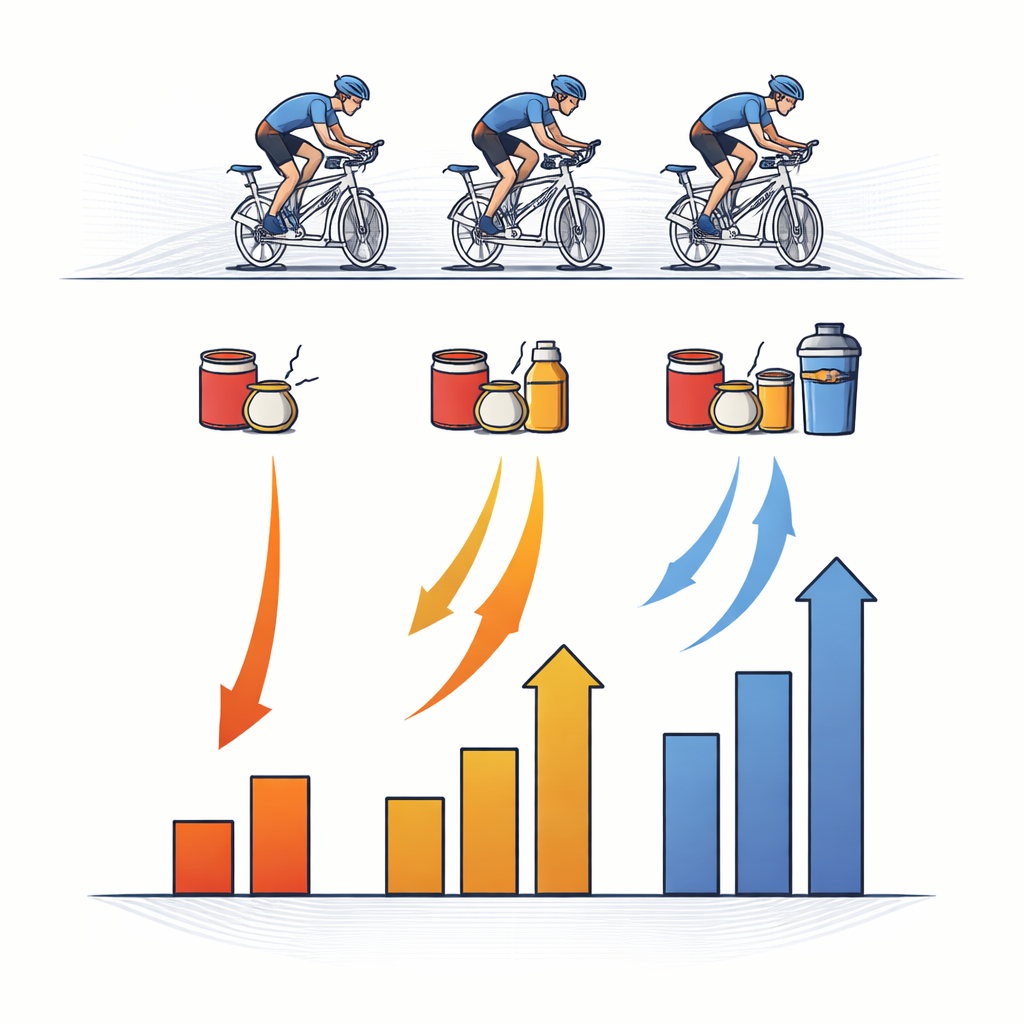
Sixty healthy, physically active young men took part in the trial. None were using other supplements, and they were screened for health issues that might affect the results. The volunteers were randomly assigned to one of four groups: creatine only; creatine plus carbohydrate; creatine plus carbohydrate and protein; or a placebo drink with no active ingredients. Before any supplements were given, all participants completed a demanding test on a stationary bike: three separate 30-second all-out sprints, each separated by six minutes of light pedaling. This well-established test measures how much power the legs can produce and sustain under intense, short-term effort.
How the Supplements Were Taken
Over the next four days, participants followed a rapid “loading” plan. Those in the creatine-only group consumed creatine dissolved in a sweet but non-caloric drink. The carbohydrate group took the same amount of creatine plus a sizable dose of glucose, while the third group took creatine, slightly less glucose, and a modest amount of whey protein. All beverages tasted similar and were packaged so that neither the participants nor the testers knew who was in which group. Two days after finishing the supplements, everyone repeated the same three-sprint cycling test under identical lab conditions. The researchers recorded both peak power (the highest burst) and mean power (average power over each 30-second sprint), along with body weight and blood lactate, a marker of how hard the muscles were working.
What They Found During Repeated Sprints
Body weight rose slightly in all the creatine-based groups, a typical sign that muscles were storing more creatine and water. More importantly for athletes, the groups taking creatine with carbohydrate, and creatine with carbohydrate plus protein, showed marked increases in average power across all three sprints after the loading period. The creatine-only group also improved, but the gains were smaller and more inconsistent. The placebo group, in contrast, actually lost average power in the second and third sprints, reflecting the normal fatigue that sets in without extra support. Peak power—the single best second in each sprint—improved in all the supplement groups, while the placebo group only showed a late boost in the final sprint. The combination of creatine, carbohydrate, and protein produced the highest post-exercise blood lactate levels, suggesting that these athletes were able to tap more deeply into both rapid and backup energy systems and perform more total work.
What This Means for Training and Performance
For sports and workouts that demand repeated bursts of maximum effort—such as interval cycling, team sports, or sprint-based conditioning—these results indicate that layering carbohydrate and protein on top of creatine may help sustain performance across multiple efforts better than creatine alone. The combined approach seems to support greater energy storage, faster replenishment between sprints, and a higher overall work output, even over a brief four-day loading period.
Take-Home Message for Active People
This study concludes that while creatine by itself is helpful, combining creatine with carbohydrate and protein can further boost short-term, high-intensity performance, especially when efforts are repeated with only a few minutes of rest. The findings are preliminary and limited to young men over a short time span, so they are not a one-size-fits-all prescription. Still, for many active people and competitive athletes, a thoughtfully planned mix of creatine, carbs, and protein may be a promising way to delay fatigue and get more quality work out of hard training sessions.
Citation: Wang, Y., Wei, H., Cheng, X. et al. Synergistic effects of creatine, carbs, protein on repeated sprint performance. Sci Rep 16, 10958 (2026). https://doi.org/10.1038/s41598-026-44278-x
Keywords: creatine supplementation, repeated sprint performance, carbohydrate and protein, high-intensity exercise, sports nutrition