Clear Sky Science · en
Malnutrition and its multidimensional determinants in institutionalized older adults: a cross-sectional study from resource-limited nursing homes in China
Why this study matters
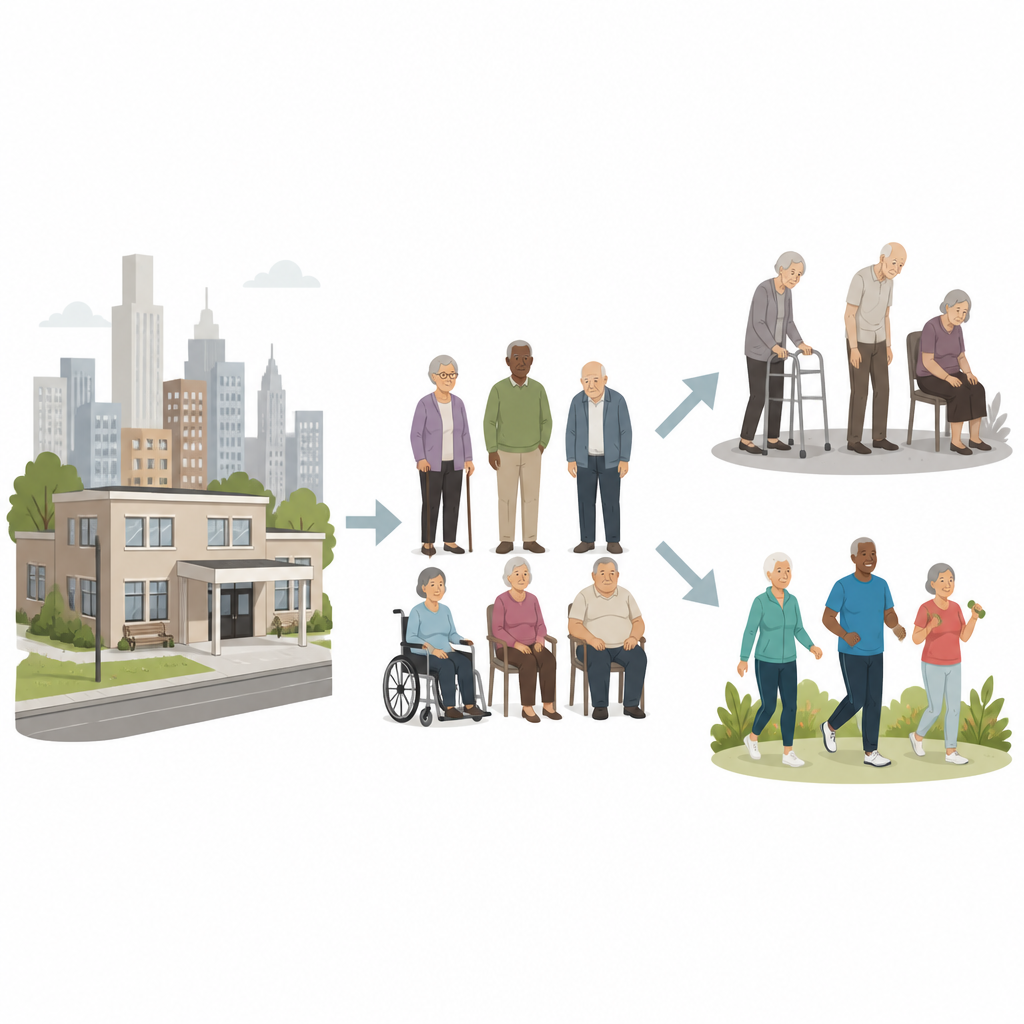
As people live longer, more older adults move into nursing homes, especially when families are far away or busy with work. But growing old in a care facility does not always mean eating well. This study looks at older residents in under-resourced nursing homes in Southwest China to see how common poor nutrition is, what drives it, and what can be done. Its lessons speak to any society grappling with how to care for aging parents and grandparents on a tight budget.
Who was studied and how
The researchers visited three nursing homes in the city of Nanchong, in Southwest China, between early 2023 and early 2024. They enrolled 205 residents aged 60 and older who could answer questions and stand for basic measurements. Bedridden people and those with severe dementia were not included because standard tests of muscle strength and walking ability would not work for them. Trained nurses and dietitians measured height, weight, arm and calf size, and handgrip strength, and used short questionnaires to rate each person’s nutrition, muscle loss, sleep quality, mood, and social connections.
How common poor nutrition was
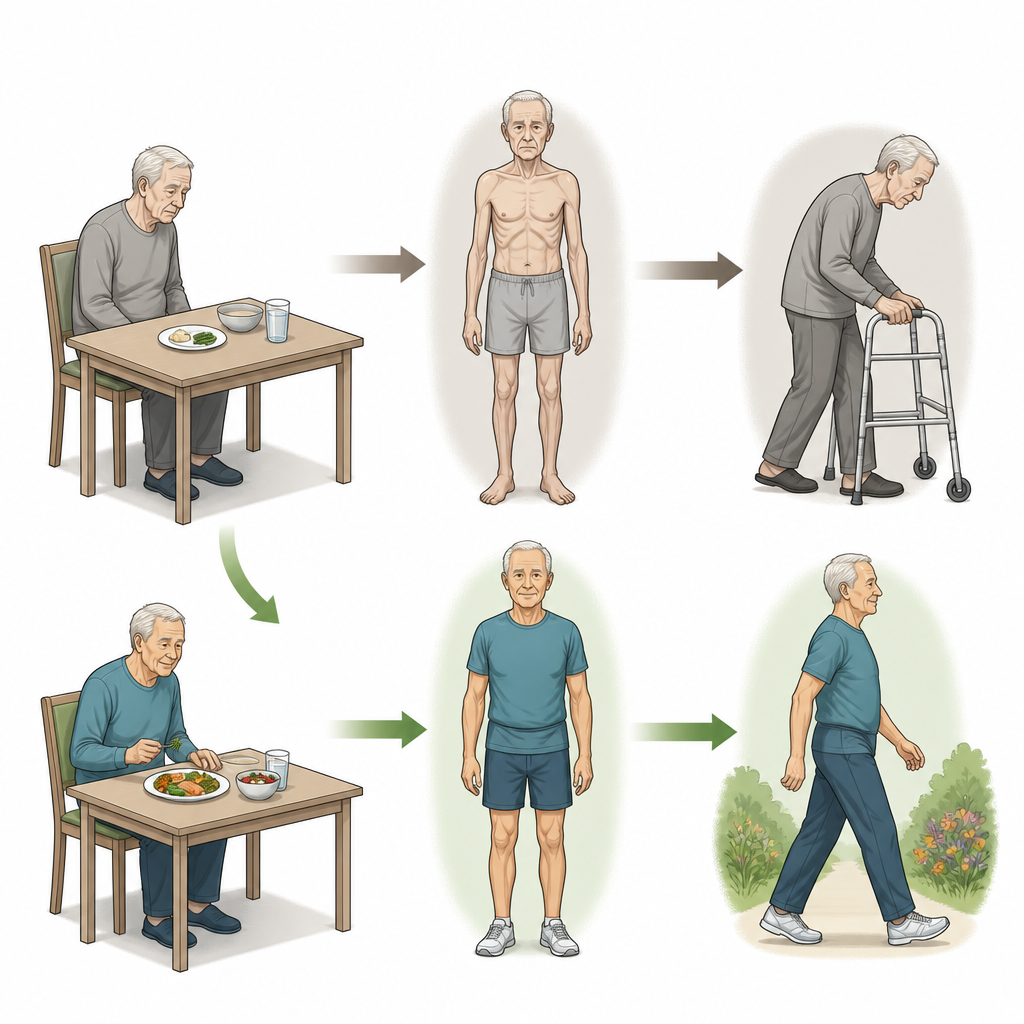
The results showed that poor nutrition was not a rare problem. About one in five residents were clearly malnourished, and an additional two in five were at risk, leaving fewer than four in ten with normal nutritional status. Those in the poorest shape tended to weigh less, have smaller calves, and weaker handgrip strength than better nourished peers. In this group, nearly two out of three had signs of serious muscle loss, a condition known as sarcopenia, compared with less than one in four among well nourished residents. These patterns suggest that thinness and weak muscles often go hand in hand in institutionalized older adults.
The roles of body weight, muscle, sleep, mood, and support
To untangle which factors mattered most, the team used statistical models that looked at many influences at once. A higher body mass index, a simple measure comparing weight to height, was linked to better nutrition scores. In contrast, greater risk of sarcopenia was strongly tied to worse nutrition, highlighting a vicious cycle: poor intake weakens muscles, and weak muscles can make moving, eating, and even chewing more difficult. Poor sleep was also more common among malnourished residents, and many showed signs of depression, although the link between mood and nutrition was modest. Social support added another layer. Many residents reported small social networks, and when the researchers adjusted for physical health, lower social support emerged as an independent predictor of poorer nutrition, suggesting that help and companionship at mealtimes may matter more than simply having many acquaintances.
What is special about these nursing homes
The study took place in a region with limited health resources and lower incomes than China’s coastal cities. Many residents had low education levels and relied on basic, standardized meal plans that may not fit their personal needs or chewing ability. Cultural stigma around nursing homes can also reduce family visits, leaving residents feeling isolated despite living in a group setting. The authors argue that these conditions amplify the impact of physical decline, making it harder to maintain a healthy diet. At the same time, they note that their snapshot in time cannot prove whether muscle loss, poor sleep, and depression cause malnutrition or result from it, only that they travel together.
What the findings mean for families and policy
For a lay reader, the takeaway is straightforward: in crowded, low-budget nursing homes, being underweight, weak, and lonely often cluster together and are warning signs of poor nutrition. The authors conclude that improving the lives of older residents will require more than just bigger meal portions. They recommend combined strategies that include better-tailored diets, simple strength and movement programs, and stronger emotional and practical support during meals. Although this research focuses on one Chinese city, it highlights challenges that families and health systems everywhere face as societies age and points toward practical steps to help older adults eat better, stay stronger, and feel more connected.
Citation: Han, J., Tao, L., Liu, J. et al. Malnutrition and its multidimensional determinants in institutionalized older adults: a cross-sectional study from resource-limited nursing homes in China. Sci Rep 16, 15523 (2026). https://doi.org/10.1038/s41598-026-44248-3
Keywords: malnutrition, nursing homes, older adults, sarcopenia, social support