Clear Sky Science · en
Risk attitudes and value of hope: survey results from Japanese hematologists and oncologists treating patients with diffuse large B-cell lymphoma
Why this choice matters
When cancer treatments cannot promise a cure, doctors and patients still have to choose between options that offer different kinds of hope. Some treatments bring a steady but modest extension of life, while others hold a small chance of much longer survival at the cost of more uncertainty and risk. This study looks at how Japanese cancer specialists make these difficult trade-offs when treating a common and serious blood cancer called diffuse large B-cell lymphoma, and what their choices reveal about the value they place on a slim chance of extra time.
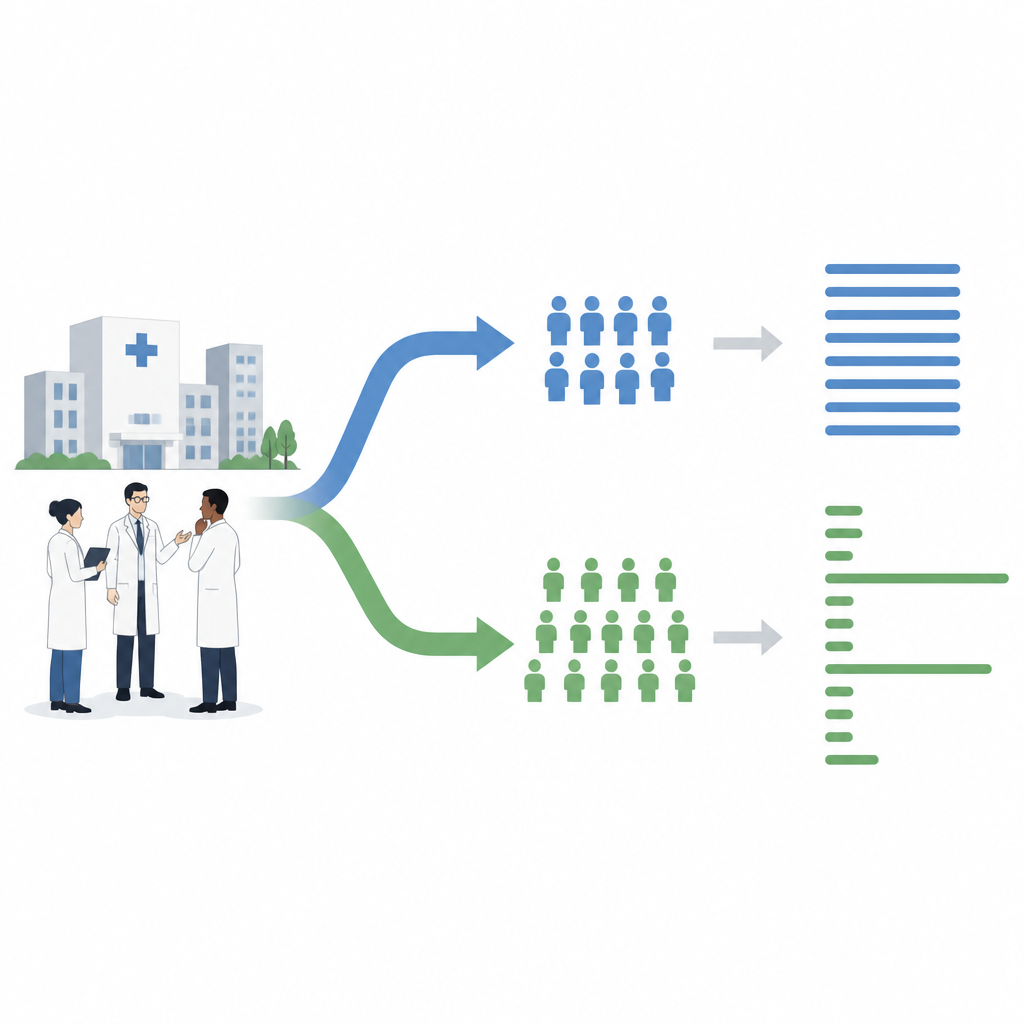
Two paths for the same outlook
The researchers focused on the idea they call the "value of hope": the appeal of a treatment that offers a small chance of a big gain in survival, even when the expected average survival is the same as a safer option. They surveyed 231 hematologists and oncologists across Japan who treat patients with diffuse large B-cell lymphoma, a fast-growing lymphoma that often returns after initial therapy. In recent years, advanced treatments such as CAR-T cell therapy have entered this field and are known for very mixed outcomes, with some patients doing extremely well and others seeing little benefit. This setting makes it an ideal test ground for understanding how doctors weigh risk versus predictability.
Imaginary patients and real decisions
To probe these preferences, the survey did not ask about real cases but instead used short stories describing two typical patients. One was an older man with somewhat less advanced disease and a slightly better outlook; the other was a younger woman with more advanced, fast-moving disease. For each patient, doctors faced paired choices between two made-up treatments. One option guaranteed a modest extension of life, such as three or six extra months. The other offered the same average gain but in a risky way: most patients would see no additional benefit, while a minority could gain a year or two of extra survival. This "hopeful" option mimicked the kind of skewed results seen with some modern cancer treatments.
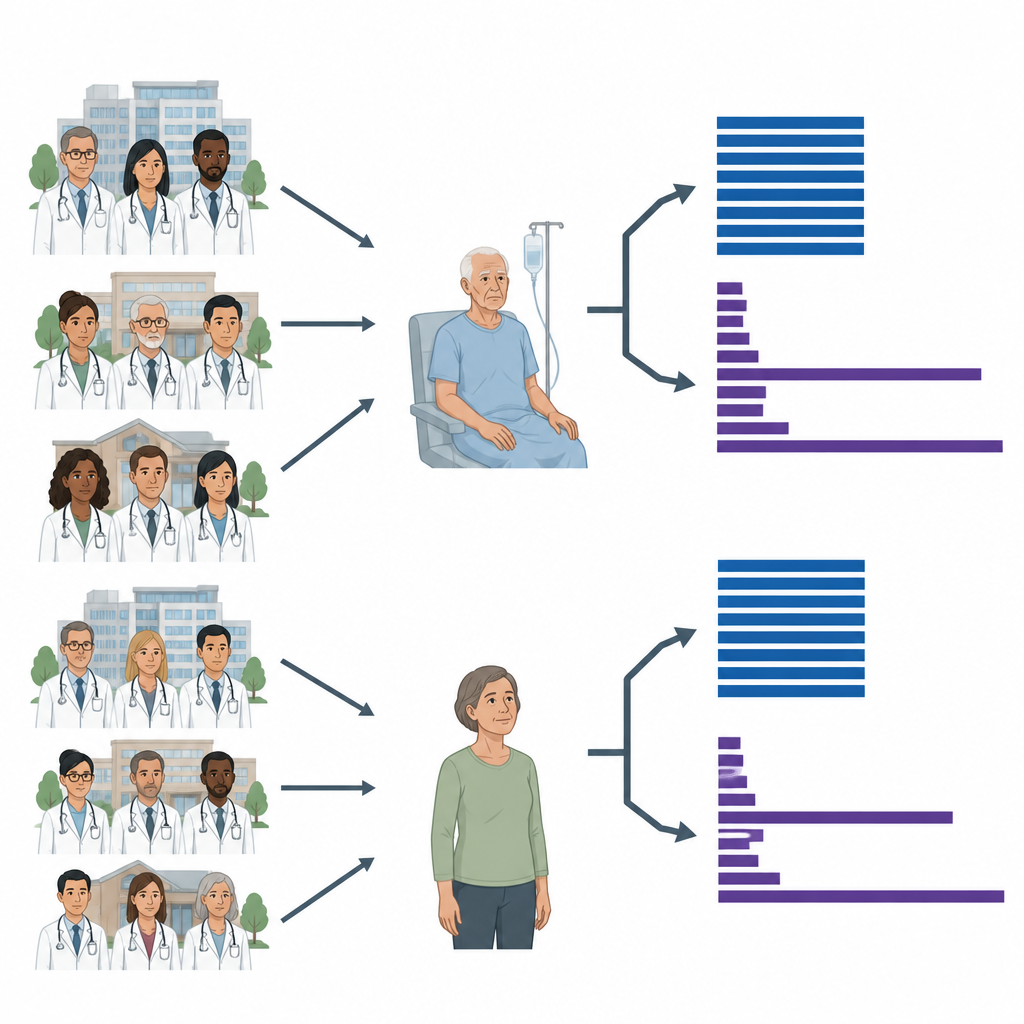
How often doctors chose hope
Across the four scenarios, between 29 and 40 percent of physicians chose the hopeful, riskier option. They were less likely to pick it when the safe option already offered a longer certain extension of life, especially for the older, less advanced patient. For the younger, more severely ill patient, doctors were somewhat more inclined to take the gamble, and their willingness did not drop as sharply when the sure gain became larger. Statistical tests showed that differences between the patient stories mattered more for a given doctor’s choices than differences in how many extra months were on offer, suggesting that clinical context and patient profile strongly shape attitudes toward risk.
Who is more willing to gamble
The study also linked these choices to features of the doctors and their workplaces. Younger physicians were much more likely to recommend at least one hopeful treatment, while those aged 60 or older were notably more cautious. Working in a large or university hospital also made a difference: doctors in these institutions, and in hospitals that met Japanese guidelines for providing CAR-T therapy with several qualified specialists on staff, were more inclined to favor the risky, hopeful paths. By contrast, the sheer number of patients a doctor treated, their years of experience, and their geographic region within Japan did not clearly influence their decisions.
What this means for patients and policy
This research suggests that, like patients, many physicians see value in treatments that offer even a slim chance of much longer survival, particularly in severe cancers with limited options. At the same time, a majority still favor more predictable outcomes, and age and workplace culture appear to tilt decisions toward or away from risk. For people living with serious illness, this means that the advice they receive can depend not only on medical facts but also on how their doctor views uncertainty. For health systems and policymakers, the findings add to calls for evaluation methods that account for the emotional and personal worth of hope, not just average survival numbers, when weighing the costs and benefits of high-impact therapies like CAR-T.
Citation: Arai, Y., Bolt, T., Onishi, H. et al. Risk attitudes and value of hope: survey results from Japanese hematologists and oncologists treating patients with diffuse large B-cell lymphoma. Sci Rep 16, 15558 (2026). https://doi.org/10.1038/s41598-026-44232-x
Keywords: value of hope, risk attitudes, lymphoma treatment, CAR-T therapy, physician decision-making