Clear Sky Science · en
Nonlinear threshold and association of depressive symptoms with pain in middle-aged and older Chinese adults: a cross-sectional and cohort study
Why mood and pain matter as we age
Many middle aged and older adults live with both low mood and daily aches, but these problems are often treated as separate issues. This study followed thousands of Chinese adults over several years to ask a simple but important question: how strongly are depressive feelings linked to everyday body pain, and does even a little sadness matter for later pain? The answers suggest that mild, early mood changes should not be ignored when thinking about pain in later life.
Who was studied and what was measured
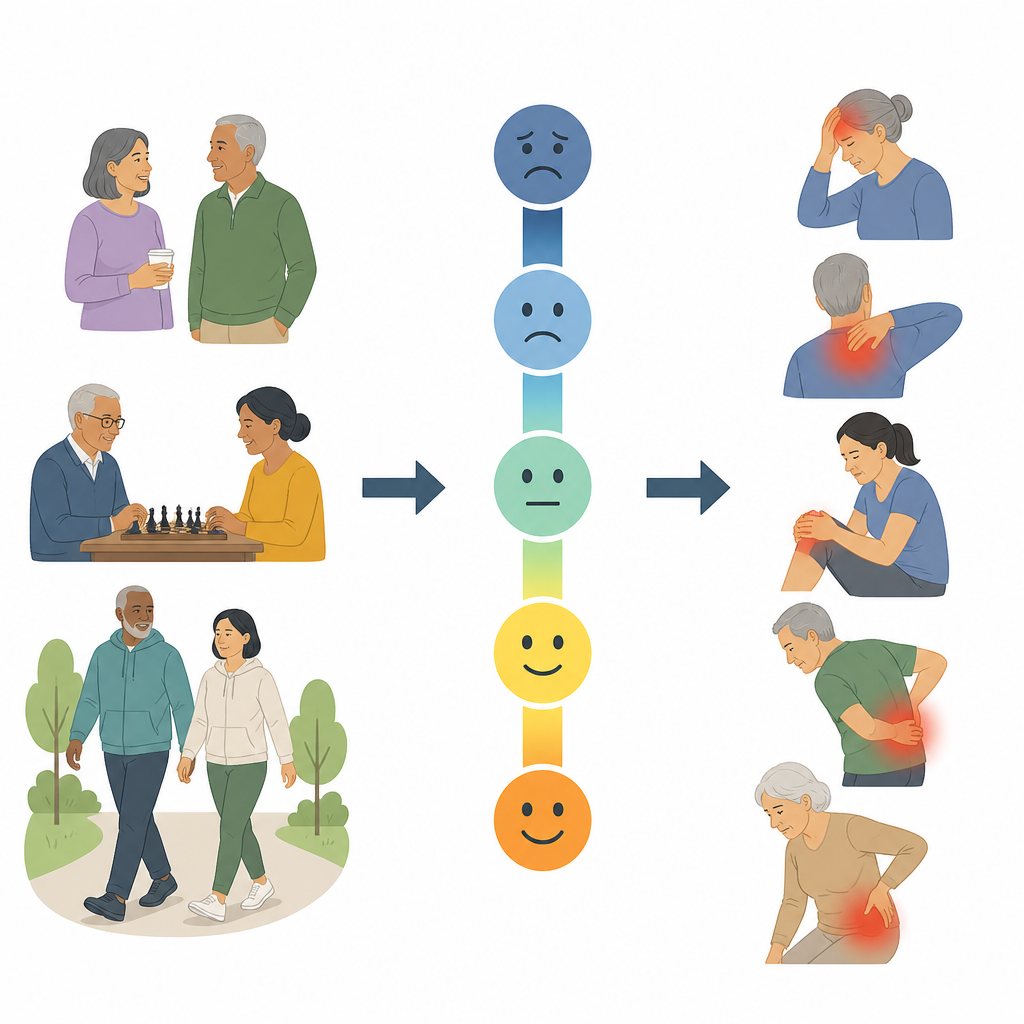
The researchers used data from the China Health and Retirement Longitudinal Study, which regularly surveys adults aged 45 and older across the country. More than sixteen thousand people were examined at one point in time, and over eight thousand were followed for about four years. Participants reported how often they felt sad, lonely, or had sleep and energy problems, which were combined into a short depression score. They were also asked a simple question about whether they were often troubled by body pain. The team collected information on age, sex, smoking, drinking, and common long term diseases such as hypertension, diabetes, and heart disease so that these factors could be taken into account.
How mood scores related to current pain
When the researchers compared people at the same moment in time, a clear pattern emerged. Higher depression scores were linked to a greater chance of reporting body pain, even after adjusting for age, lifestyle, and many medical conditions. People whose scores were high enough to count as having depressive symptoms were much more likely to report pain than those with low scores. Interestingly, the link between mood and pain was not perfectly straight. The increase in pain risk was steep when moving from very low to modest levels of depressive symptoms, then became somewhat weaker at higher scores, although the connection remained meaningful at all levels.
How mood today predicted pain tomorrow
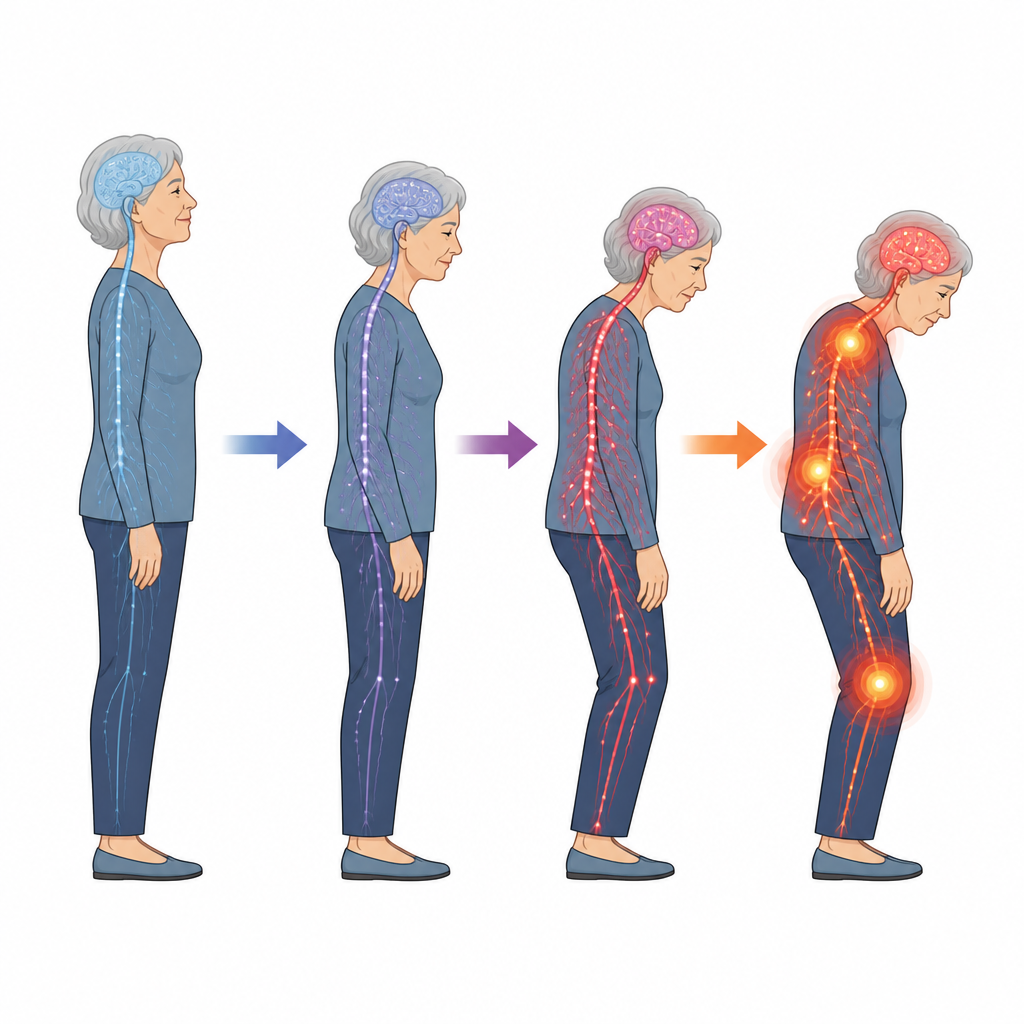
The story was similar when looking forward in time. Among adults who did not report pain at the start of the study, those with higher depression scores were more likely to develop new pain over the following four years. Again, people above the usual cutoff for depressive symptoms had a clearly higher risk than those below it. But even within the group whose scores were below that cutoff often thought of as "non depressed" each small rise in the score was associated with a noticeable bump in the chance of later pain. This suggests that the mood pain link begins well before depression would normally be diagnosed.
Patterns across different groups
The investigators checked whether the mood pain connection differed by sex, age, or health problems such as stroke, high blood pressure, or diabetes. Overall, the relationship held up in most groups. Women tended to show a slightly stronger link between depressive symptoms and pain than men in the cross sectional snapshot, and there were hints of differences among people with a history of stroke, though numbers there were smaller. A range of sensitivity checks, including stricter and looser ways of defining pain, gave broadly similar results, adding confidence that the findings were not due to a particular definition or missing data.
What this means for everyday health
For lay readers, the key message is straightforward: even mild, lingering low mood is tied to a higher risk of present and future body pain in middle aged and older adults. The connection appears strongest at the early stages, when symptoms may seem too small to warrant attention. The authors argue that routine screening for depressive feelings, and early support such as counseling, social engagement, or lifestyle changes, could play a valuable role in preventing or easing pain later on. Rather than treating sadness and aches as separate problems, this work encourages viewing them as closely linked parts of overall health, especially in later life.
Citation: Zhang, J., Yi, L., Yu, H. et al. Nonlinear threshold and association of depressive symptoms with pain in middle-aged and older Chinese adults: a cross-sectional and cohort study. Sci Rep 16, 14903 (2026). https://doi.org/10.1038/s41598-026-44220-1
Keywords: depressive symptoms, chronic pain, older adults, mental health, CHARLS