Clear Sky Science · en
GPER agonist G1 suppresses neuronal apoptosis mediated by endoplasmic reticulum stress after exertional heat stroke injury
Why Heat Can Hurt the Brain
As extreme heat waves become more common and intense workouts grow in popularity, exertional heat stroke is a growing concern for soldiers, athletes, and outdoor workers. Beyond the immediate danger of collapsing from overheating, this condition can silently injure the brain, leaving survivors with memory and thinking problems. This study uses a mouse model to ask a hopeful question: can we tap into a hormone-related safety switch in brain cells to protect them from heat damage without giving people estrogen itself?
When Exercise and Heat Go Too Far
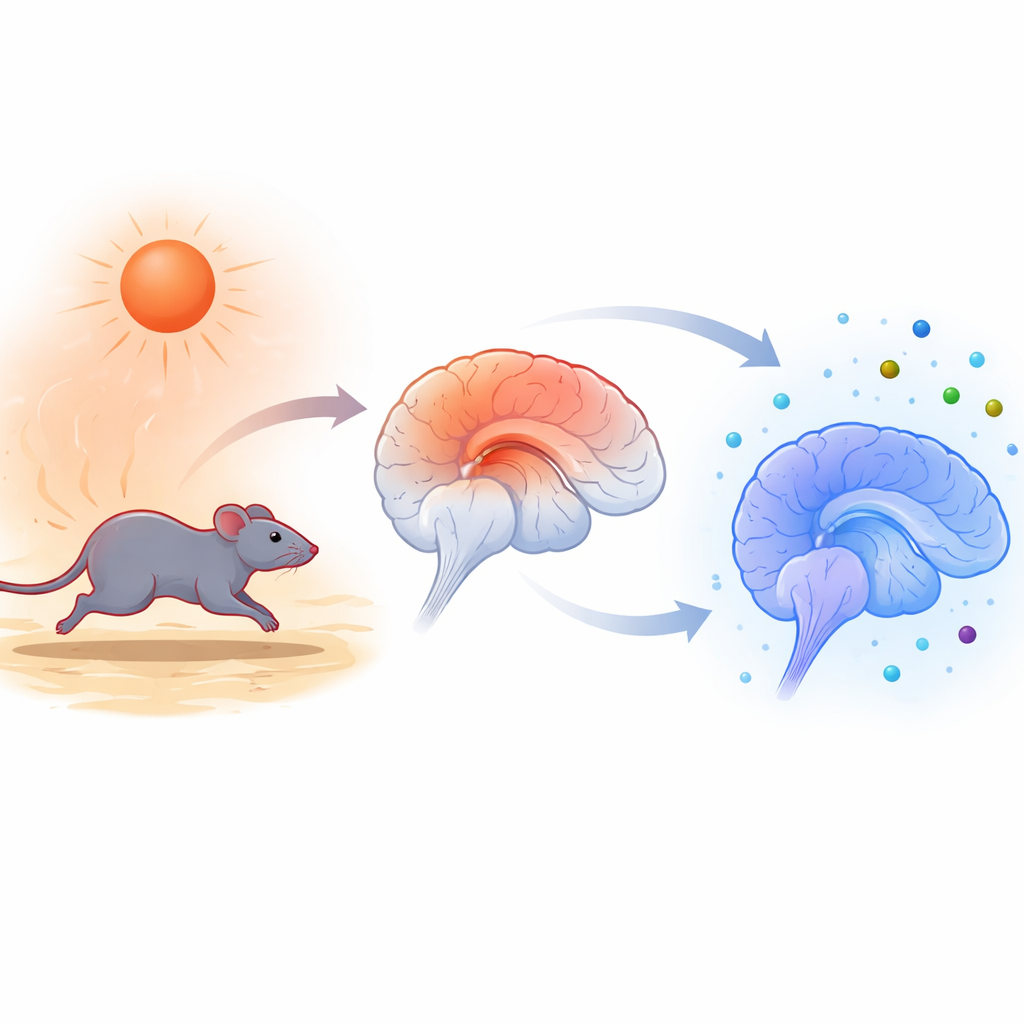
Exertional heat stroke happens when intense physical activity in a hot, humid environment pushes core body temperature to dangerous levels, often above 40 °C. In people, early signs include confusion, seizures, or even coma, and the condition can quickly damage multiple organs, including the brain. In this study, male mice were made to run on a treadmill in a hot, humid chamber until their body temperature soared and they lost consciousness, closely mimicking human exertional heat stroke. The researchers then focused on the hippocampus, a brain region crucial for learning and memory, to see how badly it was affected 24 hours after the event—the point when neurological problems were most severe.
Clues from a Hidden Cell Factory
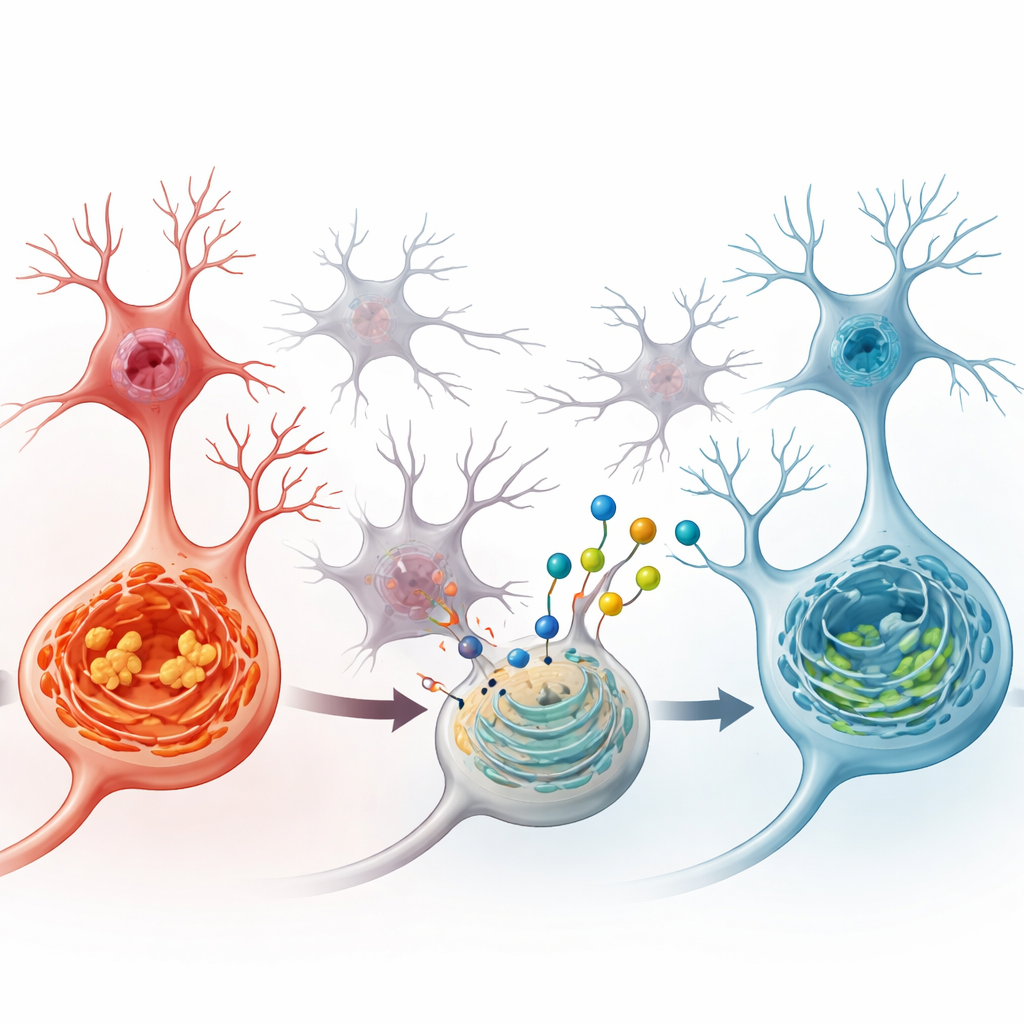
Inside every brain cell sits a structure called the endoplasmic reticulum, a kind of microscopic factory that folds and processes newly made proteins. Under stress—such as extreme heat—this factory can become overloaded, causing proteins to misfold and triggering an internal alarm known as endoplasmic reticulum stress. When this alarm blares for too long, it can push the cell toward a self-destruct program. Using broad gene activity measurements in the hippocampus, the team found that mice with heat stroke had strong activation of stress-related signals in this protein-folding factory, along with higher levels of proteins linked to stress-driven cell death. These molecular changes paralleled clear signs of brain injury, including brain swelling, damaged neurons, and worse performance on memory tests.
Turning On a Protective Switch
The scientists next tested a drug called G1, which activates a receptor known as GPER—a target normally triggered by the hormone estrogen but one that does not require giving estrogen itself. Because estrogen is linked to cancer risks and cannot easily be used in men, a non-hormonal route to harness similar protection would be valuable. Mice received G1 immediately after heat stroke, and some also received a blocker called G15 to shut GPER back down. Compared with untreated heat stroke mice, those given G1 had lower brain water content (less swelling), better scores on neurological tests, and improved memory and learning in the water maze. Under the microscope, their hippocampal neurons looked healthier, with fewer cells showing signs of programmed death. When G15 was added, these benefits largely disappeared, indicating that the protective effect truly depended on GPER.
How Calming the Inner Factory Saves Neurons
Diving deeper, the researchers measured key proteins that act as sentinels for stress inside the cell’s protein-folding factory and for the downstream decision to die. Heat stroke alone ramped up several of these molecules, including GRP78, CHOP, caspase-12, and caspase-3—markers that the cell was overwhelmed and headed toward apoptosis, or controlled self-destruction. Treatment with G1 dialed these signals back down and was associated with fewer dying neurons. Again, adding the GPER blocker erased this improvement, returning stress markers and cell death levels to those seen in untreated heat stroke. Together, these results support a chain of events in which heat stroke overdrives the cell’s inner factory, triggers lethal stress pathways, and G1 interrupts this cascade by calming the process through GPER.
What This Could Mean for People
In simple terms, this work suggests that a brain cell “thermostat” linked to estrogen can be flipped on with a specialized drug to protect neurons from the delayed damage of exertional heat stroke. By easing stress inside the cell’s protein factory, G1 helped preserve brain structure and function in mice, even after severe overheating. The findings do not yet prove that this approach will work in humans, and the study was done only in male animals at a single time point. Still, it points toward a future in which people at high risk—from soldiers on forced marches to marathon runners—might one day receive targeted treatments that shield the brain from heat-induced injury without the drawbacks of hormone therapy.
Citation: Han, Z., Wang, X., Guo, J. et al. GPER agonist G1 suppresses neuronal apoptosis mediated by endoplasmic reticulum stress after exertional heat stroke injury. Sci Rep 16, 13111 (2026). https://doi.org/10.1038/s41598-026-44173-5
Keywords: exertional heat stroke, brain injury, neuroprotection, estrogen receptor, cell stress