Clear Sky Science · en
Trehalulose serves as a distinctive marker for Indonesian stingless bee honey under raw and dehumidified conditions
Why this special honey matters
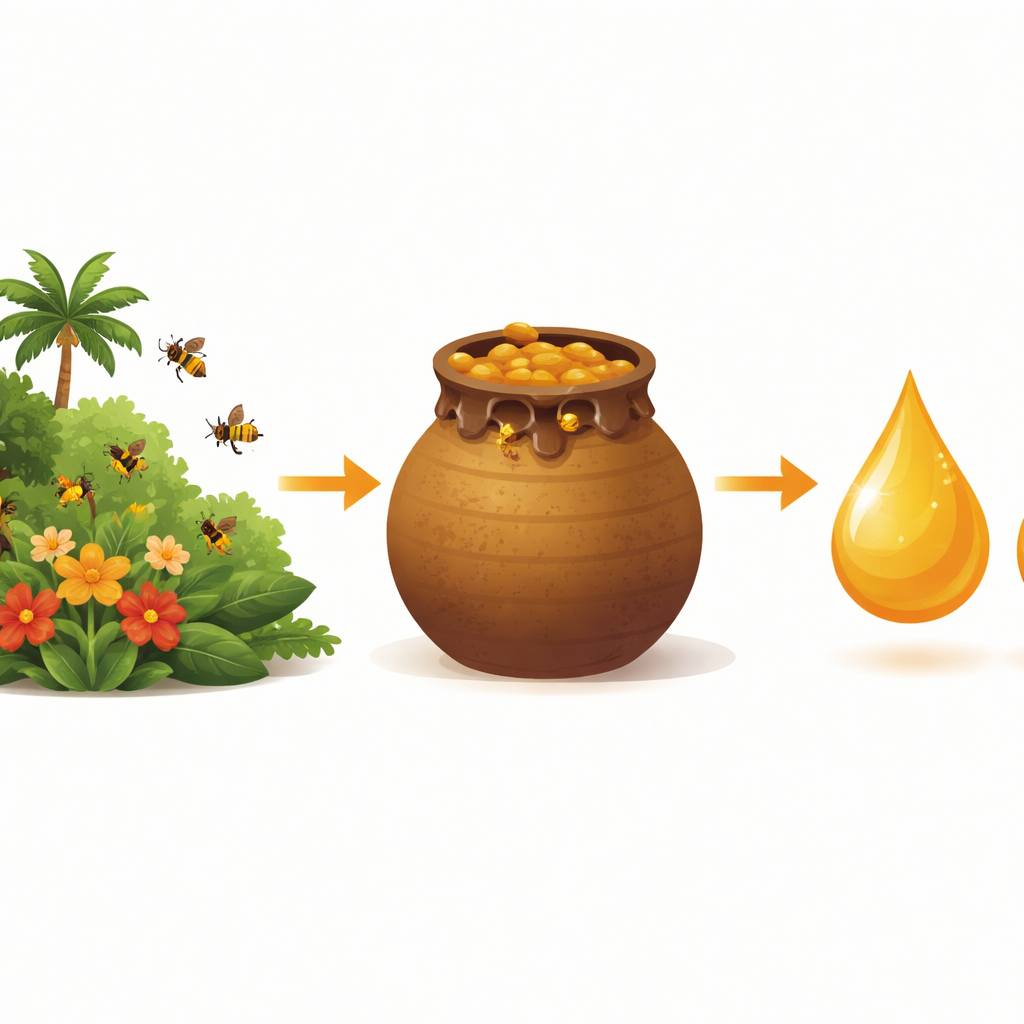
Most of us think of honey as a simple sweetener, but not all honeys are alike. In tropical regions such as Indonesia, tiny stingless bees make a tangy, medicinal honey that local communities prize for health and income. This study explores what makes that honey chemically unique, how to prove it is genuine, and how best to store and process it so that its special qualities last. The answers matter for consumers who want honest products, and for small-scale beekeepers who depend on selling a high‑value, trustworthy honey.
A rare sugar with a special fingerprint
At the heart of this work is trehalulose, a rare type of sugar that turns out to be a telltale sign of stingless bee honey. Earlier research had shown that this sugar is essentially missing from the familiar honey made by the Western honey bee, Apis mellifera. Here, the authors collected stingless bee honey from 12 regions across Indonesia and compared it with one commercial Apis mellifera honey. Using a precise laboratory method that separates and measures sugars, they confirmed that trehalulose appeared in almost all stingless bee samples but not in the conventional honey. This makes trehalulose a powerful chemical fingerprint to distinguish genuine stingless bee honey from look‑alike products.
Same bees, different flowers, different sugar
The study also reveals that not all stingless bee honey is the same. Trehalulose levels varied widely from place to place, from none detected in a few regions to very high levels in others. These differences likely arise from the flowers the bees visit, local climate, and subtle differences in the bees themselves. Because of this natural variation, the authors argue that trehalulose should not be used as a rigid number that every jar must meet. Instead, its simple presence or absence is more meaningful: if trehalulose is detected, it strongly suggests stingless bee honey; if it is missing, that raises questions about the honey’s origin or handling, but does not automatically prove fraud.
Drying the honey: a helpful but delicate step
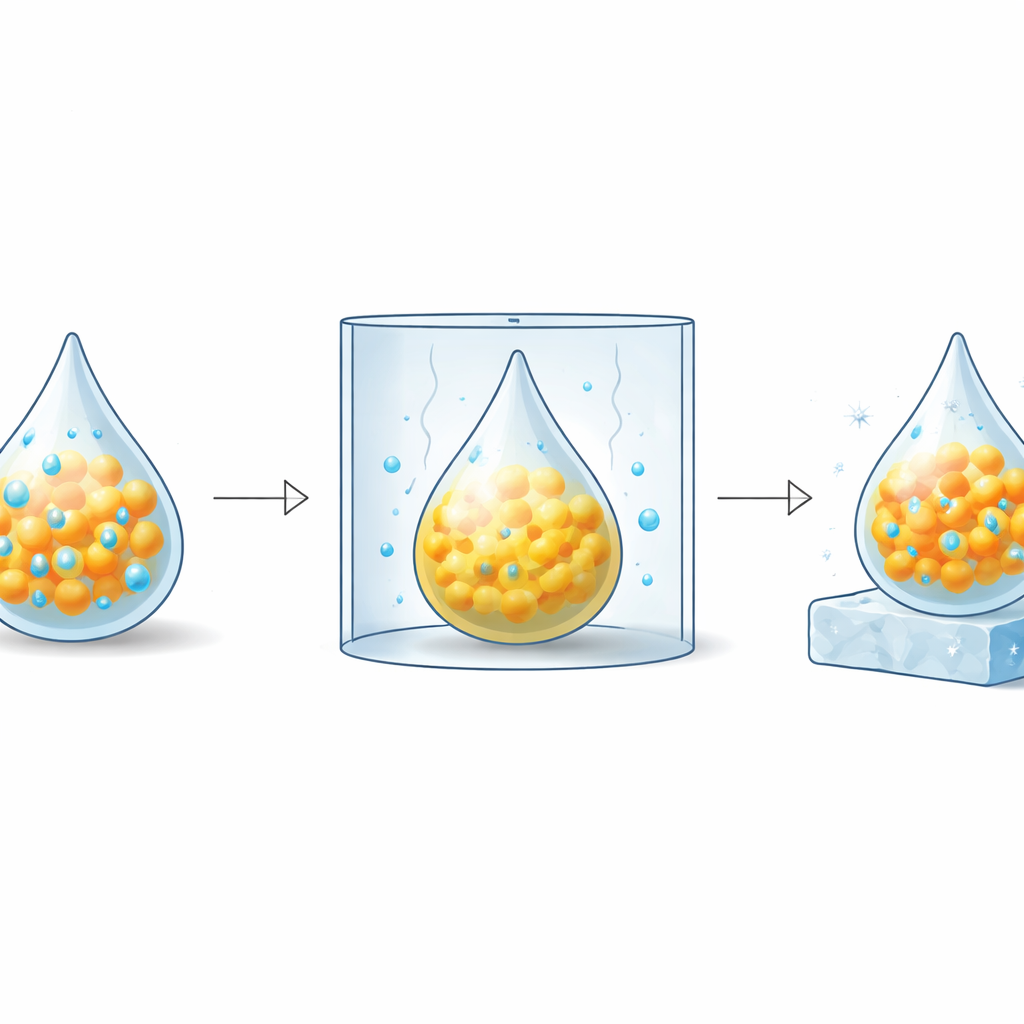
Stingless bee honey naturally contains much more water than regular honey, which makes it prone to souring and fermentation. Indonesian producers often gently dry the honey, or dehumidify it, to bring moisture down to levels that keep microbes in check. The researchers tested how this treatment affects trehalulose. When they dried the honey at a controlled warm temperature until the water content fell below about one‑fifth of the weight, the measured proportion of trehalulose rose. This mostly reflects simple concentration: less water means the same amount of sugar in a smaller volume. Importantly, the drying step did not destroy trehalulose, and even made it easier to detect and quantify in the lab.
Heat, cold, color, and sourness
The team then followed both raw and dried honey over eight weeks at different storage temperatures, from freezing to warm room conditions. Warm storage made all the honeys darken in color, a sign of slow cooking reactions between sugars and other components. These browning reactions are the same family of processes that give toasted bread and roasted coffee their color, but in honey they can signal quality loss. The effect was strongest in dried honey kept at higher temperatures, because concentrated sugars and gentle heat encourage these changes. At the same time, warmer and wetter conditions led to rising acidity, another sign of ongoing chemical and possibly microbial activity.
Keeping the rare sugar safe
Across all treatments, trehalulose proved relatively robust. In raw honey stored warm, its share dropped noticeably, suggesting that higher water and temperature together encourage breakdown or conversion of this sugar. In dried honey, especially when stored in the fridge or freezer, trehalulose levels stayed higher and more stable. These cooler, drier conditions also kept acidity lower, pointing to a calmer chemical environment. Taken together, the results show that careful drying combined with cold storage best protects the rare sugar that marks stingless bee honey as special, while also preserving its appearance and taste.
What this means for buyers and beekeepers
For everyday consumers, this research offers reassurance that there is a clear chemical way to tell stingless bee honey apart from regular honey: the presence of trehalulose. For beekeepers and regulators, it suggests that trehalulose is best used as a yes‑or‑no sign of authenticity, not as a fixed number every sample must match. The work also highlights practical steps—gentle drying and cool storage—that can extend shelf life and maintain quality without erasing what makes this honey unique. As interest grows in functional foods and fair trade products, such science‑based guidance can help protect both the value of Indonesian stingless bee honey and the livelihoods of those who produce it.
Citation: Sahlan, M., Amelia, C., Baariq, N. et al. Trehalulose serves as a distinctive marker for Indonesian stingless bee honey under raw and dehumidified conditions. Sci Rep 16, 14078 (2026). https://doi.org/10.1038/s41598-026-44148-6
Keywords: stingless bee honey, trehalulose, honey authenticity, dehumidification, honey storage