Clear Sky Science · en
Vitamin D receptor (VDR) expression in osteosarcoma and its association with histological subtypes and metastasis
Why sunshine and bone cancer are unexpectedly linked
Most people know vitamin D for its role in keeping bones strong, often through sunlight and diet. This study looks at a more surprising side of vitamin D: how its partner inside cells, the vitamin D receptor, behaves in osteosarcoma, an aggressive bone cancer that mainly strikes teenagers and young adults. By examining tumor samples and blood vitamin D levels, the researchers ask whether this receptor can help predict which cancers are more likely to spread to distant organs, especially the lungs.
Bone cancer in growing bones
Osteosarcoma starts in the cells that build bone and is one of the most common primary bone cancers worldwide. It often appears around the knee in fast-growing bones of children and adolescents, with a smaller surge later in life. Under the microscope, osteosarcoma comes in several patterns, or subtypes, but most are high-grade tumors, meaning they grow quickly and are more dangerous. Even with modern chemotherapy and surgery, many patients still develop metastases, or secondary tumors, which greatly reduce long-term survival. Doctors therefore search for markers inside the tumor that could signal which patients face higher risk and might need closer monitoring or new treatment strategies.
How vitamin D talks to cancer cells
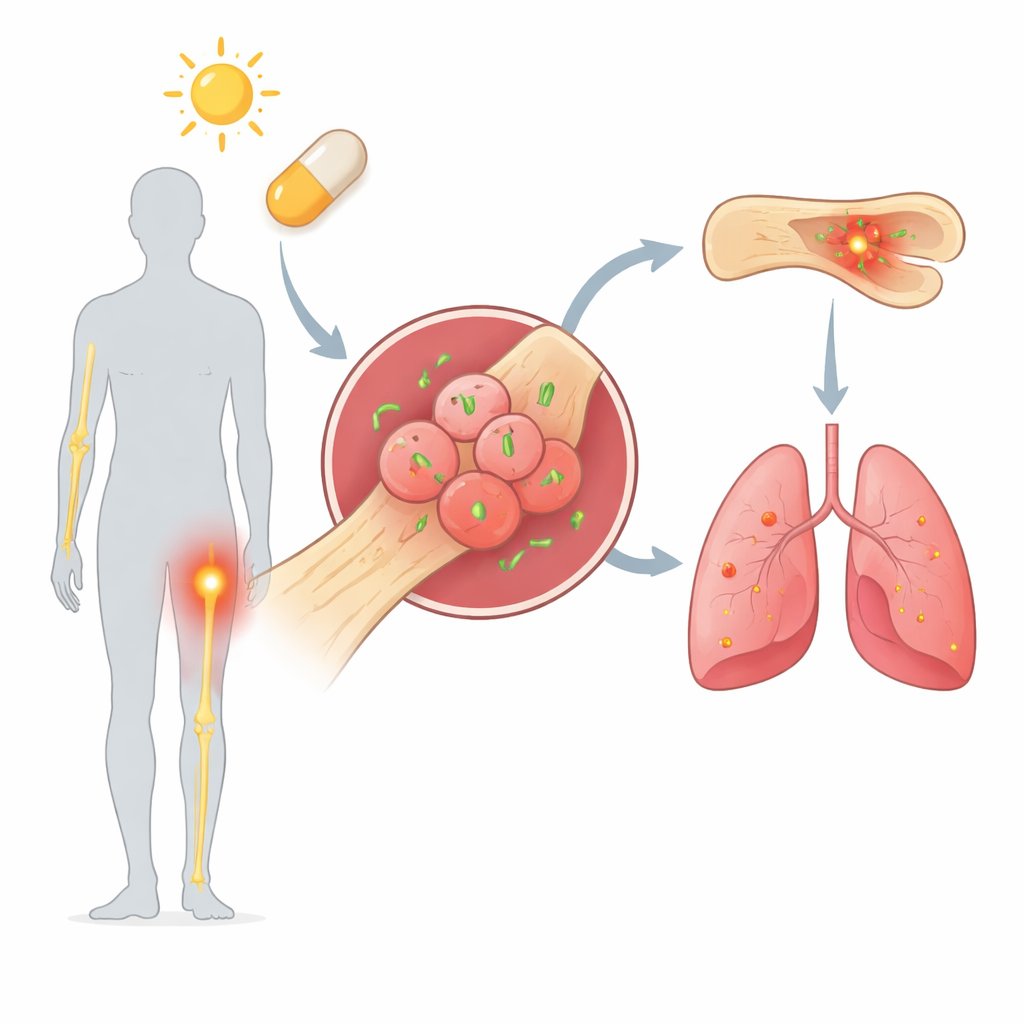
Vitamin D does its work in the body through a docking protein inside cells called the vitamin D receptor. When the active form of vitamin D attaches to this receptor, it switches on and off sets of genes that can slow cell growth, encourage damaged cells to die, and reduce the ability of cancer cells to invade and spread. In many cancers, higher levels of this receptor have been tied to better outcomes, suggesting that strong vitamin D signaling helps keep tumors in check. However, some studies in other tumor types hint that the story is more complicated and that the same receptor might behave differently depending on the tissue and environment.
What the researchers measured in real tumors
The team studied stored tumor samples from 57 patients treated for osteosarcoma at a major hospital in Indonesia between 2017 and 2025. Most patients were under 20 years old, and nearly all had high-grade, conventional osteosarcoma, reflecting typical real-world patterns. Using a staining method that highlights the vitamin D receptor inside cancer cells, pathologists scored each tumor as having either significant or non-significant receptor expression. The researchers then compared these scores with the tumor’s microscopic subtype, its grade, whether patients developed metastases, and, in a subset of patients, blood vitamin D levels measured around the time of diagnosis or early treatment.
Receptor levels tied to spread, not to tumor type
The results revealed a striking pattern. About 44% of tumors showed significant vitamin D receptor staining. This receptor level was not linked to which microscopic subtype the tumor belonged to, nor did it clearly separate low-grade from high-grade cancers—though almost all tumors in the study were already high-grade. In contrast, tumors with significant receptor expression were far more likely to be metastatic: roughly three-quarters of receptor-high tumors had spread, compared with about one-fifth of those with low or absent receptor staining. This strong association held even after considering age, sex, and chemotherapy, which did not explain the difference in spread.
When receptors are active but the fuel is low
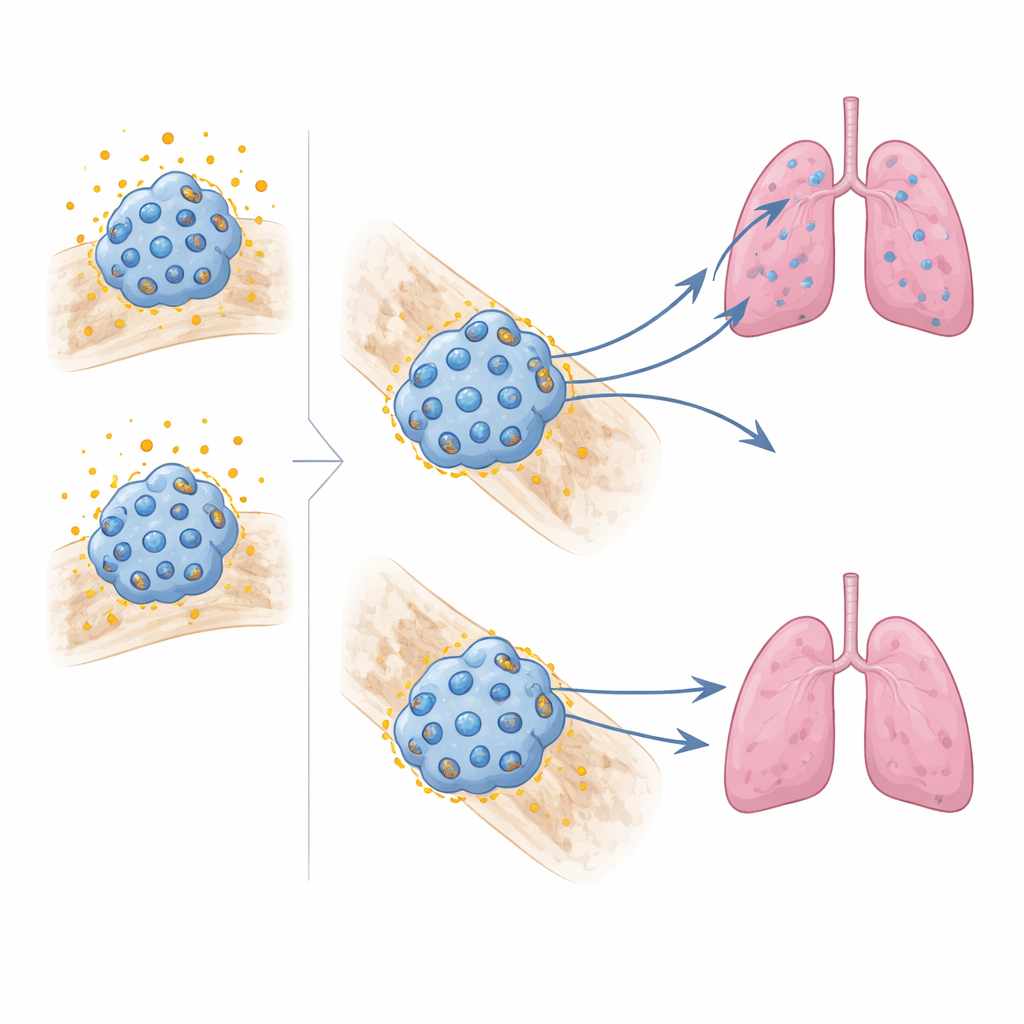
To better understand this paradox, the researchers examined the combination of tumor receptor levels and patients’ blood vitamin D. None of the measured patients had truly normal vitamin D; most were insufficient or deficient. Among those with low vitamin D levels, tumors that strongly expressed the receptor were much more likely to metastasize than tumors with weak or absent receptor staining. The authors suggest that in a body starved of vitamin D, cancer cells may ramp up receptor levels in a kind of stress response, but without enough vitamin D to activate the pathway properly, the protective effects fail to materialize. Instead, this mismatch between abundant receptors and scarce vitamin D may mark tumors that are under pressure and more prone to spread.
What this means for patients and future care
For patients and families, the core message is that a simple count of vitamin D receptors in bone cancer cells does not tell the whole story. In this study, high receptor levels alone did not signal a calmer tumor; they were actually linked to more metastasis, especially when blood vitamin D was low. The findings support the idea that this receptor acts as a "context-dependent" marker: it only becomes a good sign when enough vitamin D is present to turn on its protective programs. Measuring both tumor receptor levels and blood vitamin D could therefore help doctors better estimate which osteosarcoma patients are at higher risk of spread and might benefit from closer follow-up or vitamin D–focused strategies. Larger, forward-looking studies will be needed to test whether improving vitamin D status can truly change outcomes, but this work lays important groundwork for linking everyday nutrients to the behavior of a rare yet deadly cancer.
Citation: Baly, I., Sulistyoningrum, D.C., Putro, Y.A.P. et al. Vitamin D receptor (VDR) expression in osteosarcoma and its association with histological subtypes and metastasis. Sci Rep 16, 14572 (2026). https://doi.org/10.1038/s41598-026-44110-6
Keywords: osteosarcoma, vitamin D, vitamin D receptor, metastasis, bone cancer