Clear Sky Science · en
Biostimulant-driven improvement in yield, seed quality, and soil health of peanut (Arachis hypogaea L.) cultivated in arid sandy environment
Turning Desert Sand into Productive Farmland
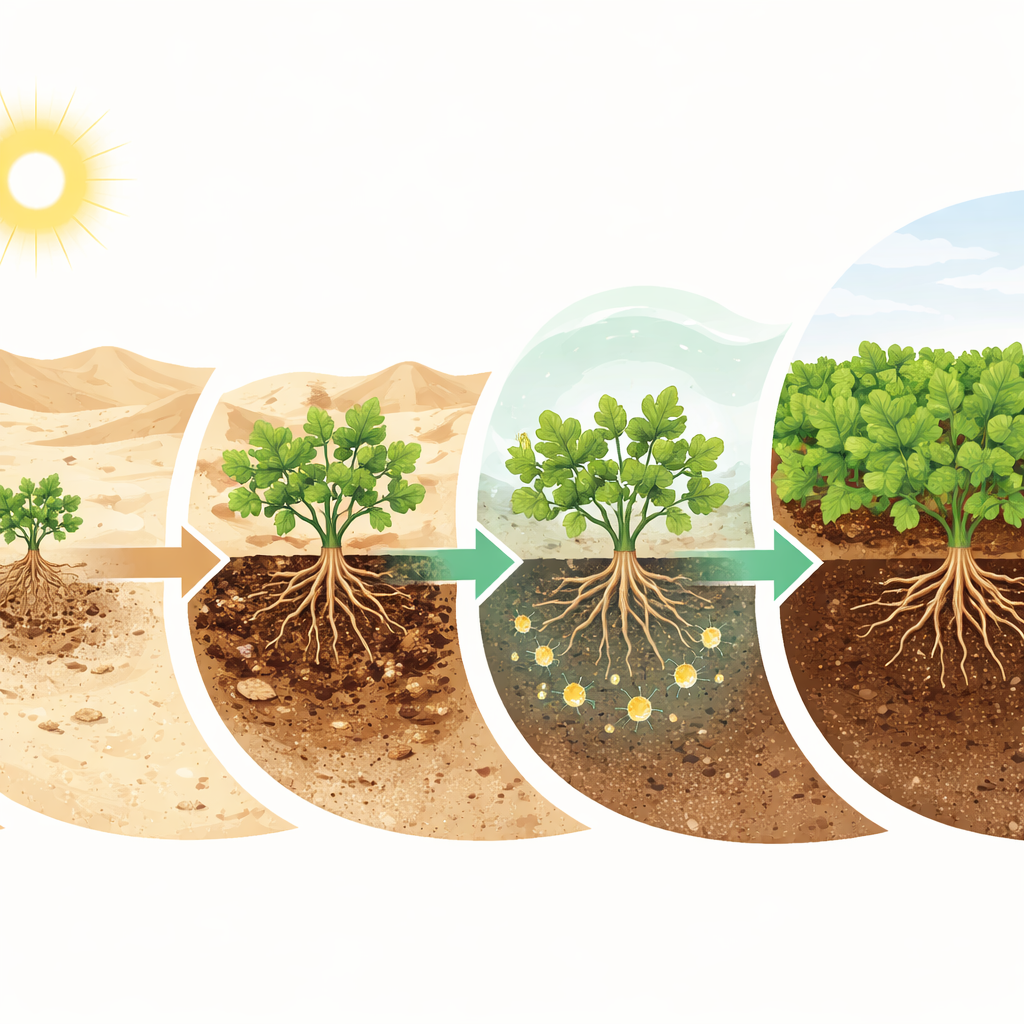
In many dry regions, farmers are pushing into sandy, low‑fertility land to grow food crops such as peanuts. These soils hold little water or nutrients, so plants often struggle and yields stay low. This study tested whether "biostimulants"—natural soil and plant boosters made from humic substances, beneficial microbes, or seaweed extracts—can help peanut crops thrive in an arid sandy environment in Egypt, while also improving the health of the soil itself.
Why Peanuts Struggle in Harsh Soils
Peanuts are an important source of edible oil and protein, especially in arid and semi‑arid countries. But the newly reclaimed desert lands where they are increasingly grown are mostly sand: they contain very little organic matter, lose water quickly, and do a poor job holding onto nutrients. In such fields, conventional fertilizers alone are often not enough to sustain good growth. Biostimulants offer a different strategy. Instead of simply adding nutrients, they are designed to make plants better at using what is already there and to gradually improve the soil’s structure and life.
Testing Three Natural Crop Boosters
The researcher carried out two full field seasons of experiments along the Alexandria Desert Road in Egypt, using a commonly grown peanut variety adapted to poor soils. Plots received one of four treatments: no biostimulant (the control), a humic acid product (Humic King) added to the soil, a microbial inoculant (Biofertile) containing two helpful bacterial species applied to seeds and soil, or a seaweed extract (Kelpak) sprayed on leaves. All plots received the same basic fertilizer and standard farm practices. At harvest, the team measured plant size, pod yield, seed weight, shelling percentage, the share of plant mass ending up as pods (harvest index), seed protein and oil content, and detailed chemical changes in the soil.
Better Growth, Bigger Harvests, and Richer Seeds
All three biostimulant treatments produced stronger peanut plants than the untreated control. Total plant dry weight rose by up to about 10 percent, showing that the crops captured more sunlight and built more tissue. Pod yields also climbed: while control plots produced roughly 2 tons of pods per hectare, treated plots reached up to about 3.4 tons under humic acid and around 2.5 tons under the microbial and seaweed products. The harvest index increased from about 30 percent in the control to more than 35 percent with humic acid, meaning more of the plant’s growth was converted into marketable pods. Seed quality improved as well. Seaweed extract gave the highest protein boost, raising seed protein by roughly 14 percent over the control, while humic acid delivered the highest oil content, nudging it from about 41 to over 43 percent. These shifts show that biostimulants can help peanuts become both more abundant and more nutritious.
Soil Gains Beneath the Surface
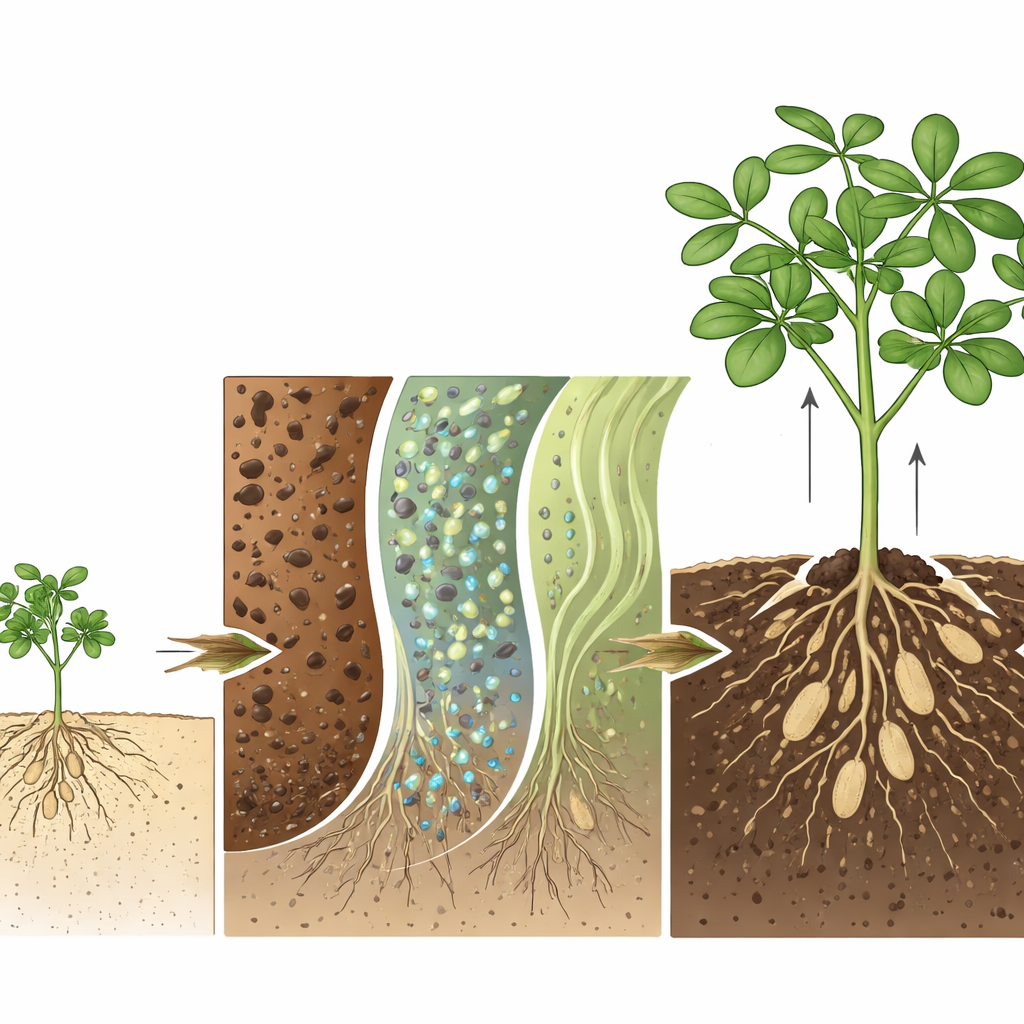
The benefits extended below ground. Post‑harvest soil tests showed modest but meaningful improvements where biostimulants were used. Humic acid and seaweed extract slightly increased organic matter in the topsoil, a vital step toward turning loose sand into more sponge‑like soil that stores water and nutrients. Microbial inoculant plots showed the highest levels of plant‑available nitrogen, reflecting the activity of beneficial bacteria helping to fix or release this key nutrient. Electrical conductivity and sodium‑related measures, which are linked to salinity stress, tended to be lower under humic acid and microbial treatments, suggesting gentler salt conditions around the roots. Together, these changes indicate that biostimulants can gradually make harsh sandy soils more hospitable for future crops.
What the Findings Mean for Farmers
For growers working in dry, sandy regions, the study’s message is practical and hopeful. Biostimulants did not simply act as extra fertilizer; they helped peanuts use resources more efficiently, produced steadier yields, and nudged the soil toward better health. Among the products tested, the humic acid formulation Humic King gave the most consistent all‑around benefits, especially for harvest index, oil content, and soil quality, while the microbial mix boosted biomass and yield and the seaweed extract excelled at raising seed protein. In plain terms, carefully chosen biostimulants can help turn marginal desert sand into more productive peanut fields, offering a relatively low‑impact tool for more sustainable farming in some of the world’s toughest environments.
Citation: Hamed, L.M.M. Biostimulant-driven improvement in yield, seed quality, and soil health of peanut (Arachis hypogaea L.) cultivated in arid sandy environment. Sci Rep 16, 13839 (2026). https://doi.org/10.1038/s41598-026-44087-2
Keywords: peanut, biostimulants, sandy soils, arid agriculture, soil health