Clear Sky Science · en
Advancing human skin models by integrating skin microbes for next-generation research
Why the bugs on our skin matter
Our skin is more than a simple outer shell; it is a living habitat for countless microbes that quietly help defend us. When the balance between skin cells and these resident bacteria is disturbed, problems like infections and inflammatory skin diseases can arise. This study introduces a next‑generation lab‑grown skin model that includes real skin bacteria, allowing scientists to watch how common microbes shape skin structure and inflammation without experimenting on animals.
Building mini skin in the lab
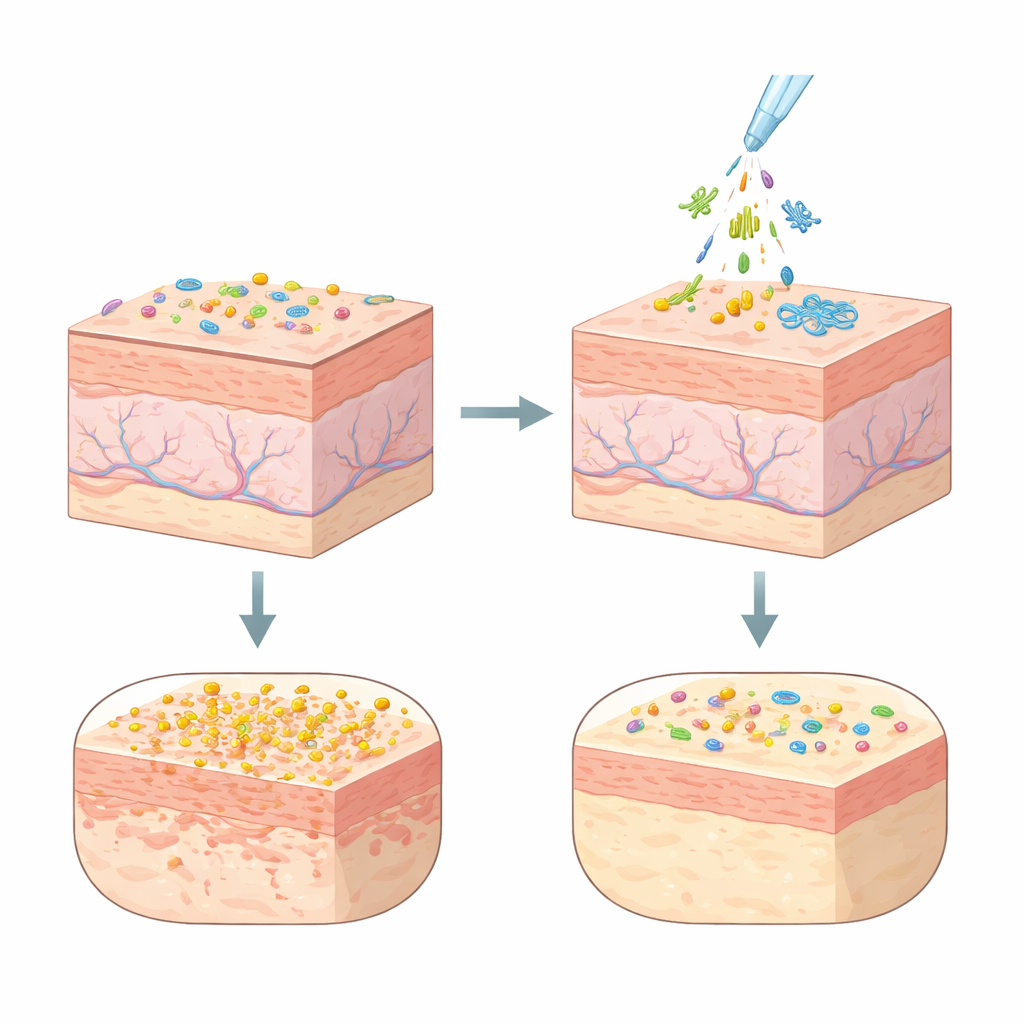
The researchers used three‑dimensional human skin equivalents—thin discs of living human skin cells grown in the lab that closely mimic the layered structure of real skin. These models reproduce the key layers of the outer skin barrier and can be grown from cells donated after cosmetic surgery. By leaving out antibiotics shortly before the experiments, the team created a clean but welcoming surface on which they could deliberately add selected microbes, rather than relying on accidental contamination.
Inviting friendly and unfriendly microbes
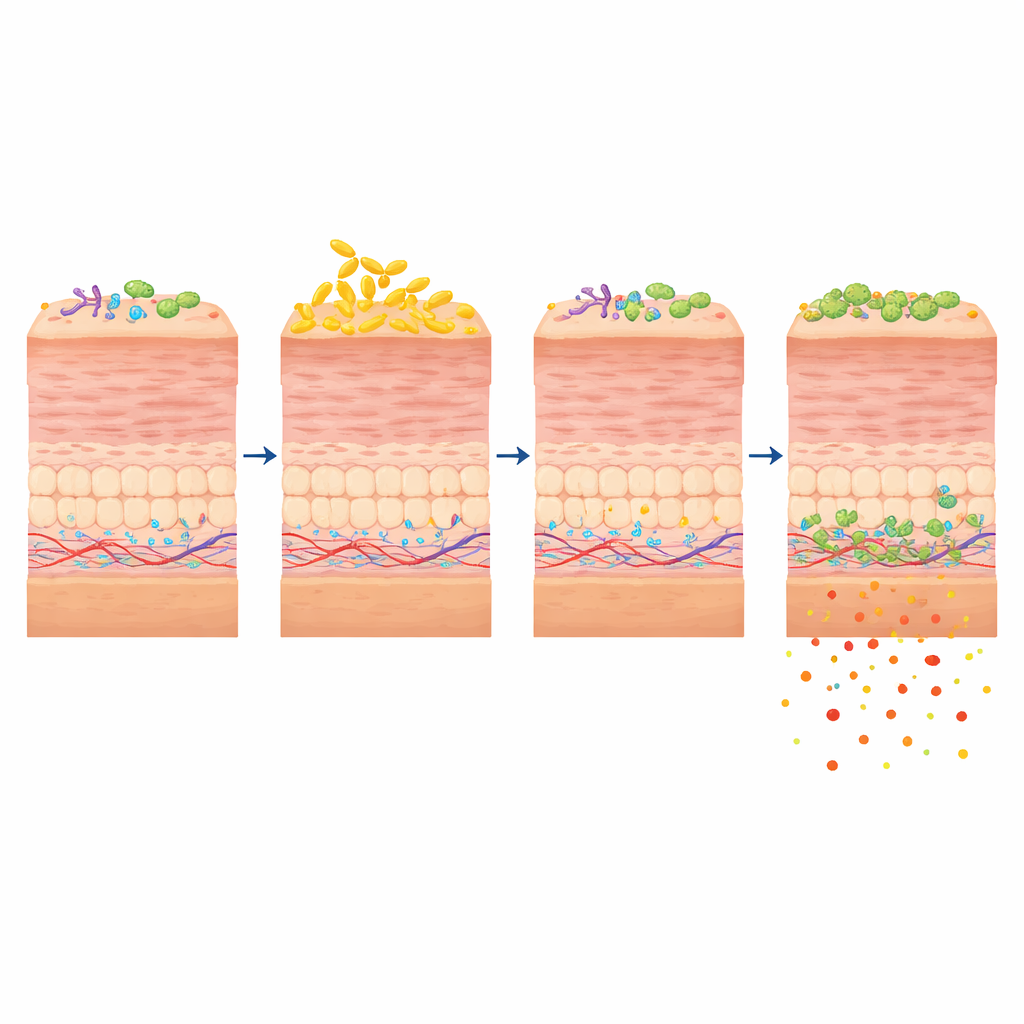
To probe how different microbes behave, the team added three well‑known skin bacteria: Staphylococcus aureus, often linked to skin infections and flare‑ups of conditions like eczema; Staphylococcus epidermidis, typically a friendly resident; and Cutibacterium acnes, commonly found in hair follicles and associated with acne. They tested two starting amounts of each bacterium and followed their growth over 48 hours. All three species managed to grow on the lab‑grown skin, but S. aureus expanded the most, while two strains of S. epidermidis showed more modest, strain‑specific growth. C. acnes also grew despite being placed in relatively oxygen‑rich conditions that are less than ideal for this species.
How microbes reshape the skin surface
Next, the scientists examined how this microbial growth changed the skin architecture. Under the microscope, healthy models showed neatly organized layers. When S. aureus was present, the lower cells became less orderly and the upper layers flattened sooner than normal, signs that the skin barrier was being disturbed. One S. epidermidis strain caused milder changes, while the other had little visible effect. C. acnes left the overall structure largely intact but subtly increased the number of dividing cells in the bottom layer, suggesting it can stimulate skin cell renewal without obvious damage. The team also tracked key structural proteins involved in forming the tough outer barrier. While some markers stayed stable, a protein called loricrin, important for the final sealing of the skin surface, was reduced in the presence of several microbes, especially S. aureus.
When the skin sounds the alarm
Skin cells can act like sentinels, releasing chemical signals when they sense danger. The researchers measured two such signals—small proteins that attract immune cells and drive inflammation—in the liquid beneath the skin models. Co‑culturing with S. aureus triggered a strong increase in both inflammatory signals, whereas S. epidermidis and C. acnes did not boost them above control levels. Although the lab models lacked immune cells, the pattern of secreted molecules suggests that S. aureus pushes the skin toward an inflammatory state, while the other common residents appear more neutral or even supportive of calm, steady growth.
Toward better, animal‑free skin research
By combining realistic human skin equivalents with carefully chosen microbes and multiple readouts—bacterial growth, tissue structure, and inflammatory signals—the authors created a robust test bed for studying how skin and microbes interact. Their results highlight S. aureus as a particularly disruptive partner, capable of overgrowing the surface, weakening key barrier features, and provoking inflammation, while typical “good” residents have far gentler effects. This integrated, human‑based system offers a powerful alternative to animal testing and paves the way for screening new treatments, skin‑care products, and therapies that aim to support a healthy partnership between our skin and its microscopic inhabitants.
Citation: Mieremet, A., Rietveld, M., van Leijden, B. et al. Advancing human skin models by integrating skin microbes for next-generation research. Sci Rep 16, 13182 (2026). https://doi.org/10.1038/s41598-026-44005-6
Keywords: skin microbiome, human skin equivalent, Staphylococcus aureus, in vitro skin model, skin inflammation