Clear Sky Science · en
Affective touch and face recognition: effects on memory and metacognitive performance
Why Touch and Faces Matter to Everyday Life
We are constantly touching and being touched—through handshakes, hugs, or a reassuring pat on the arm. At the same time, our lives depend on recognizing faces, from spotting a friend in a crowd to remembering who we met at work yesterday. This study brings these two everyday experiences together, asking a simple but intriguing question: does being gently touched while you look at someone’s face actually help you remember that face later, or feel more sure about your memory?
A Gentle Experiment with Human Touch
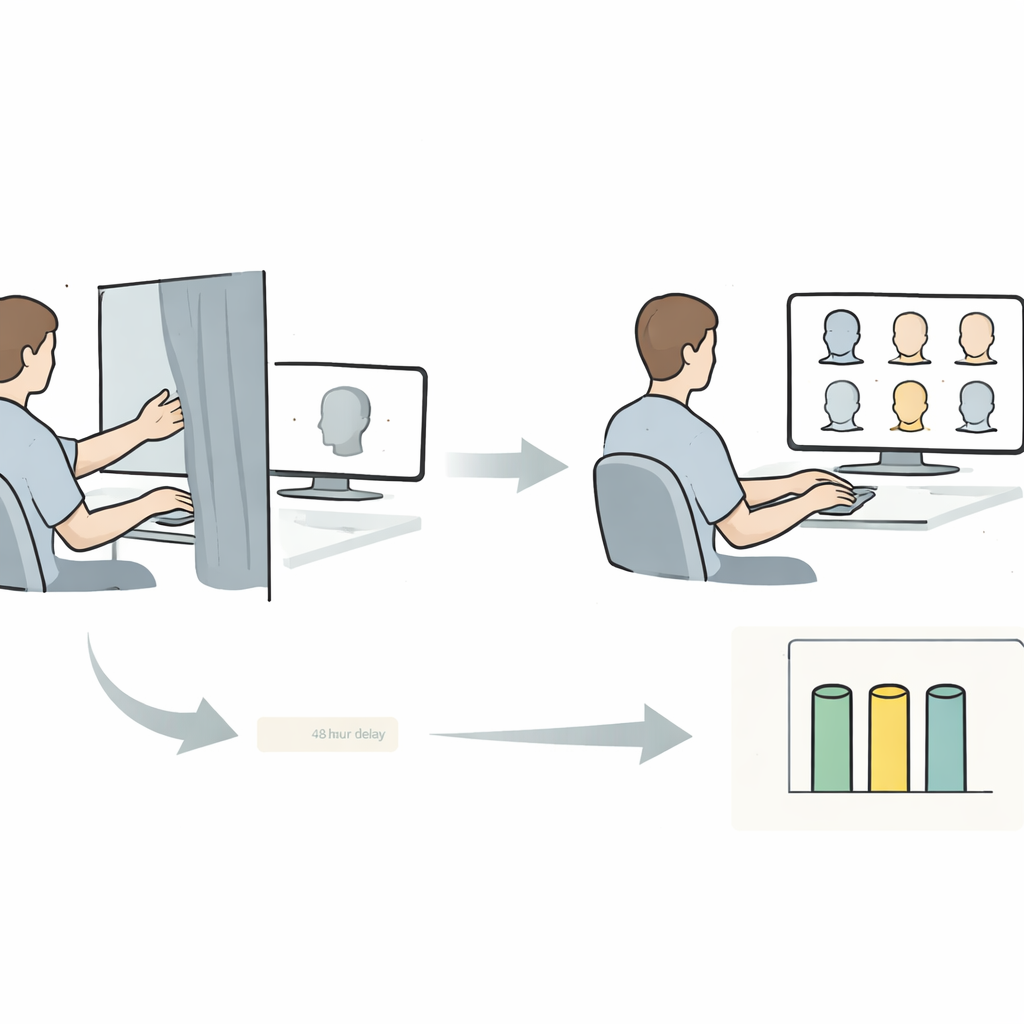
To probe this question, researchers invited 57 adults into the lab for two sessions held two days apart. In the first session, participants viewed nearly one hundred neutral faces on a computer screen and rated how attractive and trustworthy each person seemed. While they did this, a hidden experimenter either did not touch them at all, rested a still hand on their forearm, or slowly stroked their skin in a gentle, caress-like way thought to be especially pleasant. Participants were told to imagine that the touch was coming from the person whose face they were seeing, creating a small social scene out of each trial.
How Memories and Self-Judgment Were Tested
Two days later, the volunteers returned for a surprise memory test. This time, they saw a mix of old faces from the first session and new faces they had never seen before. For each one, they decided whether it was old or new and rated how confident they felt in that judgment. From these answers, the researchers could estimate not only how accurate people’s memories were, but also how good they were at judging the reliability of their own memories—a quality known as metacognitive sensitivity. The team also measured participants’ general talent for face recognition and their attitudes toward social touch, to see whether these traits shaped any touch effects.
What the Data Revealed About Touch and Memory
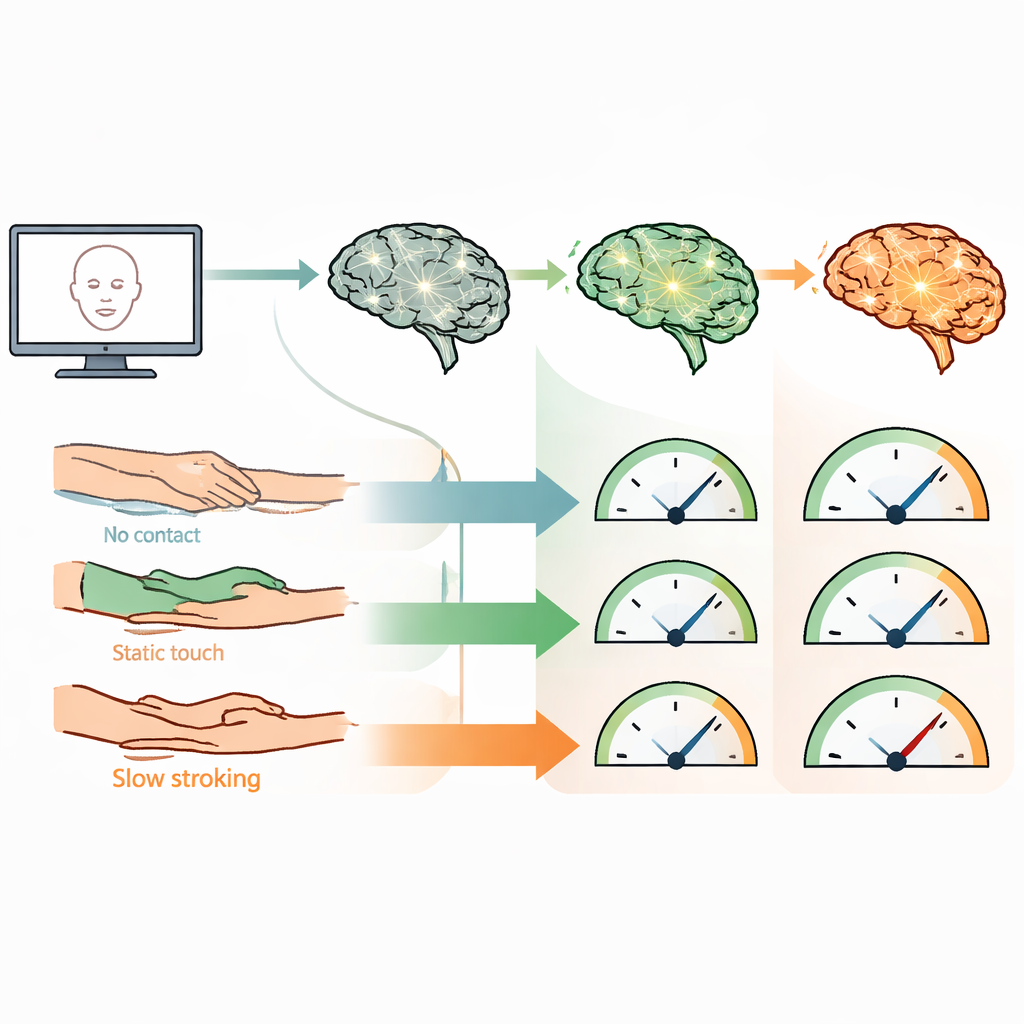
Despite the powerful role that touch plays in social life, the results were striking in their simplicity: gentle touch during the first session did not noticeably change how well people later recognized the faces. Whether there was no touch, a light resting hand, or a slow caress, memory accuracy stayed about the same. Touch also did not make participants more or less confident in their answers, nor did it help them better tell when their memories were right or wrong. Even their ratings of how attractive or trustworthy each face seemed barely budged as a result of being touched.
When Touch Does Not Seem to Matter
The researchers went further by using statistical tools designed to weigh how strongly the results support the absence of an effect. These analyses suggested moderate to strong evidence that, in this tightly controlled lab setting, brief social touch does not produce even medium-sized changes in face memory or confidence. People who generally disliked touch found the touch less pleasant, but this did not translate into better or worse memory. Nor did participants’ natural differences in face-recognition skill alter the pattern. The touch, in other words, felt real but left memory and judgment essentially unchanged.
Why Context May Be the Missing Ingredient
To make sense of these null results, the authors point to the importance of context. In real life, touches are woven into rich relationships and situations—a hug from a loved one or a reassuring hand on the shoulder from a friend. In contrast, the lab touch in this study was brief, delivered by a stranger behind a curtain, and paired with unfamiliar faces on a screen. The findings suggest that under such stripped-down conditions, touch may be too weak a signal to alter how we store and monitor social memories. For everyday life, this means that while meaningful touch can comfort us and shape our feelings, it may not automatically make us better at remembering new faces unless it happens in a more emotionally rich and personally significant context.
Citation: Bregulla, M., Packheiser, J., Merz, C.J. et al. Affective touch and face recognition: effects on memory and metacognitive performance. Sci Rep 16, 10991 (2026). https://doi.org/10.1038/s41598-026-43969-9
Keywords: social touch, face recognition, memory, metacognition, social cognition