Clear Sky Science · en
Genetic diversity and conservation implications for European Griffon Vultures (Gyps fulvus): Insights from mitochondrial D-loop HVR1
Why these sky-cleaners matter
High above the cliffs and pastures of Europe, Griffon Vultures quietly provide a public health service: they dispose of carcasses before disease can spread. Yet these impressive birds nearly vanished from many parts of their range during the last century. This study asks a deceptively simple question with big conservation consequences: how genetically diverse are Europe’s Griffon Vulture populations today, and what has decades of moving birds around for reintroduction actually done to their genetic make-up?
Following family lines through tiny DNA markers
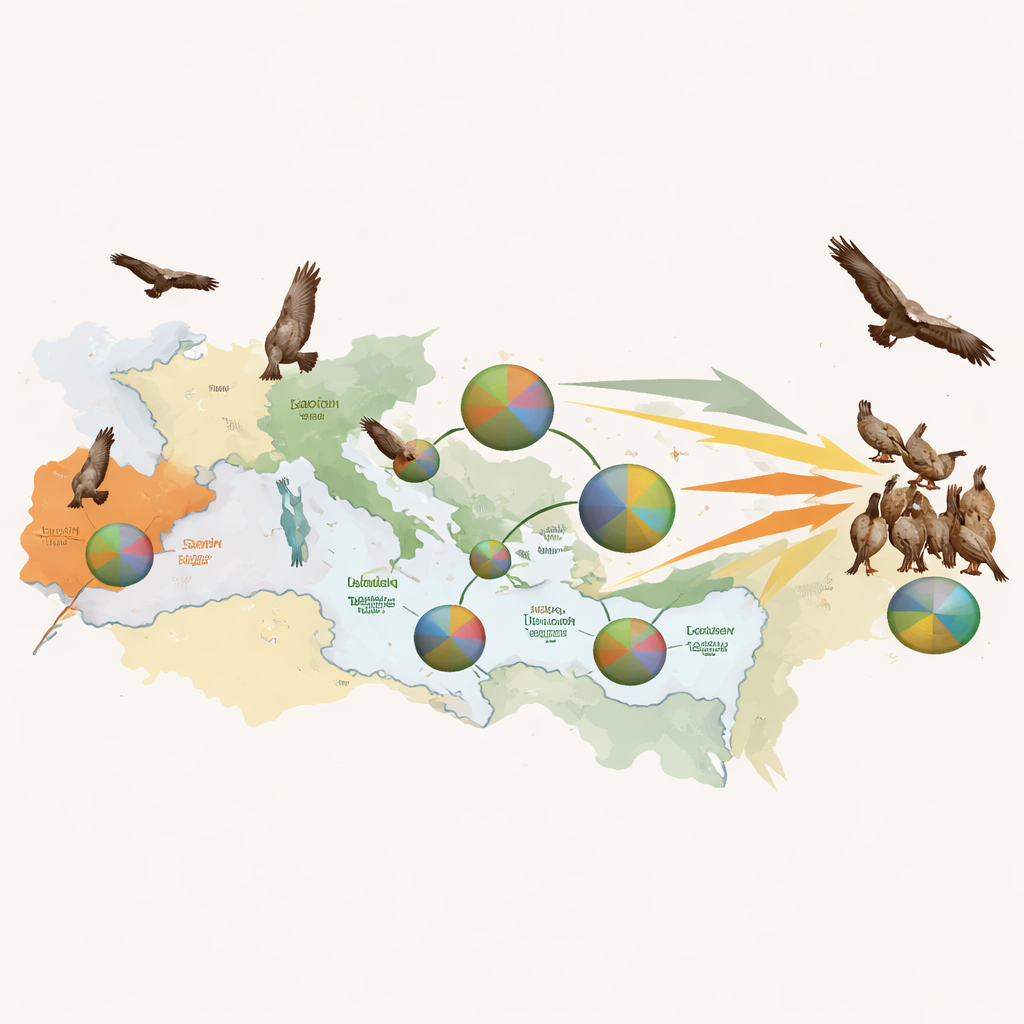
To explore this, the researchers examined a small but fast-evolving stretch of mitochondrial DNA, a piece of genetic material passed down the maternal line. This particular region is useful for telling one family line from another, like barcodes for vulture clans. The team assembled the largest genetic dataset yet for the species: 341 vultures from nine populations across continental Europe, Mediterranean islands, and the Middle East, including extensive sampling from Spain, which holds about 90% of Europe’s Griffon Vultures. Within this fragment of DNA they found 18 distinct genetic variants, or “haplotypes,” 14 of them previously unknown.
Shared roots and hidden pockets of uniqueness
Across all regions, one haplotype dominated. It appeared in more than three-quarters of all birds and in every population examined, especially in Spain. Around this common core, some populations held their own private variants, found nowhere else in the dataset. Spain, Serbia, Israel, Croatia, and Sardinia each carried unique maternal lineages, hinting at local history and long-term isolation. Statistical analyses showed that most genetic variation lies within each population rather than between them, but patterns in the data still grouped colonies into geographic clusters: continental Balkans plus Aegean islands, western Mediterranean (including Spain and Sardinia), and the Middle East. These groupings reflect both natural movements and human-led translocations.
How moving vultures reshapes their genetic map
Since the 1980s, conservationists have moved hundreds of Griffon Vultures—mainly from Spain—to rebuild colonies in France, Italy, the Balkans, and Mediterranean islands such as Sardinia and Cyprus. The genetic evidence shows these efforts have not been neutral. In Sardinia, for example, museum specimens reveal that a once-characteristic local haplotype used to dominate the island; today, after birds from Spain were repeatedly released, that native variant has been greatly diluted by the widespread haplotype from the donor population. In Cyprus, the small sample examined before the latest releases already showed only the dominant haplotype, suggesting that restocking may have largely erased whatever distinct maternal lineages once existed there. While these actions have boosted numbers and prevented local extinctions, they may also be quietly flattening regional genetic differences that could matter for future adaptation.
When close cousins and distant relatives mix
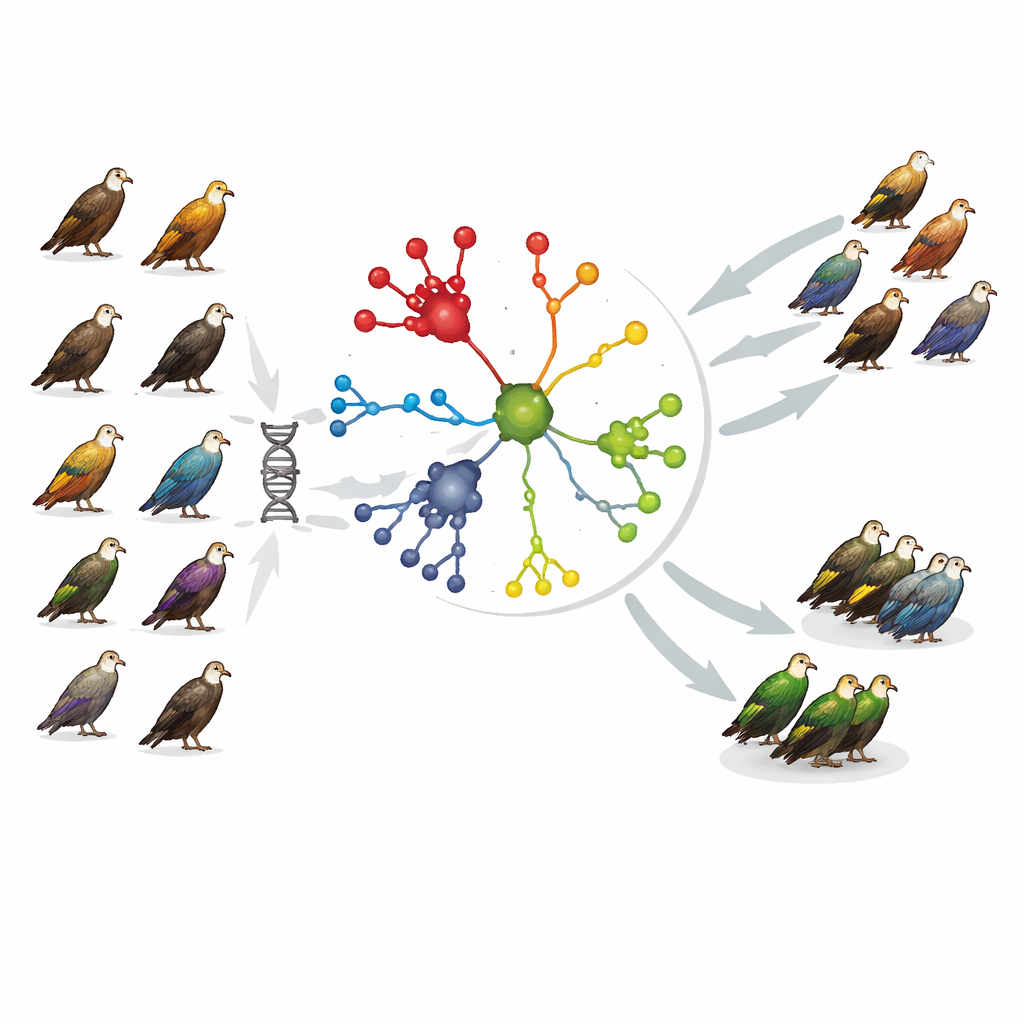
Not all mixing is equal. The study’s distance measures and clustering analyses indicate that some populations—such as Serbia and neighboring Balkan colonies—are genetically similar enough that using Serbian birds to reinforce nearby groups is likely safer than importing vultures from far-off Spain. The work also uncovered a warning sign: three Spanish birds carried mitochondrial sequences more typical of Rüppell’s Vulture, an African relative that has recently started breeding in Iberia. This points to either hybridization or mistaken identity in the field. If such undetected hybrids are used as donors for restocking in regions where Rüppell’s Vulture is absent, managers could unintentionally introduce foreign genetic material into otherwise distinct lineages.
What this means for saving vultures
In plain terms, the study shows that European Griffon Vultures still share a common genetic backbone, but several regions harbor their own rare maternal lineages that are worth protecting. Spain remains an invaluable source of birds thanks to its huge population and rich haplotype pool, yet its overwhelming dominant lineage and possible hybrids mean any exports should be genetically screened and used with caution. For the eastern Mediterranean, Serbia emerges as a promising, better-matched donor. Overall, the work argues that future vulture translocations should be guided not just by where birds are abundant, but by how their genes fit into the larger picture—so that rescuing vulnerable colonies does not come at the cost of losing the very genetic diversity that will help the species cope with a changing world.
Citation: Mereu, P., Davidović, S., Pirastru, M. et al. Genetic diversity and conservation implications for European Griffon Vultures (Gyps fulvus): Insights from mitochondrial D-loop HVR1. Sci Rep 16, 13225 (2026). https://doi.org/10.1038/s41598-026-43926-6
Keywords: griffon vulture, genetic diversity, conservation translocation, Mediterranean populations, vulture hybridization