Clear Sky Science · en
Compliance patterns in adopting sustainability practices: A cluster analysis of oil palm producers in Colombia
Why palm oil sustainability matters to everyone
Palm oil shows up in everything from snacks to soaps, yet stories about rainforest loss and labor abuses often leave consumers wondering whether it can ever be truly sustainable. This study looks at a very different setting from the usual headlines—Colombia, the largest palm oil producer in the Americas—and asks a practical question: how, in real life, are thousands of farmers moving toward more responsible ways of growing this crop, and what holds them back?
A national health check for palm oil farms
To understand how Colombian producers are doing, the researchers relied on a detailed scorecard called the Sustainability Index. Instead of a simple pass–fail label, this index tracks 79 on‑farm practices, grouped into economic, environmental, and social aspects. Economic items include things like crop management and long‑term profitability. Environmental ones cover issues such as efficient water use, avoiding deforestation, and preventing pollution. Social practices involve formal jobs, safe working conditions, land rights, and respect for human rights. Between 2020 and 2023, trained technicians visited 3,808 palm growers—over half of all producers in the country—and recorded how well each farm complied with these practices using a standardized mobile app.
Turning thousands of farms into clear patterns
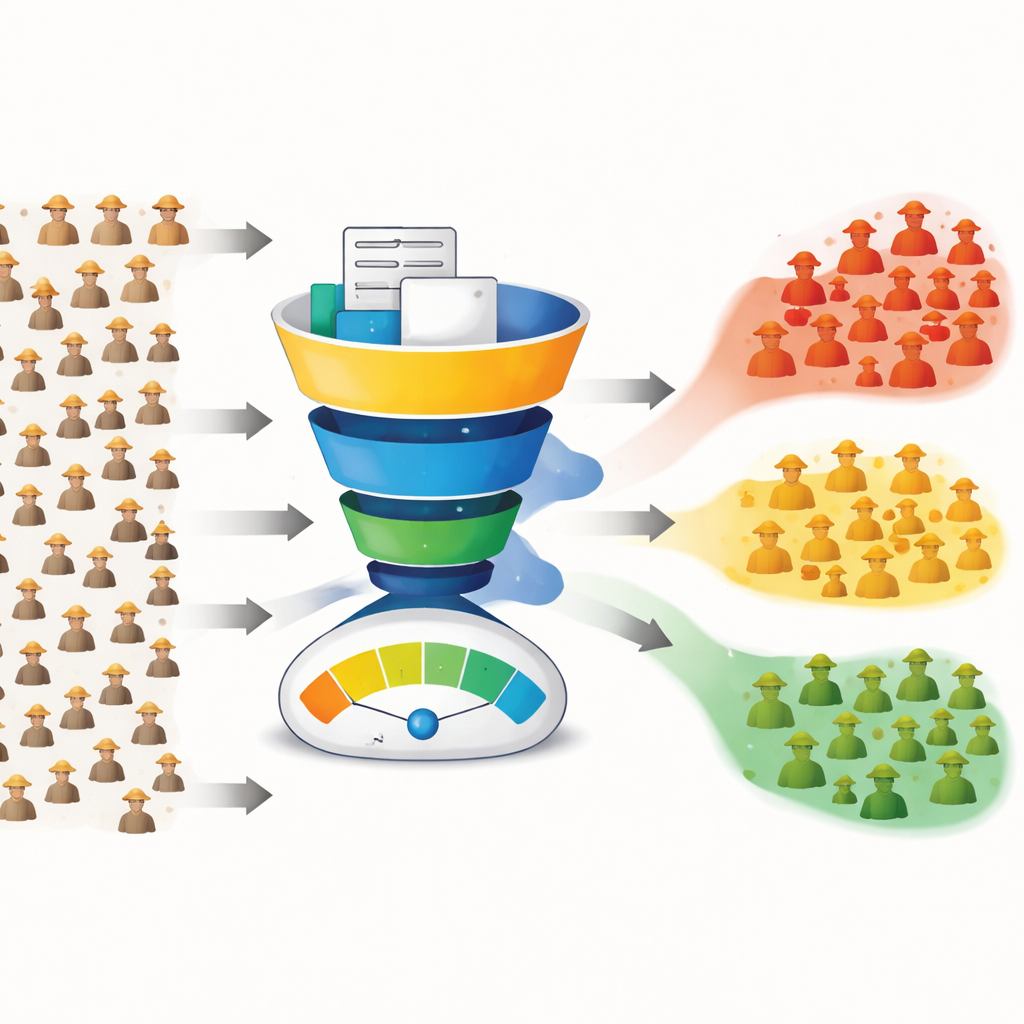
With this large dataset in hand, the team used clustering techniques, a form of machine learning, to let the data group farmers according to similar behavior rather than forcing them into pre‑set categories. At the national level, six main groups emerged, ranging from fully “Advanced” adopters—high performance on economic, environmental, and social fronts—to “Lagging” adopters, who scored low in all three. In between lay mixed profiles: some farms were strong economically but weak environmentally, others had solid economic and social performance but lacked environmental safeguards, and many combined moderate strengths with serious gaps.
Why place and organization shape farm behavior
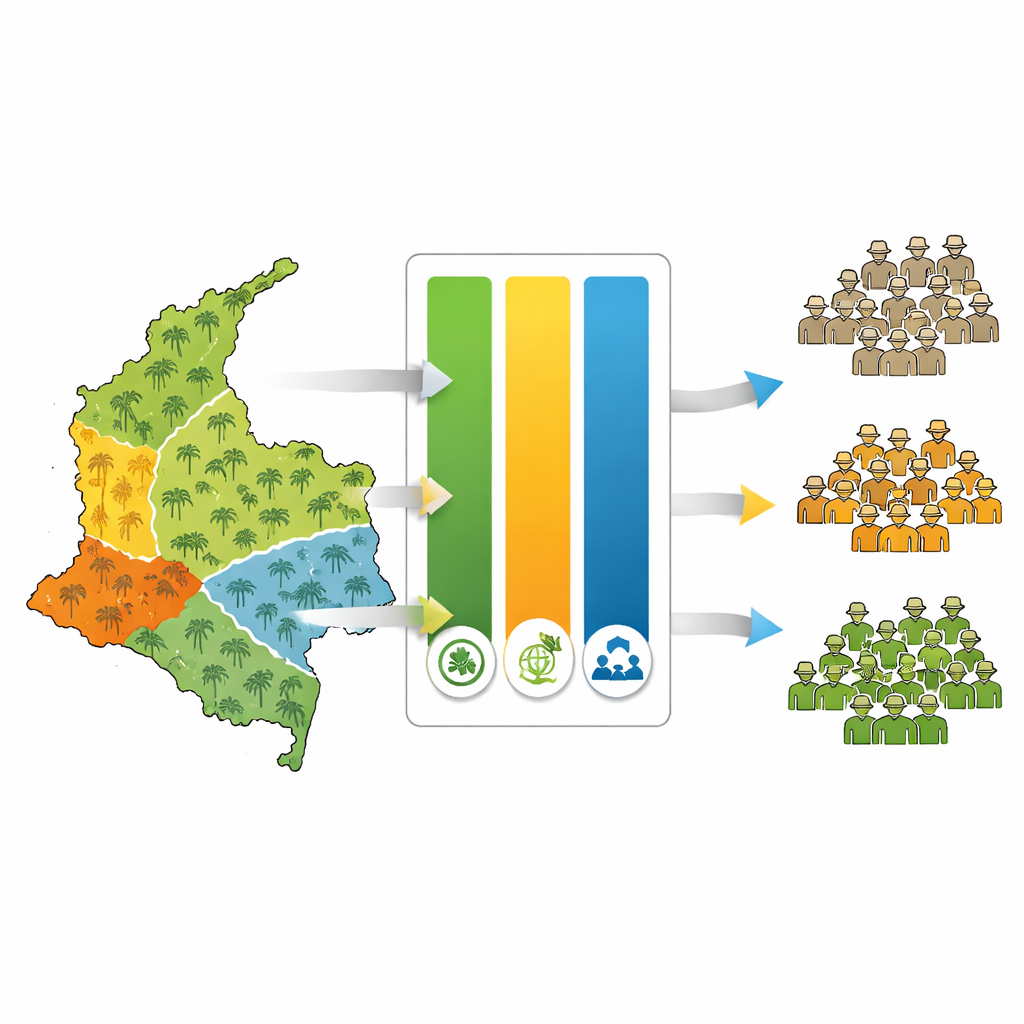
The researchers then repeated the analysis separately for each of Colombia’s four palm‑growing zones—Northern, Central, Eastern, and Southwestern—because these regions differ in climate, infrastructure, security, and history. This finer‑grained look revealed ten distinct typologies in total and showed that where a farmer is located strongly influences which group they fall into. For example, the Eastern Zone, with more mechanized, larger operations, contained more “Advanced” and “Socioeconomically Advanced” producers, while the Southwestern Zone, affected by plant diseases and security problems, had no “Advanced” group at all and many farmers struggling economically and environmentally. Another powerful influence was whether producers were linked to a “Palm Nucleus”—a mill‑centered organization that buys fruit and often provides technical support. In most regions, belonging to a stronger nucleus was closely tied to better sustainability performance.
Challenging old ideas about who can be sustainable
A common assumption in agricultural development is that smallholders, because they have fewer resources, will always lag behind larger operations in adopting better practices. This study challenges that view. By looking directly at practice‑level scores rather than just farm size or farmer age, the researchers found that sustainability gaps appear across all scales and demographics. Some small farms score very well, and some large ones do poorly. Context—regional conditions, access to advice, strength of local organizations, and targeted support—turns out to matter as much as, or more than, farm size itself.
What this means for making palm oil truly sustainable
Instead of one‑size‑fits‑all campaigns or certification pushes, the authors argue for extension efforts and policies that are tailored to the specific patterns uncovered by the Sustainability Index. Lagging groups may need basic training, credit access, and help coping with plant diseases, while economically strong but environmentally weak farms require focused support on issues like habitat protection and pollution control. Because the index pinpoints which practices are missing and where, it can guide mills, researchers, and government programs to invest where they will close the biggest gaps. For consumers and policymakers, the message is cautiously hopeful: with the right, locally adapted support, farms in a country like Colombia can move along a clear path from lagging to advanced adoption of sustainable practices, making responsible palm oil a more realistic goal rather than a marketing slogan.
Citation: Becerra-Encinales, J.F., Rodríguez, B., Mesa-Fuquen, E. et al. Compliance patterns in adopting sustainability practices: A cluster analysis of oil palm producers in Colombia. Sci Rep 16, 13354 (2026). https://doi.org/10.1038/s41598-026-43888-9
Keywords: palm oil sustainability, Colombian agriculture, farm clustering, sustainability index, agricultural extension