Clear Sky Science · en
Taxonomic descriptions of Nocardia anocheti sp. nov. and Streptomyces odontomachicola sp. nov. isolated from ants
Tiny Allies with Big Pharmaceutical Promise
Most of us think of ants as picnic raiders or garden pests, but these insects also host microscopic partners that could help fight dangerous infections. This study explores bacteria living on and inside Thai ants and reveals two previously unknown species that are genetically primed to make useful bioactive compounds. By tracing where these bacteria live on ants, how they differ from known relatives, and what their genomes contain, the researchers open a new window on nature’s hidden pharmacy. 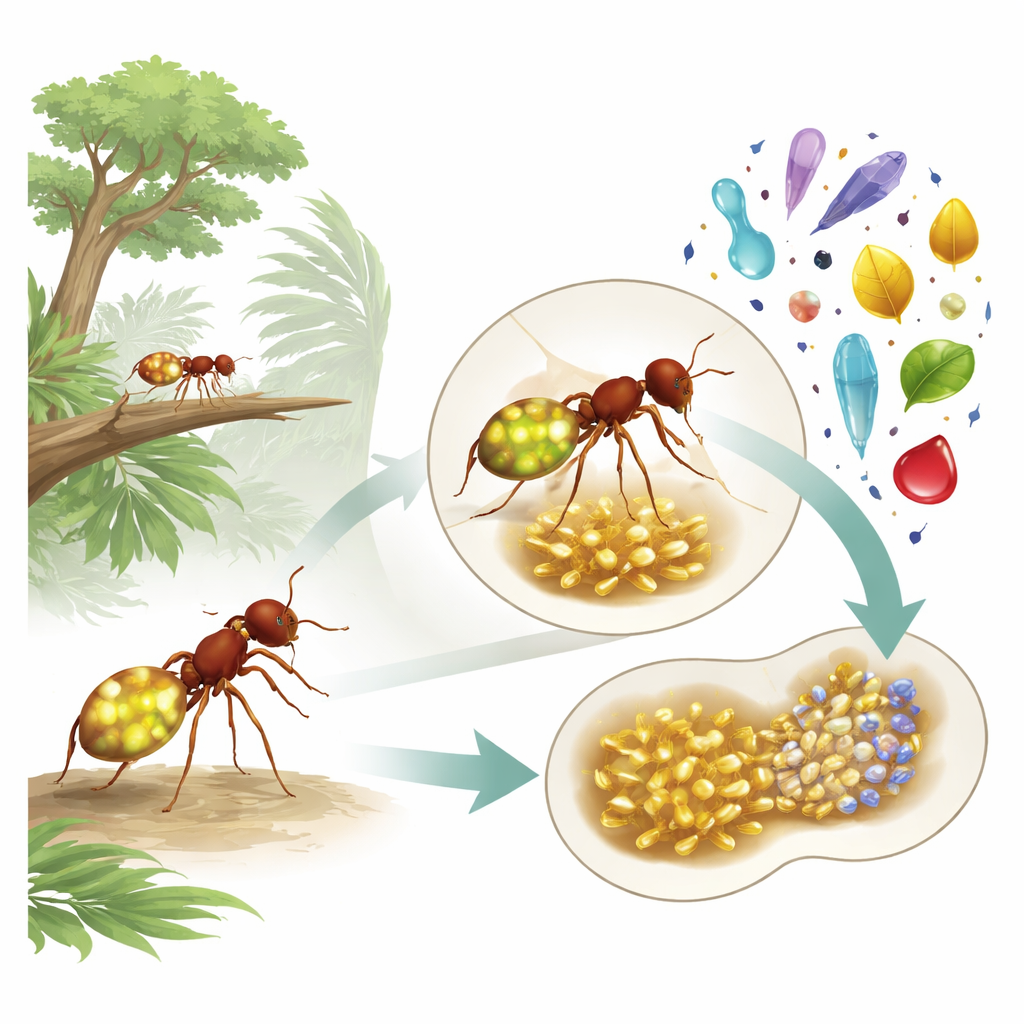
Ants as Living Microbe Farms
Ants do not live alone: many carry specialized bacteria on their bodies or in tiny internal niches. These bacteria often produce natural antibiotics that protect ant colonies from harmful fungi and other pathogens. Scientists have already found several such helpful strains on ants, including bacteria that make powerful molecules active against drug‑resistant hospital germs. Yet in biodiversity‑rich countries like Thailand, the bacterial partners of ants are still poorly cataloged. The authors set out to explore this overlooked world by isolating actinomycete bacteria—a group famous for antibiotic production—from two ant species collected in the Thai countryside and at a national science museum.
Finding Two New Bacterial Neighbors
From workers of the trap‑jaw ants Anochetus graeffei and Odontomachus simillimus, the team obtained two promising strains, named AG03ᵀ and ODS28ᵀ. Careful comparisons of their genetic signatures, growth patterns, and chemical makeup showed that neither strain fit any known species. DNA sequencing of a standard marker gene (16S rRNA) and broader multi‑gene comparisons placed AG03ᵀ within the genus Nocardia and ODS28ᵀ within the genus Streptomyces, but each on its own distinct branch of the family tree. Measures of overall genome similarity—average nucleotide identity and digital DNA–DNA hybridization—fell far below accepted cutoffs for belonging to an existing species. Together, these lines of evidence led the authors to name two new species: Nocardia anocheti sp. nov. and Streptomyces odontomachicola sp. nov., each tied to its ant host.
Clues Hidden in Color, Shape, and Chemistry
The researchers did not rely on DNA alone. They also grew the strains under different conditions and recorded their appearance, preferred temperatures, salt tolerance, and food sources. Nocardia anocheti formed pinkish colonies with orange‑yellow undersides and delicate aerial filaments, thriving between 25 and 37 °C and tolerating modest salt levels. It used some common sugars but ignored others that related species could digest. Streptomyces odontomachicola produced yellow to orange colonies, endured much higher salt concentrations, and showed a broader appetite for different sugars. Under the microscope, both behaved like typical filament‑forming actinomycetes, yet their detailed chemical fingerprints—such as which fatty acids, cell‑wall building blocks, and vitamin‑like quinones they carried—set them apart from close relatives and reinforced their status as new species.
Genomes Packed with Chemical Innovation
Perhaps the most exciting finding lies in the bacteria’s genomes. When the team scanned their DNA with specialized software, they uncovered multiple biosynthetic gene clusters—stretches of genes that work together to build complex natural products. In Nocardia anocheti, the clusters hinted at the ability to make compounds like ε‑poly‑L‑lysine, metal‑binding molecules, and an osmoprotectant called ectoine. Streptomyces odontomachicola carried an even richer toolbox, including pathways for earthy‑smelling terpenes and several families of compounds resembling known antibiotics and iron‑scavenging molecules. Although these clusters are predictions rather than proven products, they suggest that ants harbor bacteria capable of synthesizing a wide array of yet‑to‑be‑tested chemicals. 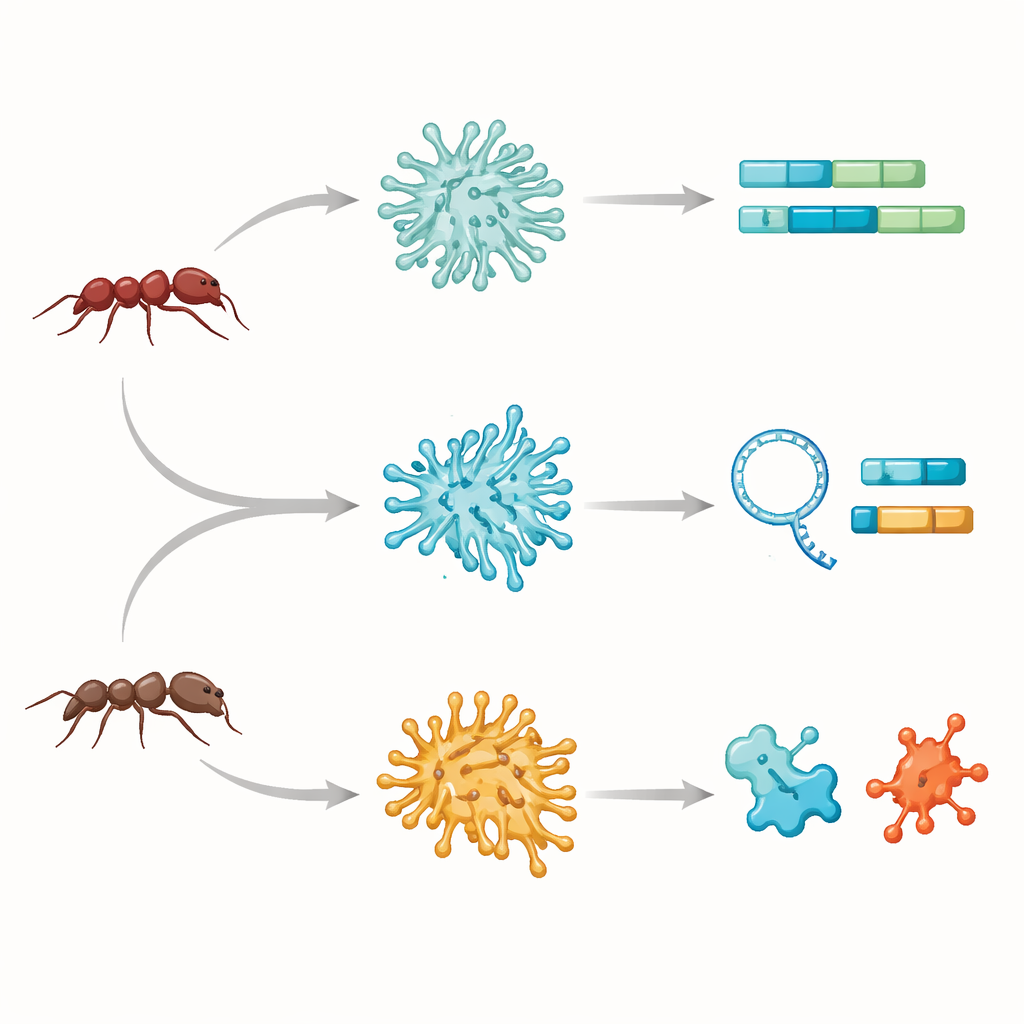
What This Means for Future Medicines
In accessible terms, this work shows that ordinary‑looking ants can shelter extraordinary microbes. By discovering two new bacterial species closely tied to ant hosts, and showing that their genomes contain many blueprints for complex natural molecules, the study strengthens the idea that insect‑associated bacteria are fertile ground for drug discovery. While further experiments are needed to confirm which compounds these microbes actually make and how potent they are, the findings add Thailand’s ant fauna to the growing list of natural treasure troves that may yield the next generation of antibiotics and other valuable medicines.
Citation: Somphong, A., Tunvongvinis, T., Suriyachadkun, C. et al. Taxonomic descriptions of Nocardia anocheti sp. nov. and Streptomyces odontomachicola sp. nov. isolated from ants. Sci Rep 16, 13074 (2026). https://doi.org/10.1038/s41598-026-43878-x
Keywords: ant microbiome, actinomycetes, natural antibiotics, Nocardia, Streptomyces