Clear Sky Science · en
Protective effect of iron against cadmium-induced lesions in rat testis via downregulation of NQO1/Nrf2 and NF-κB
Why metal in water matters for male health
Heavy metals such as cadmium can seep into drinking water from industrial pollution and build up in the body over time. One organ that is particularly sensitive is the testis, which produces both sperm and the hormone testosterone. This study in rats asks a practical question with real-world echoes: when cadmium is present, can iron—another common metal in our diet and water—lessen the damage to male reproductive health?
What the researchers set out to test
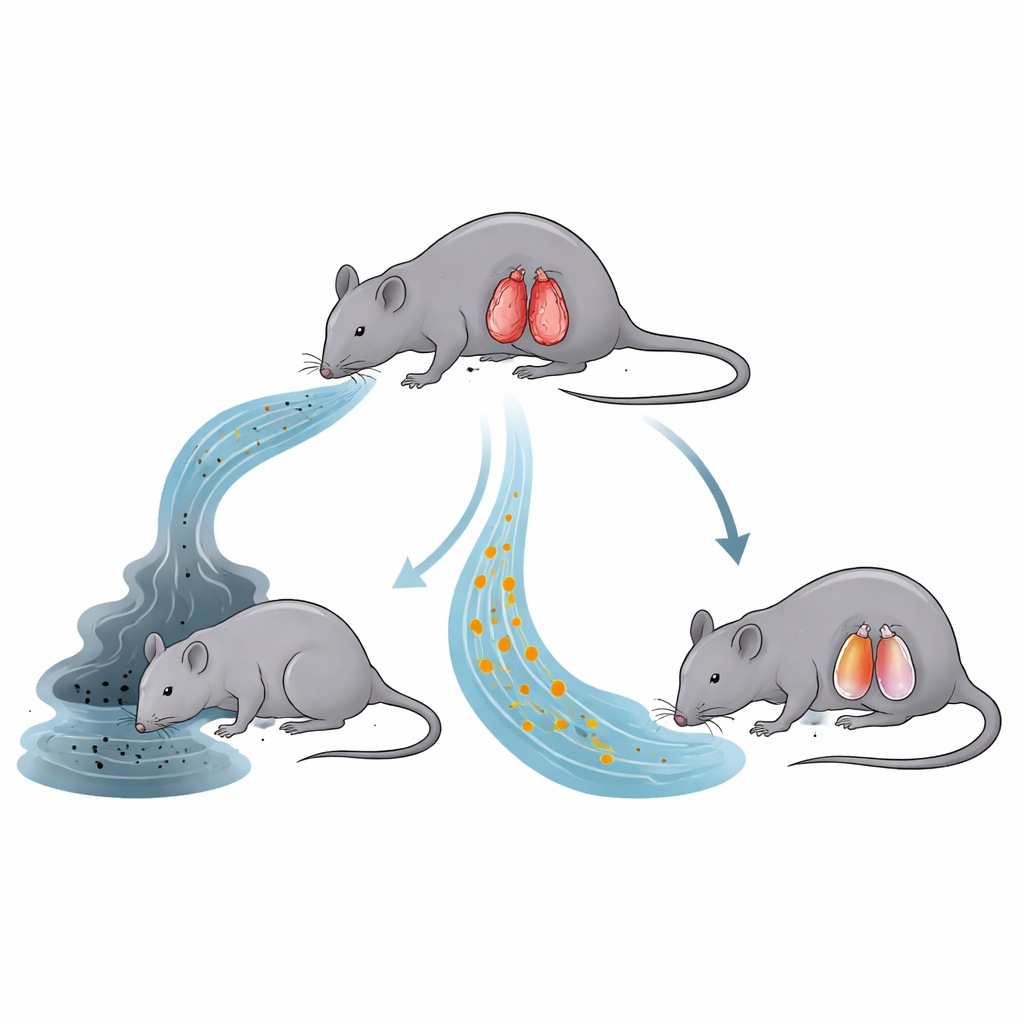
The scientists focused on how cadmium harms the testes and whether iron can soften that blow. Cadmium is known to trigger chemical stress inside cells and to disturb hormone levels, while iron can compete with cadmium for entry into the body through shared transport routes in the gut. To explore this, the team divided young male rats into four groups for four weeks: one got clean water, one got cadmium-contaminated water, one received only iron, and one drank water containing both metals together. After exposure, the researchers measured standard blood markers, reproductive hormones, and the activity of key protective and inflammatory switches inside testicular cells. They also examined thin slices of testis tissue under the microscope to see how the structure had changed.
What happened to hormones and cell defenses
Rats exposed to cadmium alone showed clear signs of reproductive disruption. Blood levels of luteinizing hormone (LH) and follicle-stimulating hormone (FSH)—signals from the brain that drive testis function—rose sharply, while testosterone fell. Estradiol, a form of estrogen, increased, indicating a hormonal imbalance that can impair fertility. At the same time, the activity of catalase, a key antioxidant enzyme, dropped, pointing to a weakened defense against harmful reactive molecules. When iron was given by itself, it altered some of these measures in a different way and could itself be mildly stressful at the chosen dose. But when iron and cadmium were given together, several cadmium-driven changes were blunted: antioxidant activity in the blood was partially restored, estradiol levels moved back toward normal, and some stress markers behaved less dramatically.
How iron changes signals inside testicular cells
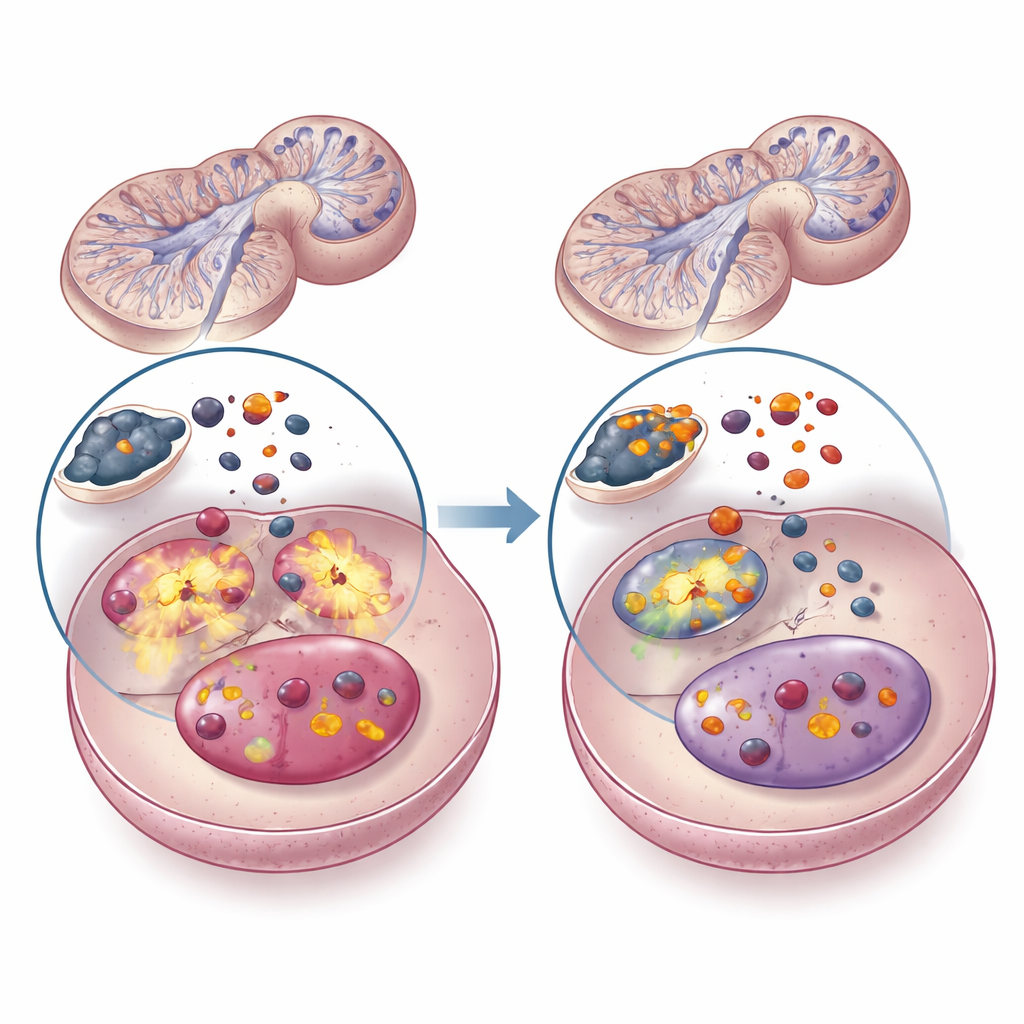
The team then looked deeper at the genetic switches that control how cells respond to toxic insults. Cadmium alone boosted the activity of Nrf2 and NF-κB, two central controllers that turn on genes involved in antioxidant defenses and inflammation. It also increased the message levels for NQO1, a protective enzyme regulated by Nrf2. Surprisingly, another stress-related gene, HO-1, was reduced rather than increased. When iron was present along with cadmium, these cadmium-induced surges in Nrf2, NF-κB, and NQO1 were brought back down, suggesting that iron dampened both oxidative and inflammatory signaling. Iron also altered genes linked to iron handling and red blood cell production, such as the transferrin receptor and erythropoietin, showing that metal balance in the body is tightly connected to how cells cope with toxic exposures.
What the testis tissue looked like
Microscope images provided a visual confirmation of these molecular shifts. In healthy control rats, the seminiferous tubules—the tiny loops of tissue where sperm are made—were round, orderly, and packed with developing sperm cells, with abundant hormone-producing Leydig cells in between. In cadmium-exposed rats, many tubules were distorted and filled in, the cell layers were vacuolated and thinning, and Leydig cells were reduced, all signs of impaired sperm production and hormone output. Iron-only rats also showed some degenerative changes. Strikingly, in rats that received both cadmium and iron, most tubules regained a more regular outline, with thinner basement membranes and a more complete series of developing sperm cells, indicating that iron co-exposure helped preserve near-normal testicular structure compared with cadmium alone.
What this means for protecting male fertility
Taken together, the findings suggest that iron can partly shield the male reproductive system from cadmium damage under the conditions tested. While cadmium alone disturbed hormones, weakened antioxidant defenses, activated stress and inflammation pathways, and visibly injured testis tissue, adding iron reduced some of this disruption, especially at the level of cell signaling and tissue structure. However, iron did not correct all hormone changes and can itself be harmful at certain doses, so it is not a simple antidote. For non-specialists, the key takeaway is that the balance of metals we ingest matters: exposure to a toxic metal like cadmium can be modulated by essential metals such as iron, which may offer some protection to sensitive organs like the testes. More work will be needed to understand safe levels and to translate these rat findings to human health.
Citation: Ogunbiyi, O.J., Okolie, N.P., Obi, F.O. et al. Protective effect of iron against cadmium-induced lesions in rat testis via downregulation of NQO1/Nrf2 and NF-κB. Sci Rep 16, 13613 (2026). https://doi.org/10.1038/s41598-026-43876-z
Keywords: cadmium toxicity, iron supplementation, male fertility, oxidative stress, endocrine disruption