Clear Sky Science · en
Disease-derived liver organoids as a preclinical screening platform identify Sargassum japonica as an anti-fibrotic candidate
Why this seaweed and liver story matters
Liver scarring, or fibrosis, is a silent process that can turn common problems like fatty liver into life‑threatening disease. Yet most drug candidates that look promising in lab dishes fail once they reach animals or people. This study tackles that problem by building tiny 3D "mini‑livers" that actually come from scarred livers, then using them to search for new treatments. Using this approach, the researchers pinpointed an extract from a brown seaweed, Sargassum japonica, as a strong candidate to slow or even reverse liver scarring.
Building better mini-livers from real disease
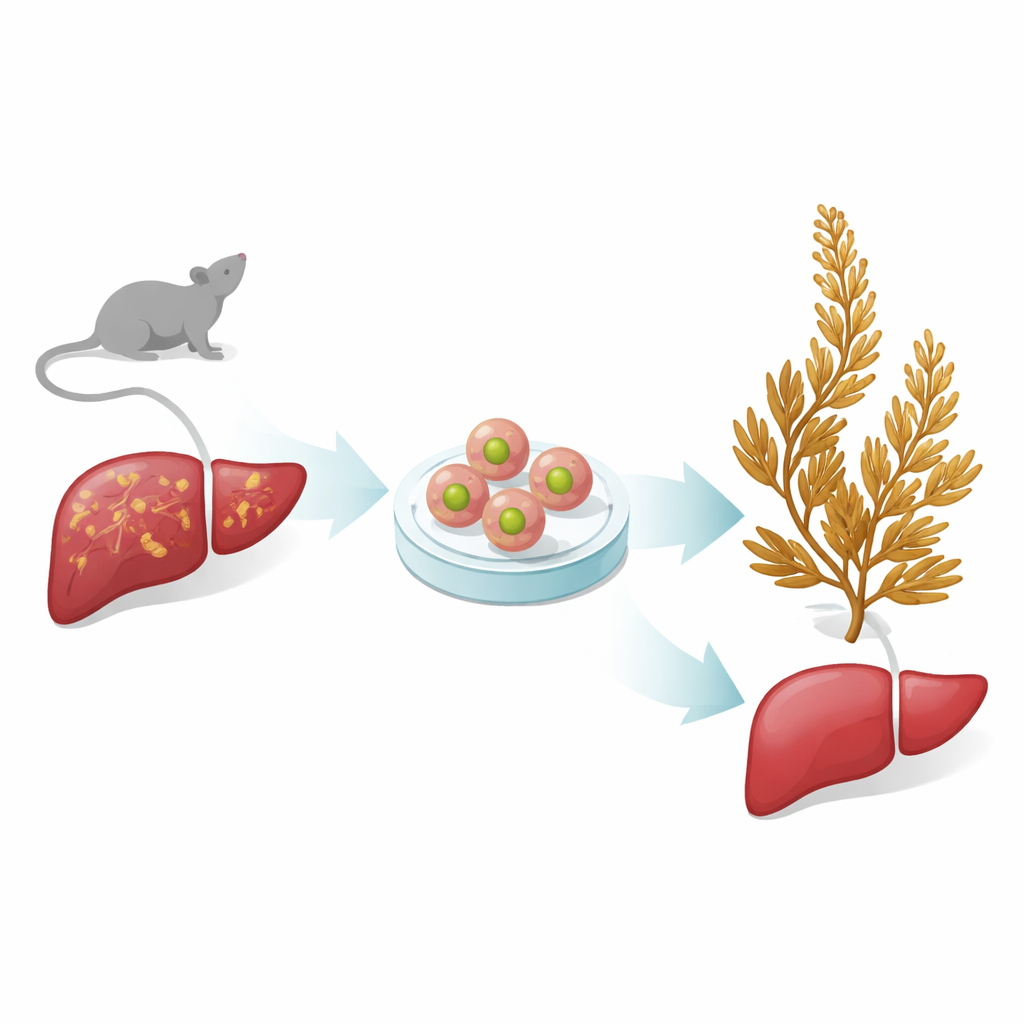
Traditional liver fibrosis research relies heavily on flat cell layers grown on plastic. These cells are easy to handle but lack the complex structure and mix of cell types found in a real organ, so they often mislead drug developers. The team instead turned to organoids—tiny three‑dimensional balls of liver tissue that can mimic how cells behave inside the body. Importantly, they did not just stress healthy organoids with chemical signals to mimic disease. They created organoids directly from the livers of mice that had been injured with a toxic chemical and had developed real fibrosis. These "disease‑derived" organoids carried many of the same molecular scars as the original damaged livers, including overbuilt tissue scaffolding and sluggish metabolism.
From flat cells to organoids to living animals
The researchers designed a stepwise testing pipeline. First, they activated human liver support cells known to drive scarring and exposed them to dozens of plant‑based extracts. Three natural products—Angelica gigas, Cinnamomum cassia, and Sargassum japonica—reduced key markers of fibrosis without harming the cells. Next, these same extracts were tested in 3D liver organoids that had been pushed into a fibrotic state by a pro‑scarring signal. All three again calmed the scarring response and partially restored features of healthy liver cells. At this stage, all candidates looked promising, much as many compounds do in conventional petri‑dish tests.
Seaweed that protects real livers
The real challenge was whether any extract could help in living animals with ongoing liver damage. In mice repeatedly exposed to a liver‑toxic chemical, only Sargassum japonica clearly stood out. At a dose the animals could tolerate, the seaweed extract reduced scar‑building genes, improved blood markers of liver function, and visibly lessened collagen‑rich scar tissue in the liver. Even when new organoids were later grown from these treated livers, they formed more easily and grew larger, suggesting that the underlying tissue was in better shape. A second fibrosis model driven by a different toxin showed similar protection, reinforcing that this effect was not specific to a single type of injury.
Mini-livers that remember disease
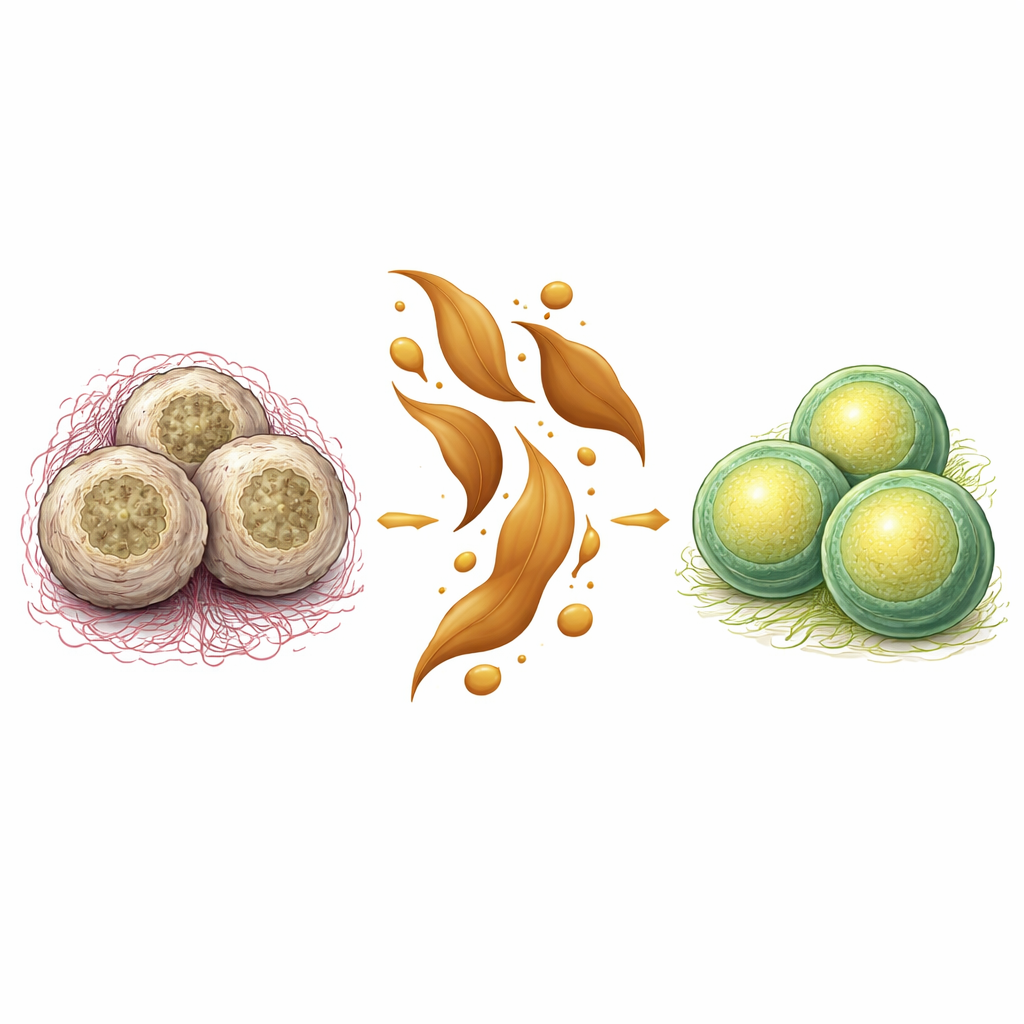
To understand why their organoid system was so predictive, the scientists compared gene activity across three situations: fibrotic liver tissue, organoids made from that tissue, and organoids in which fibrosis was artificially triggered. The disease‑derived organoids closely matched the real fibrotic livers, especially in genes tied to scar formation and metabolism, while the induced model only partly resembled true disease. Early‑passage organoids even showed a kind of "pathological memory," keeping strong fibrosis‑like signatures that gradually faded with time in culture. When treated with Sargassum japonica, both the fibrotic livers and disease‑derived organoids showed coordinated changes: genes that drive collagen buildup and tissue stiffening went down, while those involved in detoxification, fat handling, and energy use switched back on.
What this means for future treatments
In plain terms, this work shows two things. First, mini‑livers built directly from scarred tissue can mirror real disease far better than standard dish‑based models, making them powerful tools for spotting which drug candidates are most likely to succeed in animals and, eventually, people. Second, an extract from the brown seaweed Sargassum japonica not only eases scar formation but also helps restore the liver’s normal metabolic "housekeeping" in these models. While more studies in human tissue and careful safety testing are still needed, this combination of realistic organoids and natural‑product screening offers a promising path toward new therapies for chronic liver disease.
Citation: Heo, J., Chae, DH., Park, H.S. et al. Disease-derived liver organoids as a preclinical screening platform identify Sargassum japonica as an anti-fibrotic candidate. Sci Rep 16, 13783 (2026). https://doi.org/10.1038/s41598-026-43852-7
Keywords: liver fibrosis, organoids, Sargassum japonica, natural product therapy, fibrosis modeling