Clear Sky Science · en
Temporal patterns of radiocesium decline in current-year branches of coppiced Quercus serrata relative to stand age after the Fukushima nuclear accident
Why this forest story matters
In the years since the Fukushima nuclear accident, radiation has quietly become part of the everyday reality of nearby forests. These woods are not only important habitats and carbon stores—they also support local livelihoods, including the production of oak logs used to grow shiitake mushrooms. This study asks a very practical question with wide relevance: how does radioactive cesium in young oak branches change as the trees grow, and when can foresters safely and efficiently identify wood suitable for food production without cutting whole trees down?
Forests, mushrooms, and a hidden pollutant
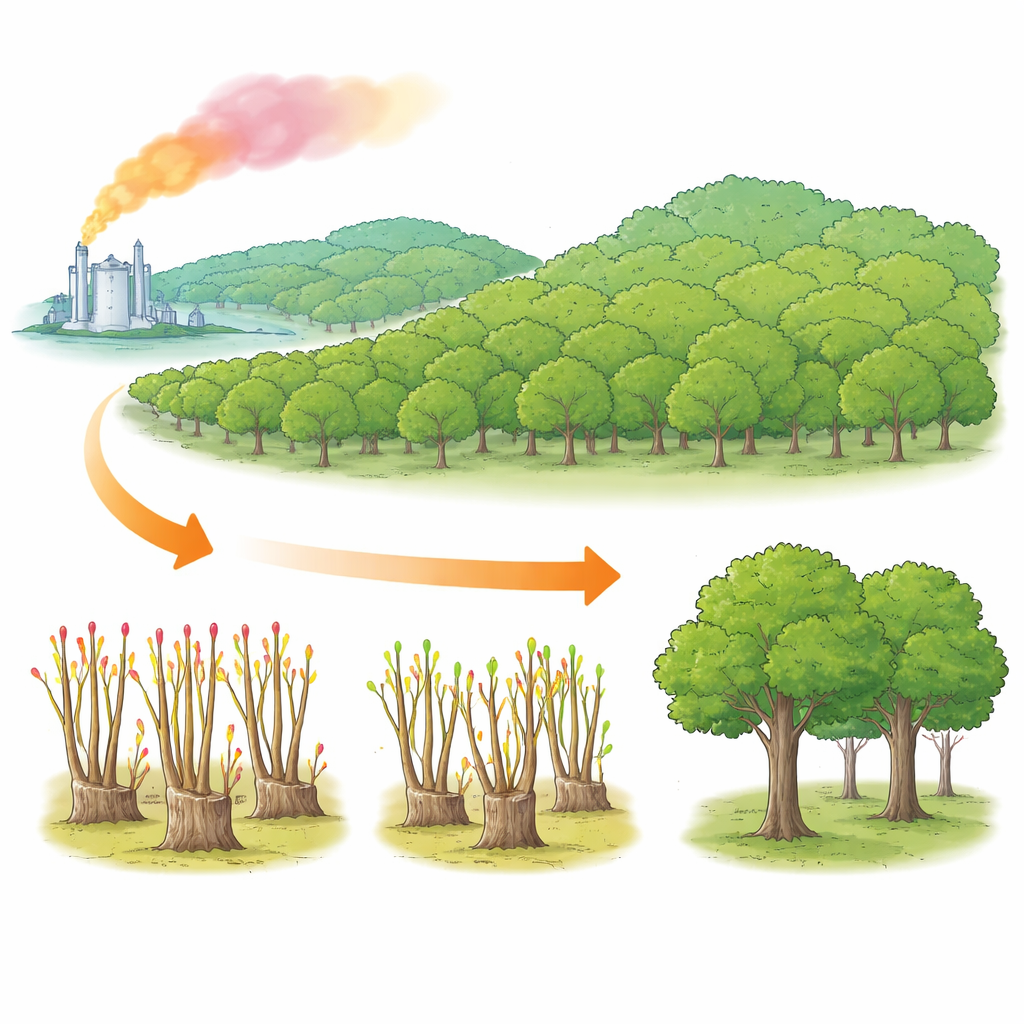
After the 2011 accident at the Fukushima Daiichi Nuclear Power Plant, a radioactive form of cesium (radiocesium, specifically cesium-137) fell onto nearby landscapes. In forests, much of this material was first caught in tree canopies and leaf litter, and over time most of it moved into the top layer of the soil. For local communities, one of the most visible impacts was the halt of shiitake mushroom farming on oak logs, because mushrooms can take up radiocesium from the wood. To keep mushroom products within strict food-safety limits, Japan set conservative thresholds for radiocesium in the bed logs themselves. That created a pressing need for simple ways to tell, before felling, which oak trees have stems clean enough to be used.
Using young twigs as a window into the tree
Researchers had already shown that radiocesium levels in leaves and small branches often track levels in the main stem, making these easily collected twigs promising indicators. But one big uncertainty remained: do these relationships hold as young, coppiced oaks grow from small shoots into harvestable trees? Coppicing is a traditional practice in which trees are cut back to the stump, allowing multiple new shoots to grow. In this study, scientists focused on konara oak stands in Fukushima that were coppiced between 2011 and 2016. They repeatedly collected current-year branches from the same trees in 20 small plots during the winters of 2016–2017, 2020–2021, and 2025, carefully choosing dormant-season months when seasonal swings in radiocesium are minimal.
Tracking radioactivity as trees grow up
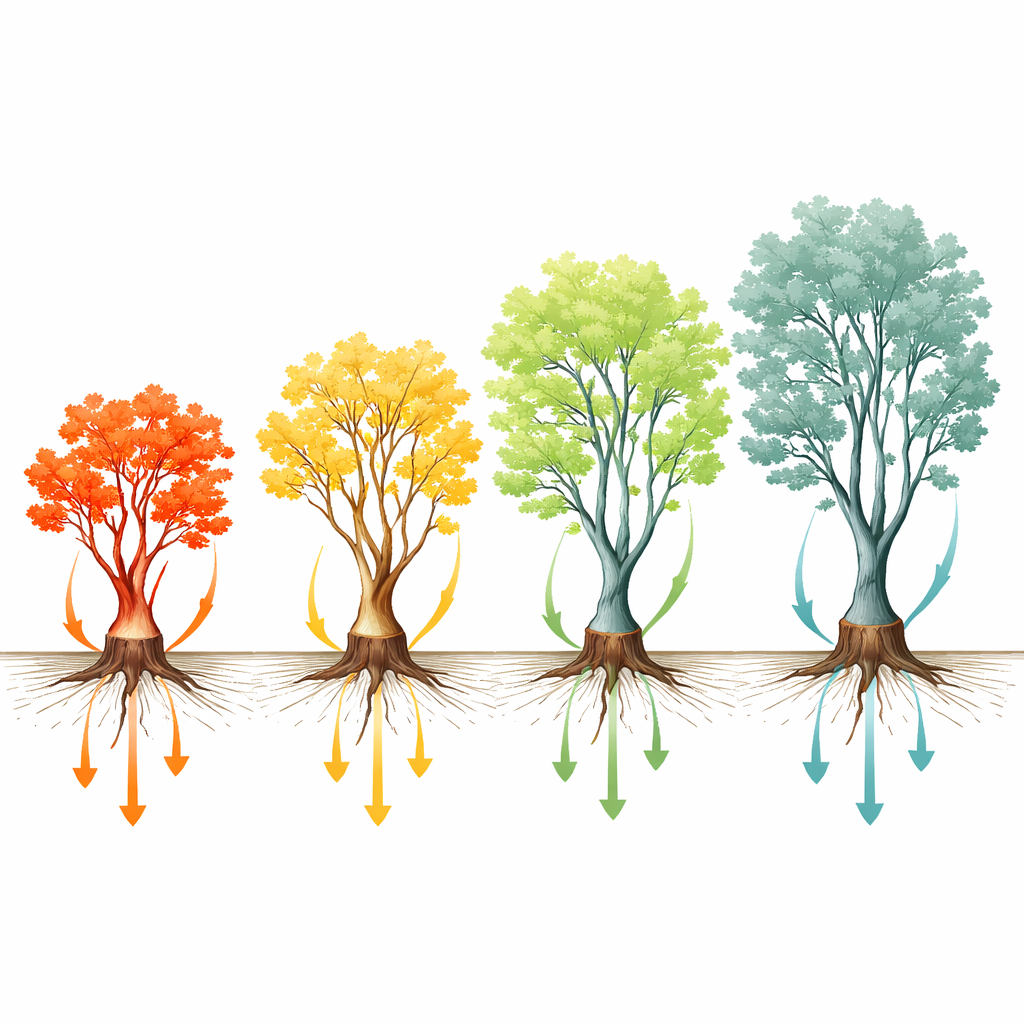
The team measured radiocesium activity in the branches and “corrected” the numbers so that they could be fairly compared across years, taking into account the natural physical decay of cesium-137, which has a half-life of just over 30 years. They then grouped plots by how old the regrown stands were at the start of each four-year interval. In very young stands—those 1 to 3 years old—the radiocesium in new branches dropped over each four-year period faster than expected from physical decay alone. In other words, the twigs were losing radiocesium more quickly than a simple radioactive-clock model would predict. In contrast, stands that were 4 to 9 years old generally showed declines that closely matched physical decay, meaning the branches behaved more like a stable reservoir slowly ticking down.
What drives the faster early decline?
The researchers suggest that several growth-related processes explain the unusually rapid changes in the youngest trees. Right after coppicing, radiocesium stored in the old stump can be actively moved into the fast-growing new shoots, leading to relatively high levels in those first branches. As the trees quickly add biomass, that same amount of radiocesium becomes spread through more tissue, diluting the concentration. Over a few years, the influence of the stump and this strong dilution effect likely weakens. By the time the stands reach about 4 years of age, the main patterns are dominated by simple radioactive decay, and the system behaves much more steadily from one four-year window to the next.
How this helps bring forests back into use
For non-specialists, the key takeaway is reassuringly straightforward. This study shows that in coppiced konara oak forests affected by the Fukushima accident, radiocesium in very young branches is more changeable, but once stands are at least 4 years old, the decline in branch radioactivity closely follows predictable physical decay. That means foresters can use current-year branches from stands aged 4 to 9 years as reliable, non-destructive indicators of radiocesium levels in the stem wood that will later become mushroom logs. By repeatedly tracking the same trees over nearly a decade, the researchers provide a clearer, more confident basis for deciding when and where to safely restart log production, while also improving models of how radioactive contaminants move through growing forests.
Citation: Sakashita, W., Miura, S., Ito, E. et al. Temporal patterns of radiocesium decline in current-year branches of coppiced Quercus serrata relative to stand age after the Fukushima nuclear accident. Sci Rep 16, 14218 (2026). https://doi.org/10.1038/s41598-026-43819-8
Keywords: Fukushima forests, radiocesium in trees, coppiced oak, shiitake mushroom logs, forest radioecology