Clear Sky Science · en
Removal of CdS-QDs pollutant from wastewater by interconnected Ca/Al layered double hydroxides with hierarchical mesoporous calcite and chitosan hydrogel
Why Tiny Dots in Water Matter
Many of the brilliant colors in modern screens and imaging devices come from ultra‑small crystals called quantum dots. When these dots are made of cadmium sulfide, they can leak toxic cadmium into rivers and lakes once they escape from factories or discarded electronics. This study tackles a simple but urgent question: can we build a reusable, nature‑inspired filter that pulls these stubborn nano‑pollutants out of water before they reach people and wildlife?
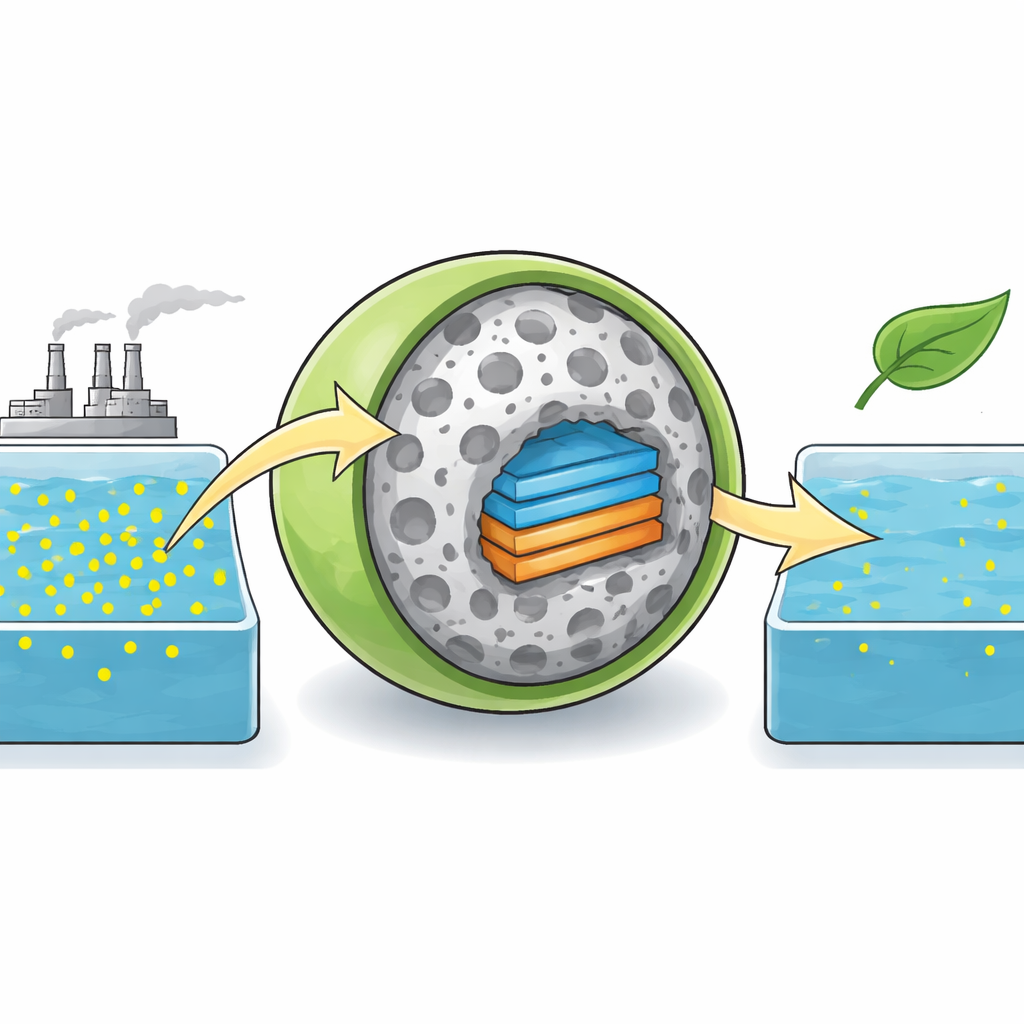
A New Kind of Smart Sponge
The researchers designed a hybrid material that behaves like a highly tuned sponge for cadmium sulfide quantum dots. It combines three main ingredients: a soft chitosan gel derived from crustacean shells, a highly porous form of calcium carbonate known as hierarchical mesoporous calcite, and thin mineral sheets called calcium–aluminum layered double hydroxides. Blended together, they form an interconnected network with many tiny tunnels and a rich mix of chemical groups that can latch onto pollutants. Tests using methods such as electron microscopy and surface analysis showed that the components are well integrated, thermally stable, and full of nanoscale pores where contaminants can be trapped.
How the Smart Sponge Grabs Pollutants
When the new material is mixed with water containing quantum dots, removal happens quickly. Under neutral conditions similar to many natural waters, the filter takes out about 97 percent of the dots in just over half an hour. Careful modeling of how fast and how strongly the dots stick suggests that they do more than just sit loosely on the surface. Instead, they form stronger chemical bonds with groups in the chitosan, calcite, and layered mineral plates, while also being drawn into the internal pores. The process works best around neutral pH, where the surface charge of the material gently attracts the negatively coated dots, and the open pore network lets them diffuse deep inside instead of bouncing off the outside.
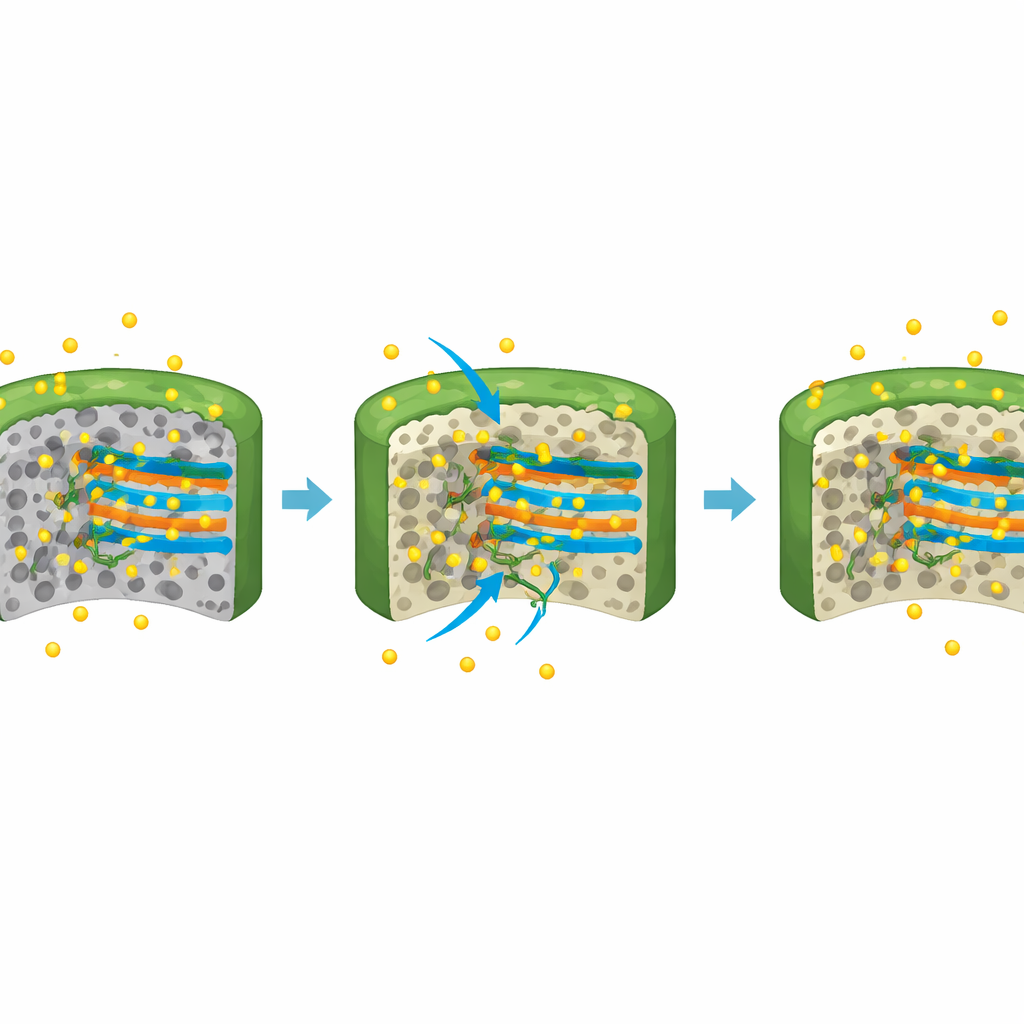
Putting the Filter to the Test
To see how the material would behave in real‑world conditions, the team varied key factors such as how much of the sponge they used, the temperature, and the salinity of the water. Using more material increased the overall fraction of dots removed, while higher temperatures helped the dots move into the pores and bind more strongly. Even in salty water, which tends to shield electrical attractions and make cleanup harder, the material still removed a large share of the quantum dots. When the sponge was used, rinsed with mild acid and base solutions, and used again, it kept more than 70 percent of its original efficiency after four cycles, showing it can be regenerated rather than thrown away.
From Laboratory Tests to Real Water
The researchers then spiked tap water, seawater, and industrial wastewater with quantum dots to mimic environmental contamination. In all three cases, the hybrid sponge captured more than 90 percent of the dots after three successive treatments, even when other salts and organic substances were present. These trials highlight that the material’s performance is not limited to clean laboratory solutions but extends to complex, real‑world water samples. The work also indicates that the sponge’s mixture of soft biopolymer, porous mineral, and layered plates provides a balance of strength, flexibility, and chemical versatility that many single‑component adsorbents lack.
What This Means for Safer Water
In plain terms, this study shows that it is possible to build a robust, reusable filter that targets one of the more worrisome nano‑pollutants emerging from high‑tech industries. By combining a natural polymer with engineered mineral structures, the authors created a material that can swiftly and strongly lock up cadmium sulfide quantum dots, even in challenging water types, and continue working over multiple cycles. While further work is needed to scale up the approach for continuous flow systems, the hybrid sponge offers a promising path toward keeping advanced materials from becoming hidden toxins in our water.
Citation: Mahmoud, M.E., Amira, M.F., Saleh, E.A.I. et al. Removal of CdS-QDs pollutant from wastewater by interconnected Ca/Al layered double hydroxides with hierarchical mesoporous calcite and chitosan hydrogel. Sci Rep 16, 11363 (2026). https://doi.org/10.1038/s41598-026-43797-x
Keywords: quantum dots, water purification, nanocomposite adsorbent, cadmium pollution, chitosan hydrogel