Clear Sky Science · en
Trends in renal failure–related mortality among U.S. multiple myeloma patients aged ≥ 45 years, 1999–2023: analysis of CDC data
Why this matters for patients and families
For many people with multiple myeloma—a cancer of immune cells in the bone marrow—the kidneys are a vulnerable weak point. When they fail, patients often become much sicker and survival drops. This study looks at how often adults in the United States have died with both multiple myeloma and kidney failure listed on their death certificates over the past quarter century, and who remains most at risk. The findings offer a hopeful overall picture, but also reveal stubborn gaps tied to age, race, and where people live.
A closer look at cancer and the kidneys
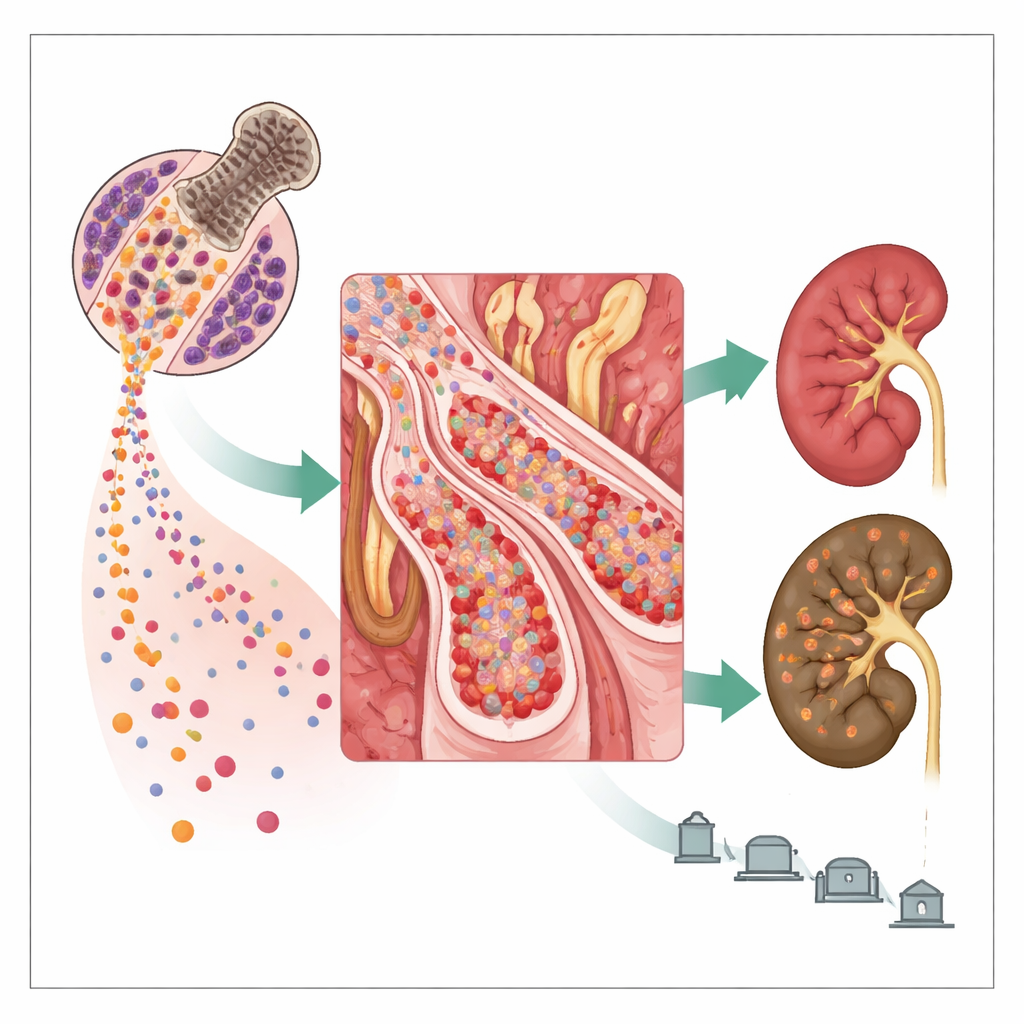
Multiple myeloma arises from plasma cells, which normally help the body fight infection. In myeloma, these cells grow out of control and pour out abnormal proteins into the blood. The kidneys must filter these proteins, and in doing so can become clogged and scarred. This damage can lead to acute or chronic kidney failure, which is common in myeloma and strongly linked to worse outcomes. Meanwhile, kidney disease on its own is a growing global problem, responsible for millions of deaths each year. Understanding how these two conditions intersect at the end of life is crucial for better care and prevention.
How the researchers tracked national trends
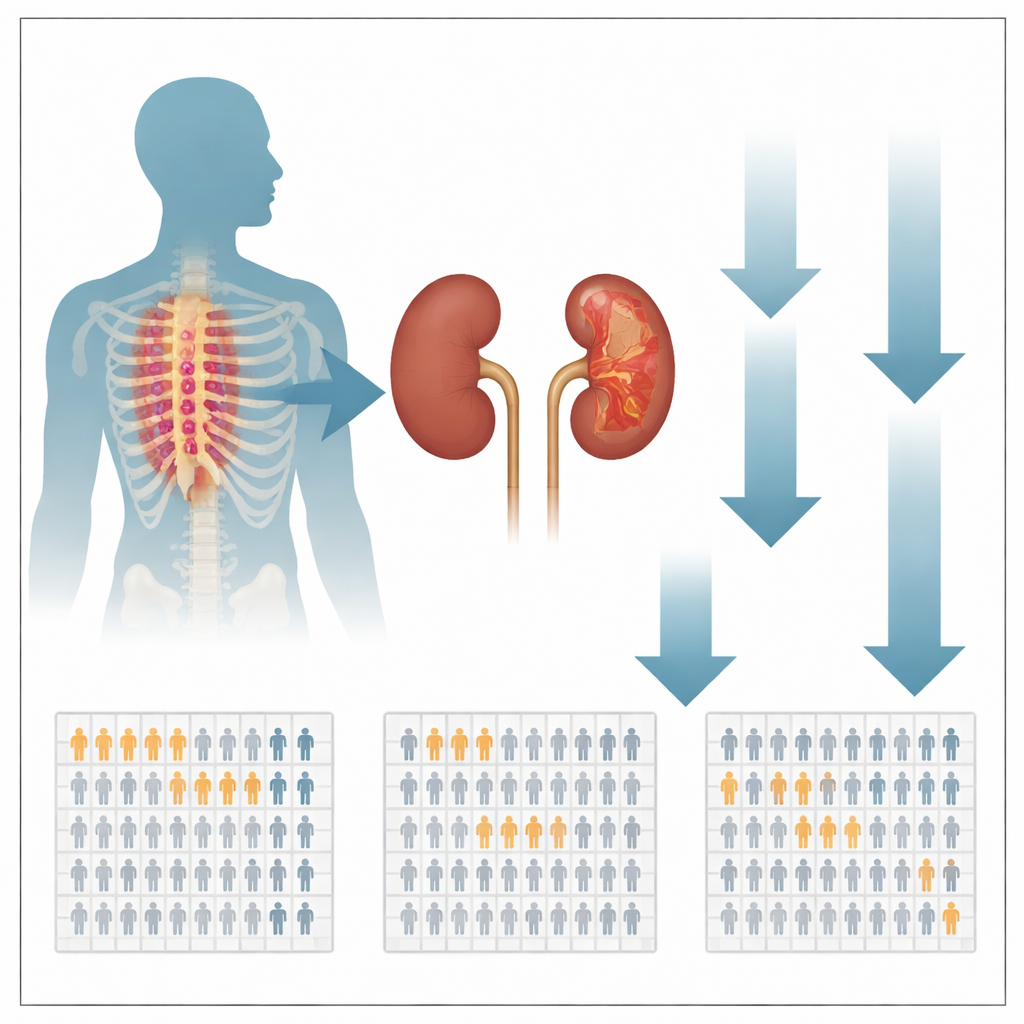
The authors used the CDC WONDER database, which compiles U.S. death certificate information. They focused on adults aged 45 and older who died between 1999 and 2023 and had multiple myeloma listed as the underlying cause of death, with kidney failure noted as a contributing condition. Using standard codes applied to death certificates, they identified these deaths and then calculated how often they occurred in the population, adjusting for age so that different years and groups could be fairly compared. They examined trends over time and broke the data down by sex, race and ethnicity, region of the country, level of urbanization, and age group.
Good news: deaths are falling overall
Across the 25-year period, 60,788 deaths met the study criteria. The age-adjusted death rate dropped from 2.39 to 1.60 per 100,000 people, a steady average decline of about 1.3 percent per year. Both men and women shared in this improvement, although men consistently had higher rates than women. Many groups—such as people living in cities and those in the western United States—experienced clear, sustained declines. The researchers suggest that modern myeloma treatments, including powerful new drugs and bone marrow transplants, along with better supportive kidney care, have helped people live longer and reduced deaths where myeloma and kidney failure occur together.
Persistent gaps: who remains at highest risk
Despite the overall progress, the benefits have not been evenly shared. Non-Hispanic Black adults had the highest death rates throughout the study, about twice those of non-Hispanic White adults, even though their rates did decline over time. Residents of the Midwest and South, and those living in nonmetropolitan areas, also faced higher mortality than people in other regions or in large cities. Age made a major difference: while people aged 45 to 74 saw long-term declines, the oldest group—those 85 and older—showed a worrying recent rise after years of improvement. These patterns likely reflect a mix of unequal access to specialist care, differences in other health problems such as diabetes and high blood pressure, and broader social and economic disadvantages.
What the findings do and do not show
The study is based entirely on how causes of death were recorded, so it cannot prove that kidney failure directly caused death in each case. It also lacks detailed clinical information, such as treatment type or disease severity, and may miss some cases because of coding errors or changes in reporting practices over time. Still, by looking at the entire U.S. population over two and a half decades, it offers a powerful window into how myeloma-related kidney complications have changed and where the burden remains heaviest.
What this means going forward
For patients and families, the main takeaway is cautiously optimistic: deaths involving multiple myeloma and kidney failure are less common now than they were in the late 1990s, likely thanks to better treatments and kidney-focused care. Yet older adults, Black communities, people living in the Midwest and South, and residents of rural areas remain at disproportionately high risk. The authors argue that closing these gaps will require targeted efforts—such as earlier detection of kidney injury, ensuring equal access to advanced myeloma therapies, and addressing broader social barriers to care—so that progress in survival can be shared more fairly by all.
Citation: Jiang, Y., Meng, Z., Liang, G. et al. Trends in renal failure–related mortality among U.S. multiple myeloma patients aged ≥ 45 years, 1999–2023: analysis of CDC data. Sci Rep 16, 12661 (2026). https://doi.org/10.1038/s41598-026-43754-8
Keywords: multiple myeloma, kidney failure, cancer survival trends, health disparities, CDC mortality data